
Short Answer
Overview
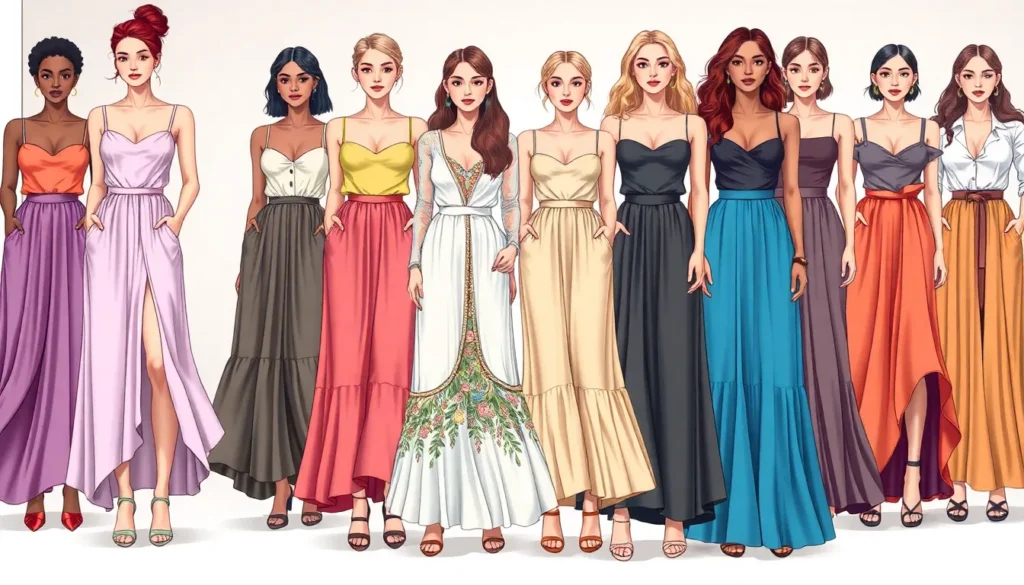
A maxi skirt is a type of skirt characterized by its full length, generally reaching to the ankles or the floor. It is designed to provide coverage while maintaining a flowing and often loose silhouette. Maxi skirts are a popular fashion item worn by people of various ages and are found in many different fabrics, patterns, and styles. They can be casual or formal depending on the material and design.
Detailed Explanation
The maxi skirt differs from other skirt types primarily in its length. Unlike mini skirts, which end above the knee, or midi skirts, which typically fall between the knee and mid-calf, maxi skirts extend fully to the ankles. This length offers a distinct aesthetic that can range from elegant and formal to relaxed and bohemian. The garment can be made from various textiles such as cotton, chiffon, silk, and synthetic blends. Some maxi skirts have a straight cut, while others may feature pleats, tiers, or ruffles to add volume and texture.
How It Works
The maxi skirt functions as a versatile bottom garment that can be paired with a variety of tops and footwear. Its length allows for modesty and comfort, making it suitable for different settings including casual outings, work environments, and special occasions. The skirt is typically secured around the waist with an elastic band, drawstring, or zipper. The flowy nature of the fabric used in maxi skirts allows for ease of movement and breathability, contributing to its popularity in warmer climates and seasons.

Examples
- Bohemian Maxi Skirt: Often made with lightweight fabrics and vibrant patterns, paired with loose tops and sandals.
- Formal Maxi Skirt: Crafted from silk or satin materials, sometimes paired with a fitted blouse or blazer for evening events.
- Pleated Maxi Skirt: Features vertical pleats that add texture and movement, suitable for both casual and semi-formal wear.
Pros and Cons
- Pros: Offers full coverage, versatile for multiple occasions, comfortable due to loose fit, suitable for various body types.
- Cons: May be less practical in wet or windy weather, can feel restrictive in very active situations, requires careful styling to avoid overwhelming the wearer’s frame.
Comparison Table
| Aspect | Maxi Skirt | Alternative/Related Topic |
|---|---|---|
| Meaning | A skirt extending to the ankles or floor | Midi Skirt – falls between knee and mid-calf length |
| Typical Use | Casual to formal occasions | Mini Skirt – primarily casual or party wear |
| Length | Full length, ankle or floor | Knee-length or shorter |
| Common Fabrics | Varies: cotton, silk, chiffon, synthetic blends | Similar range but often lighter fabrics for mini skirts |
Decision Checklist
- Use this if: You want a modest, comfortable skirt suitable for both casual and formal settings.
- Avoid this if: You require highly functional clothing for active or weather-exposed environments.
- Check this first: The fabric weight and fit to ensure ease of movement and suitability for the occasion.
What is the easiest way to understand a Maxi Skirt?
The easiest way to understand a maxi skirt is to recognize it as a long skirt that covers most of the legs, providing a flowing and often elegant look. Its length distinguishes it from other skirts, and its versatility in style and fabric makes it adaptable to many fashion needs.
FAQ
What distinguishes a maxi skirt from other skirts?
The main distinguishing feature of a maxi skirt is its length, which typically extends to the ankles or floor, unlike mini or midi skirts which are shorter.
Are maxi skirts suitable for all seasons?
Maxi skirts can be made from various fabrics suitable for different seasons; lightweight fabrics like cotton and chiffon are ideal for warmer weather, while heavier fabrics like wool blends may be used in cooler climates.
How can one style a maxi skirt?
Maxi skirts can be styled with fitted tops, blouses, or casual T-shirts and paired with sandals, flats, or heels depending on the occasion and desired look.
Leave a Reply