Short Answer
Overview
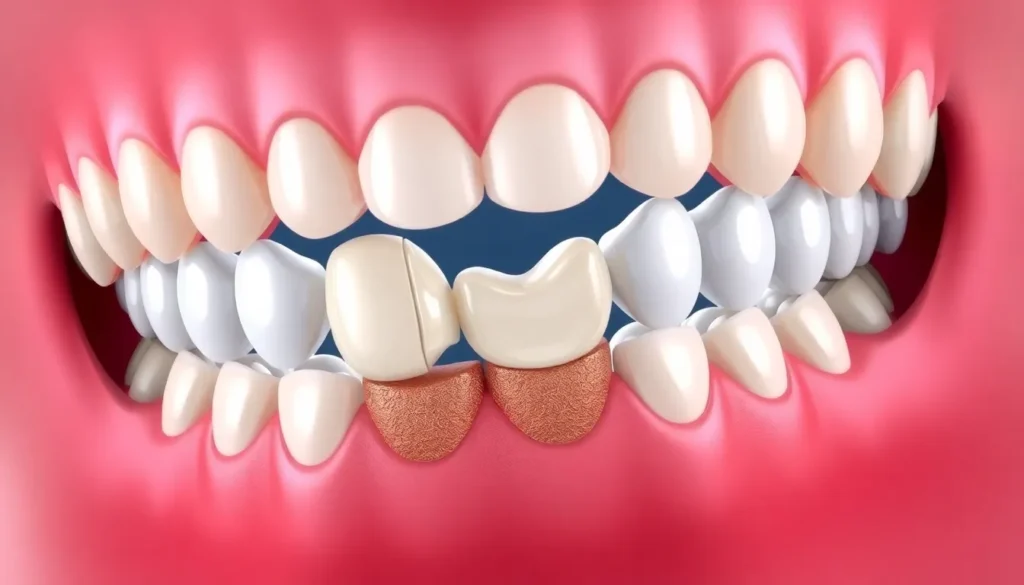
A bridge for teeth, commonly known as a dental bridge, is a fixed dental restoration used to replace one or more missing teeth by joining an artificial tooth permanently to adjacent teeth or dental implants. This prosthetic device helps restore the function, appearance, and alignment of the teeth and maintains the shape of the face. Dental bridges are a widely accepted treatment option for tooth loss and come in various designs depending on the specific clinical needs.
Detailed Explanation
Dental bridges consist of one or more artificial teeth called pontics that fill the gap created by missing teeth. These pontics are anchored in place by dental crowns that are cemented onto the natural teeth or implants adjacent to the gap, referred to as abutment teeth. Bridges can be made from several materials, including porcelain fused to metal, ceramics, or metal alloys, chosen for durability and aesthetics.
There are different types of dental bridges, such as traditional bridges, cantilever bridges, Maryland bridges (also known as resin-bonded bridges), and implant-supported bridges. Each type has particular indications based on the number and location of missing teeth, health of adjacent teeth, and patient preference.
How It Works
The process of getting a dental bridge usually involves several steps. First, the dentist prepares the abutment teeth by reshaping them to accommodate the crowns. Then, impressions of the teeth are taken to create a custom bridge that fits precisely. While the permanent bridge is being fabricated, a temporary bridge is often placed to protect the prepared teeth.
Once the permanent bridge is ready, it is checked for fit and appearance before being cemented onto the abutment teeth. The bridge functions by transferring chewing forces across the missing tooth area to the supporting teeth, restoring biting and chewing efficiency. Proper oral hygiene and regular dental visits are essential to maintain the longevity of the bridge.
Examples
- Traditional Fixed Bridge: The most common type, involving a pontic supported by crowns on both sides, suitable when there are natural teeth on either side of the gap.
- Cantilever Bridge: Used when there is an adjacent tooth on only one side of the missing tooth or teeth. It is less common due to the increased stress on the supporting tooth.
- Maryland Bridge: A conservative option where the pontic is bonded to metal or porcelain wings attached to the back of adjacent teeth, minimizing alteration of natural teeth.
- Implant-Supported Bridge: Anchored on dental implants rather than natural teeth, ideal when multiple teeth are missing and adjacent teeth are not suitable for crowns.
Why It Matters
Replacing missing teeth with a dental bridge is important for several reasons. It helps restore normal oral function, including chewing and speaking, which can be impaired by tooth loss. Bridges also prevent remaining teeth from shifting out of position, which can lead to bite problems and further dental issues. Additionally, restoring missing teeth improves facial aesthetics and supports self-confidence.
Common Misconceptions
Misconception: Dental bridges damage adjacent teeth permanently.
Correction: While abutment teeth require some reshaping to fit crowns, with proper dental care, they can remain healthy and strong over time.
Misconception: Bridges are only a temporary solution.
Correction: Dental bridges are designed as a long-term fixed restoration and can last many years with good oral hygiene and regular dental check-ups.
Pros and Cons
Pros:
- Restores chewing ability and speech.
- Improves aesthetics by filling gaps.
- Prevents shifting of adjacent teeth.
- Generally quicker and less invasive than implants.
Cons:
- Requires alteration of healthy adjacent teeth.
- May have a limited lifespan compared to implants.
- Risk of decay or gum disease around abutment teeth if hygiene is poor.
- Not suitable if abutment teeth are weak or compromised.
Comparison Table
| Aspect | Dental Bridge | Dental Implant |
|---|---|---|
| Meaning | A fixed prosthesis anchored to adjacent teeth or implants to replace missing teeth. | A titanium post surgically placed into the jawbone to support a crown, replacing a missing tooth. |
| Invasiveness | Requires reshaping of adjacent teeth; no surgery required unless implant-supported. | Requires surgical placement into the jawbone. |
| Longevity | Typically 5-15 years, depending on care. | Can last 25 years or more with proper care. |
| Cost | Generally less expensive than implants. | Tends to be more costly due to surgery and materials. |
| Maintenance | Requires diligent cleaning around abutment teeth. | Requires regular oral hygiene similar to natural teeth. |
Decision Checklist
What is the easiest way to understand a Bridge for Teeth?
A dental bridge is like a literal bridge over a gap where teeth are missing, held firmly in place by the teeth or implants on either side, restoring the ability to bite, chew, and smile normally.
FAQ
How long does a dental bridge last?
A dental bridge typically lasts between 5 to 15 years, depending on oral hygiene, the health of supporting teeth, and regular dental care.
Is the procedure to get a dental bridge painful?
The procedure is generally painless as local anesthesia is used during tooth preparation. Some sensitivity may occur after the procedure, but it usually resolves quickly.
Can a dental bridge be repaired if it breaks?
Minor damage to a dental bridge can sometimes be repaired, but significant damage often requires replacement. Regular dental check-ups help detect issues early.






Leave a Reply