Short Answer
Overview
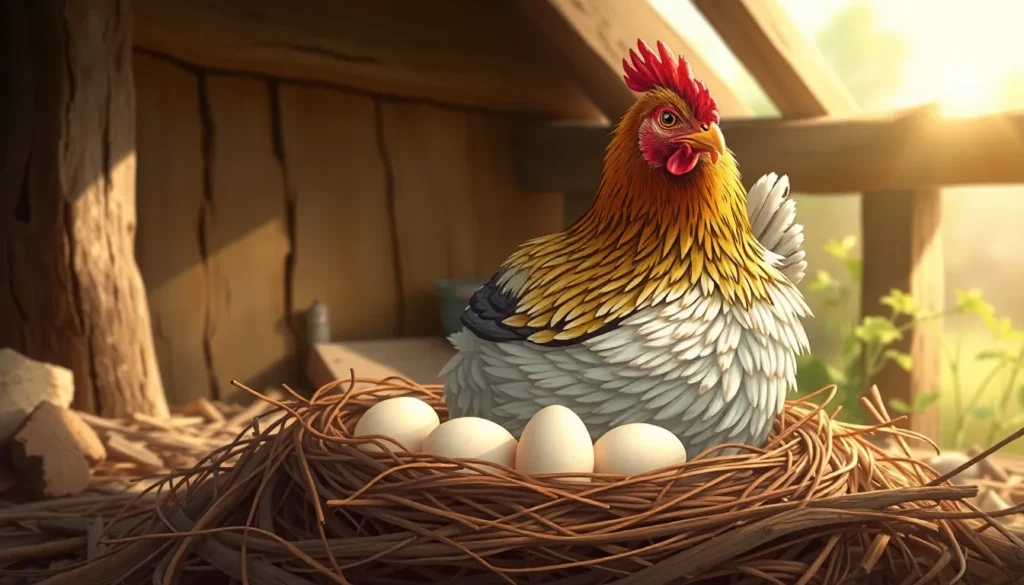
A broody hen is a female chicken that displays a natural behavior commonly referred to as broodiness. This condition involves the hen sitting persistently on a clutch of eggs with the intent to incubate them until they hatch. Broodiness is characterized by hormonal changes that trigger maternal instincts, causing the hen to cease laying new eggs, focus on keeping the eggs warm, and protect the nest. It is an essential aspect of natural reproduction in chickens and other bird species.
Detailed Explanation
Broodiness is primarily a behavioral and physiological state induced by hormonal shifts, particularly increases in prolactin. When a hen becomes broody, she will typically stop laying eggs and spend most of her time sitting on the nest, rarely leaving it except to eat, drink, or defecate. The hen’s body temperature helps to incubate the eggs, ensuring proper embryonic development.
This behavior is more common in some chicken breeds that have been less selectively bred for continuous egg-laying, as intensive commercial strains often have reduced broodiness. Broodiness can last from a few days to several weeks, depending on the hen and environmental conditions.
How It Works
Broodiness works through the interaction of hormonal signals and behavioral cues. When a hen lays a clutch of eggs, tactile stimulation from the eggs beneath her triggers the release of prolactin from the pituitary gland. This hormone promotes incubation behavior and suppresses ovulation, effectively halting further egg production.
The hen maintains warmth over the eggs by positioning her body and fluffing her feathers to create an insulating environment. She also exhibits protective behaviors such as nest defense, reduced activity, and changes in vocalizations. The incubation period for chicken eggs typically lasts about 21 days, during which the broody hen will rarely leave the nest.
Examples
- Single Hen Brooding: A hen in a backyard flock may become broody and sit on a small clutch of eggs, successfully hatching chicks without human intervention.
- Commercial Breeds: Some commercial laying breeds rarely exhibit broodiness due to selective breeding, requiring artificial incubation methods.
- Natural Broodiness in Heritage Breeds: Heritage breeds like Silkies and Cochins are known for strong broody tendencies and are often used as surrogate mothers for hatching eggs of other birds.
Why It Matters
Broodiness is significant because it represents the natural reproductive cycle of chickens and impacts poultry management practices. Understanding broodiness is important for farmers and poultry keepers who aim to hatch chicks naturally or manage egg production. In natural or small-scale settings, allowing a hen to go broody can reduce costs associated with artificial incubation. However, in commercial egg production, broodiness is often discouraged as it halts egg laying and reduces productivity.
Common Misconceptions
Misconception: Broody hens are lazy and do not want to work.
Correction: Broodiness is a natural maternal behavior driven by hormonal changes, not laziness.
Misconception: All hens become broody at some point.
Correction: Not all breeds exhibit broodiness; some modern breeds rarely or never become broody due to selective breeding.
Pros and Cons
Pros:
- Enables natural hatching and rearing of chicks without artificial incubators.
- Can improve chick survival rates due to maternal care.
- Supports preservation of traditional poultry breeding practices.
Cons:
- Broodiness interrupts egg production, which may be undesirable in commercial settings.
- Broody hens may refuse to leave the nest, potentially leading to health issues if not managed properly.
- Not all breeds respond well to broodiness, limiting its usefulness in some poultry operations.
Comparison Table
| Aspect | Broody Hen | Non-Broody Hen |
|---|---|---|
| Meaning | Hen exhibiting incubation behavior, sitting on eggs to hatch them. | Hen focused on egg production without incubation behavior. |
| Egg Production | Stops laying eggs during broodiness. | Continues laying eggs regularly. |
| Behavior | Protective, nest-bound, reduced activity. | Active, foraging, and socializing. |
| Use in Poultry | Natural hatching and chick rearing. | Primarily for consistent egg production. |
Decision Checklist
What is the easiest way to understand a Broody Hen?
The easiest way to understand a broody hen is to observe a hen that persistently sits on a clutch of eggs, rarely leaving the nest, and displays protective and nurturing behavior aimed at incubating those eggs until chicks hatch. This instinctive behavior is driven by natural hormonal changes and is a key part of the chicken’s reproductive cycle.
FAQ
What causes a hen to become broody?
Broodiness is caused primarily by hormonal changes, especially an increase in prolactin, which triggers maternal instincts leading the hen to incubate eggs.
How long does broodiness last in hens?
Broodiness typically lasts for about 21 days, corresponding to the natural incubation period of chicken eggs, but it can vary depending on the hen and environmental conditions.
Can all hens become broody?
Not all hens become broody; this behavior is more common in heritage and less intensively bred chicken breeds, while many commercial laying breeds have reduced or no broodiness.





Leave a Reply