
Short Answer
Overview
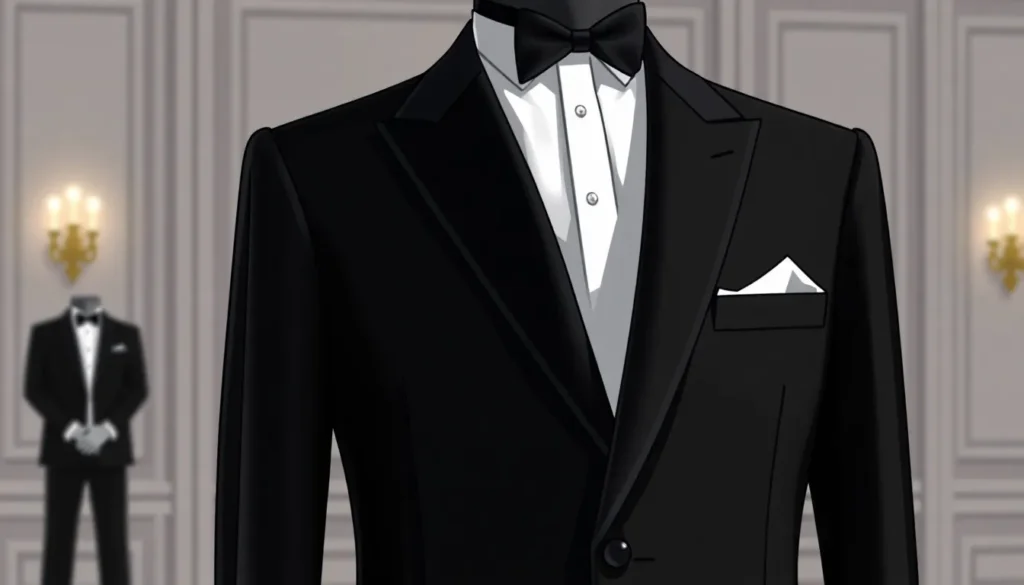
A tuxedo jacket is a distinctive type of men’s formal jacket traditionally worn as part of a tuxedo ensemble, primarily for black-tie occasions. It is characterized by specific design elements such as satin or grosgrain facings on the lapels, buttons, and pocket trims. Unlike standard suit jackets, tuxedo jackets are associated with evening wear and formal events, providing a refined and elegant appearance.
Detailed Explanation
The tuxedo jacket typically features a single-breasted or double-breasted front, with notch, peak, or shawl lapels often trimmed in satin or grosgrain fabric. The jacket’s buttons are covered with the same fabric as the lapel facings. Commonly, tuxedo jackets have a tailored fit and are made from fine wool or wool blends. They often include features such as jetted or besom pockets without flaps, and sometimes a single vent or no vent at all in the back. The jacket is designed to be worn with matching tuxedo trousers, a formal dress shirt, and accessories like a bow tie or cummerbund.
How It Works
The tuxedo jacket functions as the primary outer garment in a tuxedo outfit, providing structure and formality. Its satin or grosgrain trims differentiate it from typical business suits, signaling a dress code suitable for evening and formal events. The smooth, lustrous fabric used on key elements like lapels reflects light differently than the matte wool of the jacket body, creating a contrast that enhances the jacket’s formal aesthetic. The tailored cut ensures a sharp silhouette that complements the other tuxedo components, maintaining tradition while allowing for some individual style variations.
Examples
- Classic Black Tuxedo Jacket: A single-breasted black jacket with peak lapels in satin, matching satin-covered buttons, and jetted pockets, typically worn with black tuxedo trousers.
- White Dinner Jacket: Popular in warm climates or summer events, this jacket features the same satin or grosgrain lapels but in white or ivory, often paired with black trousers.
- Velvet Tuxedo Jacket: A modern variation, velvet jackets maintain the traditional satin lapels but substitute the wool body for velvet, offering a softer texture and a contemporary look.
Pros and Cons
- Pros: Provides a distinguished and elegant appearance suitable for formal events; distinct design elements signal adherence to traditional dress codes; versatile in style variations (e.g., shawl or peak lapels, different fabrics).
- Cons: Limited to formal or black-tie occasions, making it less versatile for casual or business wear; requires careful maintenance due to delicate satin or grosgrain fabrics; can be expensive compared to regular suit jackets.
Comparison Table
| Aspect | Tuxedo Jacket | Regular Suit Jacket |
|---|---|---|
| Meaning | Formal evening jacket with satin or grosgrain facings, worn for black-tie events | Business or casual jacket typically made entirely of matte fabric, worn for day or office wear |
| Lapels | Often satin or grosgrain faced in shawl, peak, or notch styles | Fabric-covered, usually matte, often notch lapels |
| Buttons | Satin or grosgrain-covered buttons matching lapels | Plain or fabric-covered buttons matching the jacket fabric |
| Pockets | Usually jetted or besom without flaps | Flap pockets common |
| Occasion | Black-tie and formal evening wear | Business, casual, or less formal occasions |
Decision Checklist
- Use this if you are attending a formal black-tie event requiring traditional evening attire.
- Avoid this if you need versatile jackets for business or casual settings.
- Check this first the dress code of the event to confirm that a tuxedo jacket is appropriate.
What is the easiest way to understand a Tuxedo Jacket?
The easiest way to understand a tuxedo jacket is to view it as a special type of suit jacket designed specifically for formal evening wear. Its key identifiers are the shiny satin or grosgrain fabric on the lapels, buttons, and pocket trims, which visually set it apart from regular suit jackets intended for business or casual use.
FAQ
What distinguishes a tuxedo jacket from a regular suit jacket?
A tuxedo jacket features satin or grosgrain facings on the lapels, buttons, and pocket trims, whereas a regular suit jacket typically uses the same matte fabric throughout. This satin detailing is the primary visual difference, signaling the jacket's formal use.
Can a tuxedo jacket be worn during the day?
Traditionally, tuxedo jackets are reserved for evening wear and black-tie events. Wearing them during the day is generally considered inappropriate unless specified by the dress code.
What types of lapels are common on tuxedo jackets?
Tuxedo jackets commonly feature shawl, peak, or notch lapels. Shawl lapels are smooth and rounded, peak lapels are pointed and angular, and notch lapels have a small cut-out notch where the collar meets the lapel.


Leave a Reply