
Short Answer
Overview
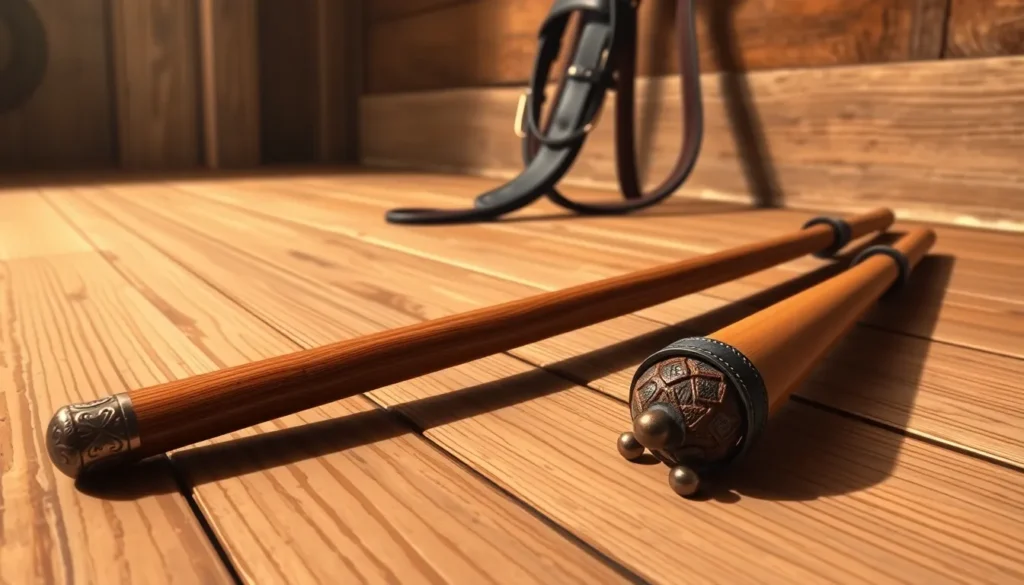
A riding crop is a short, flexible tool traditionally used in horseback riding to assist riders in signaling commands to their horses. It typically consists of a slender shaft made from fiberglass, cane, or synthetic materials, ending in a small leather loop or flap called a keeper. Riding crops serve as an extension of the rider’s arm, allowing precise tactile cues without causing harm when used properly. They are commonly employed in various equestrian disciplines, including show jumping, dressage, and eventing, as well as recreational riding and horse training.
Detailed Explanation
The riding crop is designed to provide a controlled and clear form of communication between rider and horse. Its length generally ranges from approximately 60 to 80 centimeters (24 to 32 inches), making it shorter than other types of whips such as lunge whips. The core shaft may be made from materials like fiberglass for durability and flexibility, while the handle is often wrapped in leather or synthetic materials to offer a secure grip. The keeper at the tip is usually made from a small piece of leather, designed to deliver a sharp but gentle tap.
In equestrian practice, the riding crop is not intended to punish or cause pain but to reinforce commands given by the rider’s legs, seat, or voice. Its use requires skill and sensitivity to ensure it encourages the horse without distress. The crop enhances communication, especially when a horse may not respond promptly to lighter aids.
How It Works
When using a riding crop, the rider holds it in one hand, typically the right, and uses it to tap or lightly strike the horse’s shoulder, flank, or hindquarters. This action is meant to prompt the horse to increase speed, maintain focus, or execute specific movements. The crop amplifies the rider’s cues and helps in situations where subtle signals might be insufficient.
Proper technique is essential: the rider must deliver a quick, precise tap rather than a prolonged or heavy strike. Overuse or misuse can lead to confusion or discomfort for the horse, potentially damaging the training relationship. Experienced riders learn to use the crop sparingly, as part of a broader system of aids including reins, legs, and voice.
Examples
- Show Jumping: Riders use the crop to encourage a horse to approach a jump with confidence or to maintain rhythm during the course.
- Dressage: While crops are less commonly used in dressage, they may be employed to help refine responsiveness during training.
- Eventing: In the cross-country and stadium phases, riders might use the crop to prompt a horse to speed up or focus on obstacles.
- Recreational Riding: Casual riders sometimes carry a crop as an aid for safety, ensuring better control in unpredictable environments.
Pros and Cons
Pros:
- Enhances communication between rider and horse.
- Provides a precise, controlled aid that can improve training and performance.
- Lightweight and easy to handle.
- Helps manage horses that are less responsive to other aids.
Cons:
- Potential for misuse causing discomfort or distress to the horse.
- May be perceived negatively by observers unfamiliar with proper riding techniques.
- Not suitable for all horses or riding styles.
Comparison Table
| Aspect | Riding Crop | Lunge Whip |
|---|---|---|
| Meaning | A short whip used by riders for precise communication with horses. | A longer whip used from the ground to control and direct horses during training. |
| Length | Approximately 60–80 cm (24–32 inches). | Typically 1.5 to 2 meters (5 to 6.5 feet). |
| Usage | Held by the rider during mounted riding. | Held by trainer or handler on the ground. |
| Purpose | To reinforce rider’s commands and encourage horse responsiveness. | To guide, encourage, or correct horse’s movements from a distance. |
Decision Checklist
- Use this if: You require a discreet, effective aid to enhance communication with your horse during riding.
- Avoid this if: You are unfamiliar with proper riding crop techniques or your horse is highly sensitive to touch aids.
- Check this first: Ensure your riding style and discipline permit the use of a riding crop and that you understand correct usage to avoid causing harm.
What is the easiest way to understand a Riding Crop?
The easiest way to understand a riding crop is to view it as a communication tool rather than a punishment device. It acts as an extension of the rider’s arm, providing a clear, controlled signal to the horse to reinforce commands given through natural aids such as leg pressure or voice. Learning about its design, intended use, and correct technique helps clarify its role in equestrian activities.
FAQ
Is a riding crop necessary for all types of horseback riding?
No, a riding crop is not necessary for all types of horseback riding. Its use depends on the discipline, rider experience, and individual horse temperament. Some riders prefer to rely solely on natural aids such as voice and leg pressure.
Can a riding crop harm a horse?
When used correctly, a riding crop is designed to provide a light, clear cue without causing harm. Misuse or excessive force can cause discomfort or injury, so proper training on its use is essential.
How do you hold a riding crop properly?
A riding crop is typically held in the hand opposite the dominant rein, often the right hand, with a firm but relaxed grip on the handle. The shaft extends forward and is used to tap the horse lightly when needed.




Leave a Reply