
Short Answer
Overview
A Roman centurion was a key military officer in the Roman army, tasked with commanding a century, typically consisting of about 80 legionaries. The centurion’s position was one of significant authority and responsibility, bridging the gap between common soldiers and higher-ranking officers. Known for their discipline, tactical skill, and leadership, centurions were instrumental in maintaining the effectiveness and organization of Roman legions.
Detailed Explanation
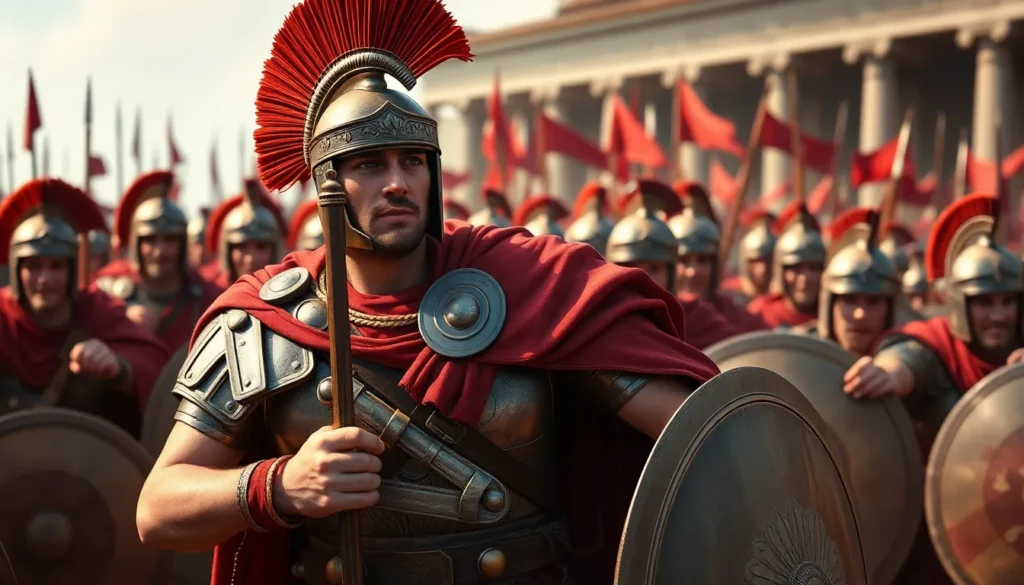
The Roman army was structured into legions, each comprising several cohorts. Each cohort was divided into centuries, and each century was led by a centurion. The centurion was responsible for the training, discipline, and welfare of his soldiers, as well as leading them in battle. Centurions were often experienced soldiers promoted from the ranks due to their merit and leadership qualities. Their distinctive equipment included a transverse crest on their helmets, which set them apart visually on the battlefield.
How It Works
Centurions functioned as both tactical commanders and disciplinarians. In battle, they directed their centuries, ensuring formations were maintained and orders executed under sometimes chaotic conditions. Outside of combat, centurions oversaw daily training, enforced discipline, and managed logistical issues. They were also involved in administrative tasks and served as intermediaries between the rank-and-file soldiers and higher command. The rank of centurion could be further divided into grades, with senior centurions commanding larger or more prestigious units within the legion.

Examples
- Centurion Lucius Vorenus: A fictional example popularized by historical dramas, illustrating the typical role and challenges faced by centurions.
- Gaius Crastinus: A real centurion known for his valor during Julius Caesar’s civil wars, exemplifying the bravery expected of centurions.
- Centurion Titus Pullo: Known from Julius Caesar’s writings, Pullo was noted for his combat prowess and competitive nature within his legion.
Why It Matters
Centurions were critical to the success of the Roman military system. Their leadership ensured discipline and cohesion, which were vital for the effectiveness of Roman legions in various campaigns. The role of centurions also influenced military hierarchy and leadership models in later armies, contributing to the development of professional military officer corps.
Common Misconceptions
Misconception: Centurions commanded exactly 100 soldiers.
Correction: Although the term “centurion” is derived from “century,” the unit typically consisted of about 80 men rather than 100.
Misconception: All centurions were aristocrats or of noble birth.
Correction: Many centurions were promoted from the ranks based on merit and experience, not necessarily from noble families.
Pros and Cons
Pros: Centurions provided experienced leadership, maintained discipline, and improved unit effectiveness. Their presence increased morale and combat readiness.
Cons: The strict discipline enforced by centurions could be harsh, sometimes leading to resentment among soldiers. Their authority also sometimes led to abuses of power.
Comparison Table
| Aspect | Roman Centurion | Legionary Soldier |
|---|---|---|
| Meaning | Officer commanding a century (approx. 80 soldiers) | Common infantry soldier within the legion |
| Role | Leadership, training, discipline enforcement | Combatant following orders |
| Authority Level | Mid-level officer | Rank-and-file |
| Equipment Distinction | Helmet with transverse crest, vine staff | Standard legionary armor and weapons |
| Promotion | Typically from experienced soldiers | Entry-level troops |
Decision Checklist
What is the easiest way to understand Roman Centurions?
The easiest way to understand Roman centurions is to view them as experienced and authoritative mid-level officers who directly commanded groups of soldiers, ensuring discipline and tactical effectiveness within the Roman legion. Their role combined leadership, training, and combat responsibilities, making them essential to the Roman army’s success.
FAQ
What was the primary role of a Roman centurion?
The primary role of a Roman centurion was to command a century of soldiers, ensuring discipline, training, and effective combat leadership within the Roman legion.
How many soldiers did a Roman centurion command?
A Roman centurion typically commanded approximately 80 soldiers, known as a century, despite the name suggesting 100.
Were centurions always from noble families?
No, many centurions were promoted from the ranks based on merit and experience rather than noble birth.


Leave a Reply