
Short Answer
Overview
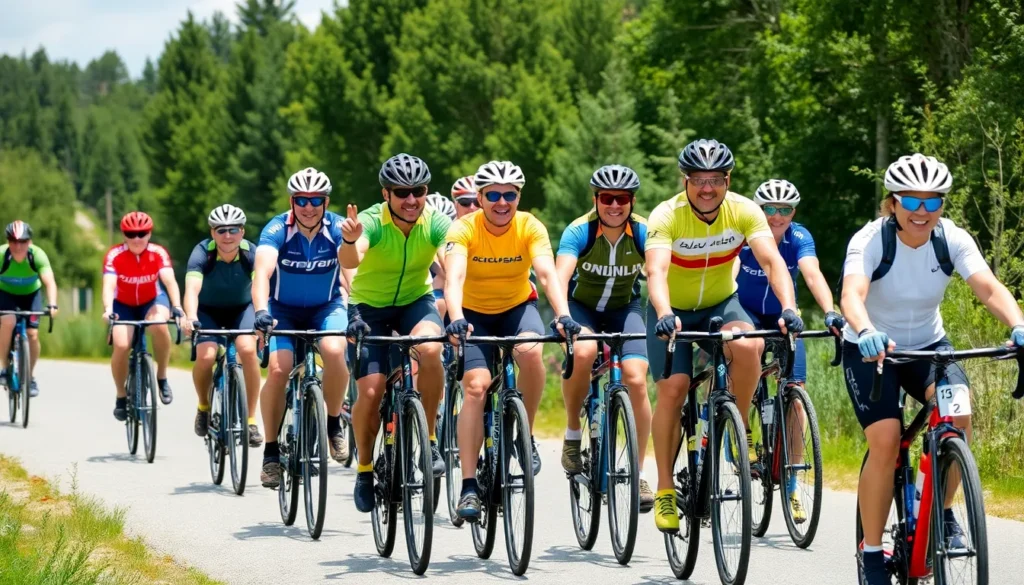
A group ride in cycling refers to an event where multiple cyclists ride together on a planned route or trail. These rides can be informal gatherings among friends or formally organized events by cycling clubs or communities. Group rides emphasize cooperation, safety, and social interaction, making cycling a communal rather than solitary activity. Participants often follow established protocols to maintain smooth traffic flow and ensure the safety of all riders.
Detailed Explanation
Group rides vary in size, pace, and purpose, ranging from casual weekend rides to competitive training sessions. They typically involve a set route and a leader or organizer who guides the group. The rides may serve different purposes such as fitness, socializing, charity fundraising, or training for races. Riders benefit from drafting, where following closely behind another cyclist reduces wind resistance, conserving energy. Additionally, group rides foster a sense of camaraderie and motivation among cyclists.
How It Works
Participants usually meet at a predetermined location and time. The ride leader communicates the route, expected pace, and any specific rules. Riders form a line or peloton, maintaining consistent spacing and speed. Communication is essential; riders use hand signals and verbal cues to indicate turns, hazards, or stopping. Safety is prioritized by adhering to traffic laws and ride etiquette, which often includes no sudden braking, maintaining predictable lines, and respecting other road users.
Examples
- Club Rides: Weekly rides organized by cycling clubs, often categorized by pace and distance to accommodate different skill levels.
- Charity Rides: Group rides organized to raise funds for various causes, attracting a mix of casual and serious cyclists.
- Training Rides: Structured group rides focused on improving cycling performance, often including intervals and strategic pacing.
Why It Matters
Group rides enhance the cycling experience by providing social interaction and mutual support. They can improve safety by increasing visibility and encouraging responsible riding behavior. For many cyclists, group rides are motivational, helping maintain regular exercise and improve skills through shared knowledge and competitive spirit.
Common Misconceptions
Misconception: Group rides are only for experienced cyclists.
Correction: Many group rides cater to various skill levels, with slower, beginner-friendly groups common.
Misconception: Riding in a group is dangerous due to close proximity.
Correction: Proper etiquette and communication reduce risks, making group rides generally safe.
Pros and Cons
Pros: Enhanced motivation, social interaction, energy savings through drafting, improved safety in numbers.
Cons: Potential for accidents if etiquette is ignored, varying skill levels can create challenges, and some rides may be intimidating for novices.
Comparison Table
| Aspect | Group Ride Cycling | Solo Cycling |
|---|---|---|
| Meaning | Multiple cyclists riding together, following rules and etiquette. | Individual cyclist riding alone without organized group support. |
| Social Interaction | High, promotes camaraderie and communication. | Low, solitary experience. |
| Safety | Generally higher due to visibility and group awareness. | Varies, potentially less visible to traffic. |
| Motivation | Often increased through group dynamics. | Depends on individual discipline. |
| Skill Development | Encouraged via shared knowledge and drafting benefits. | Limited by solo riding conditions. |
Decision Checklist
What is the easiest way to understand Group Ride Cycling?
The simplest way to understand group ride cycling is to view it as a coordinated cycling journey shared among riders who follow common rules to maintain safety, cohesion, and enjoyment. It is similar to traveling in a convoy where communication and cooperation enable all participants to travel efficiently and safely together.
FAQ
What is the main purpose of a group ride?
The main purpose is to provide a safe, social, and motivating environment for cyclists to ride together, improve their skills, and enjoy the sport collectively.
Is group riding safe for beginners?
Yes, provided beginners join groups that match their skill level and adhere to proper safety and communication protocols.
How do cyclists communicate during a group ride?
Cyclists use hand signals and verbal cues to indicate upcoming turns, hazards, stops, or changes in pace to maintain safety and coordination.






Leave a Reply