
Short Answer
Overview
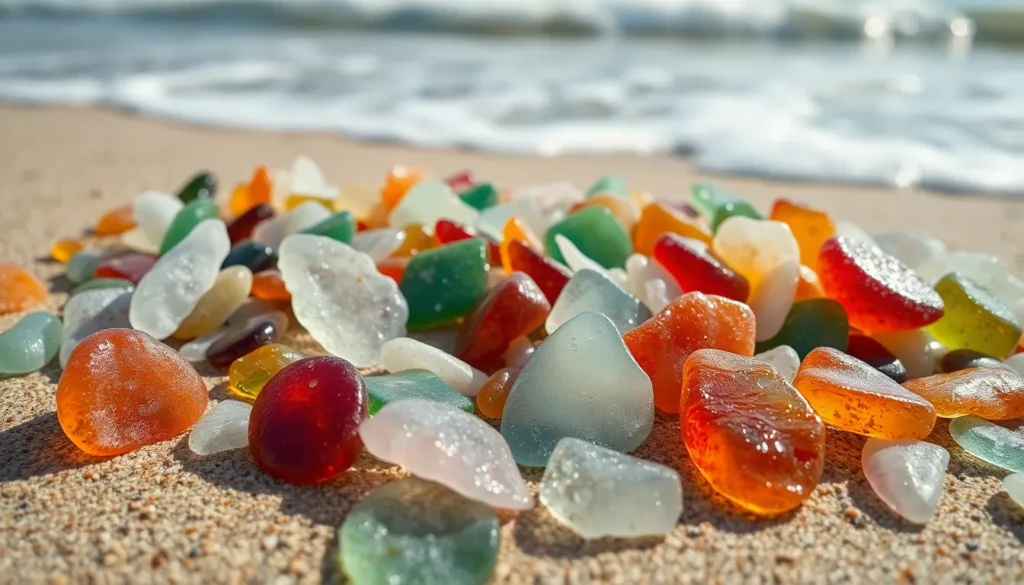
Sea glass is naturally weathered glass fragments found on shorelines, often originating from broken bottles, jars, or other glass objects that have been discarded or lost in marine environments. Over time, the action of waves, sand, and saltwater smooths and frosts the glass pieces, creating distinctive, rounded, and opaque fragments valued for their aesthetic and collectible qualities.
Detailed Explanation
Sea glass forms when glass objects enter aquatic environments through accidental loss, disposal, or shipwrecks. The movement of water, combined with abrasive forces from sand and rocks, gradually breaks down the sharp edges of the glass. The surface of the glass also undergoes chemical weathering due to prolonged exposure to saltwater, resulting in a frosted or matte appearance. This weathering process can take several decades to centuries, depending on environmental conditions and the type of glass involved.
How It Works
The formation of sea glass involves both mechanical and chemical processes. Mechanical abrasion occurs as glass fragments are tumbled by waves and collide with sand and other particles, smoothing their edges and rounding their shape. Concurrently, chemical weathering affects the glass surface, where saltwater interacts with the silica structure of the glass, leaching elements and creating a frosted texture. This dual process transforms sharp, clear glass shards into smooth, frosted pieces characteristic of sea glass.
Examples
- Common Colors: Sea glass is typically found in shades of green, brown, and clear, often originating from beverage bottles and jars.
- Rare Colors: Blue, red, and purple sea glass are less common and usually come from decorative glass, old medicine bottles, or maritime signal glass.
- Shapes and Sizes: The natural tumbling process results in a wide variety of shapes, from small pebbles to larger, flattened pieces, all with smooth textures.
Why It Matters
Sea glass holds cultural and environmental significance. It serves as a tangible reminder of human interaction with marine environments and the long-term impact of glass pollution. Additionally, it is valued by artists, jewelers, and collectors for its unique appearance and natural origin. Understanding sea glass also contributes to marine conservation awareness by highlighting the persistence of human-made materials in natural settings.
Common Misconceptions
Misconception: Sea glass is manufactured by humans.
Correction: Sea glass is naturally formed through environmental processes acting on discarded glass over time, not artificially produced.
Misconception: All smooth glass found on beaches is sea glass.
Correction: Only glass that has been naturally weathered and frosted by the sea qualifies as sea glass; recently broken glass with sharp edges is not sea glass.
Pros and Cons
Comparison Table
| Aspect | Sea Glass | Regular Glass |
|---|---|---|
| Meaning | Weathered, naturally smoothed glass fragments found on shorelines | Manufactured, unweathered glass objects or shards with sharp edges |
| Appearance | Frosted, smooth, rounded edges | Clear or transparent with sharp, jagged edges |
| Formation Time | Decades to centuries through natural processes | Instantaneous or manufactured |
| Environmental Impact | Result of glass pollution but transformed into a natural artifact | Pollution if discarded improperly |
Decision Checklist
- Use this if you are interested in collecting natural beach artifacts or crafting with unique materials.
- Avoid this if you are seeking new, pristine glass for industrial or precision purposes.
- Check this first whether the glass has been naturally weathered to avoid sharp or hazardous pieces.
What is the easiest way to understand Sea Glass?
Sea glass can be best understood as broken glass that has been naturally polished and frosted by the ocean’s movement and elements over many years, resulting in smooth, colorful pieces that are often collected for their beauty and uniqueness.
FAQ
How long does it take for sea glass to form?
The formation of sea glass can take several decades to centuries, depending on environmental factors like wave activity, sand abrasion, and chemical weathering.
Is all smooth glass found on beaches considered sea glass?
No. Only glass that has been naturally weathered and frosted by ocean processes qualifies as sea glass. Recently broken glass with sharp edges is not considered sea glass.
Are certain colors of sea glass more valuable?
Yes. Rare colors such as blue, red, and purple tend to be more valuable to collectors due to their scarcity, while common colors like green, brown, and clear are more abundant.




Leave a Reply