
Short Answer
Overview
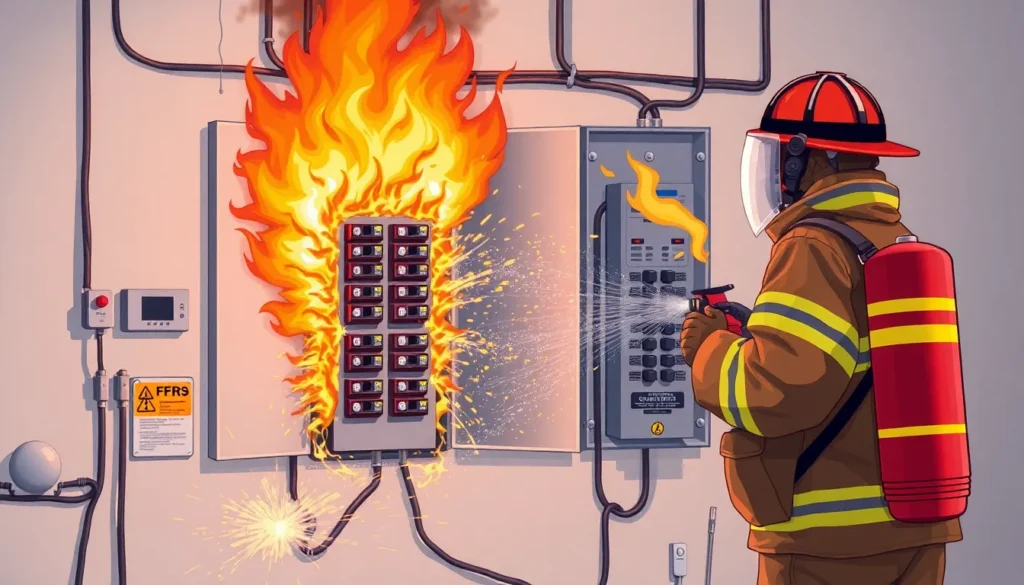
A Class C fire is a type of fire that involves energized electrical equipment. These fires are unique because the presence of electricity creates additional hazards that require specific firefighting techniques and extinguishing agents. The classification system for fires, including Class C, is designed to assist firefighters and safety personnel in selecting the proper extinguishing method to prevent injury and property damage.
Detailed Explanation
Class C fires specifically involve electrical devices such as wiring, circuit breakers, transformers, and appliances that are energized or plugged into a power source. Unlike other fire classes that are defined by the type of fuel burning (e.g., wood, flammable liquids), Class C fires are defined by the presence of electricity. The electrical current poses a risk of electrical shock or electrocution, making the use of water-based extinguishers potentially dangerous.
How It Works
When a Class C fire occurs, the key danger is the electrical current feeding the fire. Extinguishing agents for these fires must be non-conductive to avoid transmitting electricity to the user. Common agents include carbon dioxide (CO2), dry chemical powders, and halon or halon-replacement agents. These extinguishers work by interrupting the fire triangle (heat, fuel, oxygen) without conducting electricity.
Before attempting to extinguish a Class C fire, it is critical to de-energize the equipment if possible, thereby reducing the risk of shock and preventing re-ignition after extinguishing.
Examples
- Electrical fires in household appliances such as microwaves, refrigerators, or computers.
- Fires originating from electrical panels or wiring in residential, commercial, or industrial buildings.
- Malfunctioning electrical transformers or power distribution equipment catching fire.
Pros and Cons
Pros:
- Class C fire extinguishers are designed to safely fight electrical fires without conducting electricity.
- Using appropriate extinguishing agents minimizes risk of injury from electrical shock.
- They can be used effectively on energized electrical equipment without requiring prior de-energizing in some cases.
Cons:
- Incorrect extinguishing agents, such as water, can be dangerous and exacerbate electrical fires.
- Class C fires may reignite if electrical power is not disconnected.
- Specialized extinguishers may not be readily available in all settings.
Comparison Table
| Aspect | Class C Fire | Alternative/Related Fire Class (Class A) |
|---|---|---|
| Meaning | Fire involving energized electrical equipment | Fire involving ordinary combustibles like wood and paper |
| Extinguishing Agents | Non-conductive agents such as CO2, dry chemical powders | Water, foam, multipurpose dry chemical |
| Primary Hazard | Electrical shock and electrocution | Burning solids and smoke inhalation |
Decision Checklist
- Use this if you encounter a fire involving active electrical equipment or energized electrical wiring.
- Avoid this if the electrical source cannot be de-energized and water or conductive agents are the only extinguishing options available.
- Check this first whether the power can safely be turned off before applying an extinguisher, to reduce risk of shock and fire re-ignition.
What is the easiest way to understand a Class C Fire?
Think of a Class C fire as an electrical fire where the presence of live current makes typical firefighting methods dangerous. The safest approach involves using extinguishers that do not conduct electricity and, ideally, cutting off the power supply before firefighting.
FAQ
What makes a Class C fire different from other fire classes?
Class C fires are distinguished by involving energized electrical equipment, which introduces the risk of electrical shock, requiring the use of non-conductive extinguishing agents.
Can I use water to put out a Class C fire?
No, using water on a Class C fire is dangerous because water conducts electricity and can cause electrical shock or worsen the fire.
What is the safest way to extinguish a Class C fire?
The safest method is to first de-energize the electrical equipment if possible, then use a non-conductive fire extinguisher such as carbon dioxide or dry chemical agents.


Leave a Reply