
Short Answer
Overview
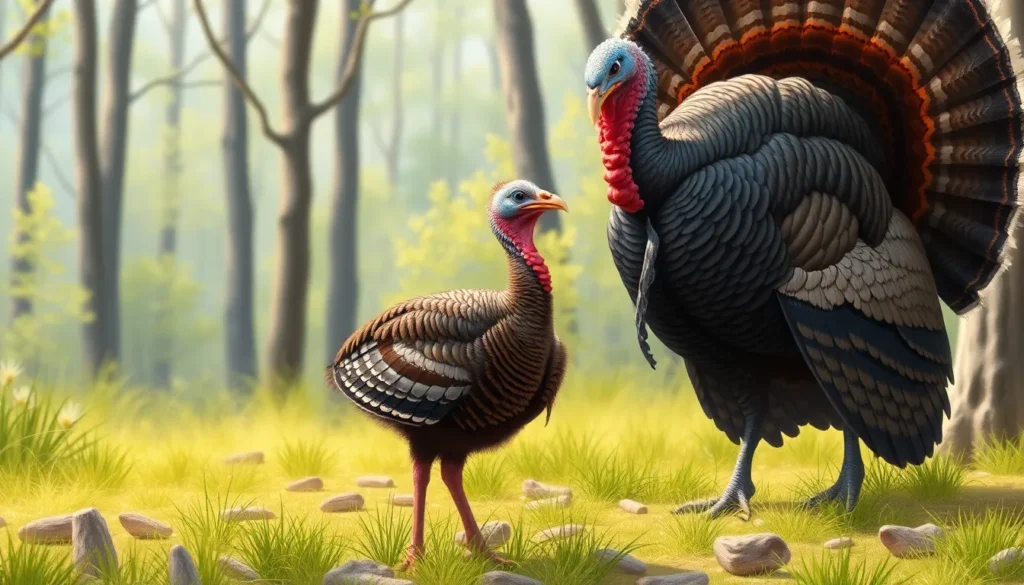
A Jake turkey is a term used primarily in North America to describe a young male wild turkey (Meleagris gallopavo) that is less than one year old. Jakes are distinguished from mature male turkeys, known as toms or gobblers, by their physical size, plumage, and behavior. The term is commonly used by hunters, bird watchers, and wildlife biologists to identify and differentiate juvenile male turkeys during the breeding season and throughout their first year of life.
Detailed Explanation
Jake turkeys usually hatch in late spring and spend their first months growing and developing their adult features. By autumn and the following spring, jakes exhibit certain characteristics that set them apart from fully mature males. While jakes have begun to develop the iridescent feathers and the distinctive beard (a cluster of bristle-like feathers on the chest) typical of male turkeys, these features are generally shorter and less pronounced compared to toms. Their spurs, located on the lower legs, are smaller and less sharp than those of mature males.
In terms of size, jakes are smaller and less robust than toms. Behaviorally, jakes may attempt to compete with mature males for mates but are usually less dominant. Their vocalizations, including the gobble, tend to be softer or less resonant. These distinctions diminish as the bird matures beyond its first year.
How It Works
Identification of a Jake turkey involves observing several physical and behavioral markers. Key physical signs include smaller body size, shorter beard length (usually less than three inches), less developed spurs (often less than half an inch), and a less pronounced wattle and snood (the fleshy protuberances on the head and neck). Additionally, jakes may have less vibrant coloration on the head and neck, often showing more dull or mottled patterns.
During the breeding season, jakes may display courtship behaviors such as strutting and gobbling, but they often yield to older toms in dominance hierarchies. Their role in the population is critical as they represent the next generation of breeding males.
Examples
- In wildlife management, distinguishing jakes from toms helps in setting hunting regulations, such as limits on harvesting young males versus mature males to maintain population balance.
- Birdwatchers in the eastern United States often identify jakes in the spring by their smaller size and less developed spurs when observing wild turkey flocks.
- Hunters may specifically target jakes during certain seasons because they are more abundant and less experienced than mature toms, though this practice varies by region and regulation.
Pros and Cons
Pros: Jakes contribute to the genetic diversity and sustainability of wild turkey populations by maturing into breeding males. They also provide opportunities for wildlife observation and regulated hunting, supporting conservation efforts.
Cons: Because jakes are less experienced and smaller, they are more vulnerable to predators and hunting pressure. Misidentifying jakes as mature males can lead to unintentional overharvesting of young turkeys, potentially impacting population dynamics negatively.
Comparison Table
| Aspect | Jake Turkey | Tom Turkey (Mature Male) |
|---|---|---|
| Meaning | Young male wild turkey under one year old | Adult male wild turkey, typically over one year old |
| Size | Smaller and less robust | Larger and more muscular |
| Beard Length | Shorter (usually less than 3 inches) | Longer (often over 3 inches) |
| Spurs | Small and blunt | Longer and sharper |
| Behavior | Less dominant, softer gobble | Dominant, loud gobble |
Decision Checklist
- Use this if you need to identify or manage young male turkeys under one year old.
- Avoid this if you are referring to fully mature male turkeys or females.
- Check this first if you are determining hunting regulations or observing turkey behavior during spring mating season.
What is the easiest way to understand Jake Turkey?
The easiest way to understand a Jake turkey is to recognize it as a juvenile male wild turkey that has not yet reached full maturity, identifiable by its smaller size, less developed physical features like the beard and spurs, and less dominant behavior compared to mature tom turkeys.
FAQ
What distinguishes a Jake turkey from a tom turkey?
A Jake turkey is a young male turkey under one year old, typically smaller, with shorter beards and less developed spurs compared to a mature tom turkey, which is larger and more physically prominent.
Can Jake turkeys breed?
While jakes may attempt to breed during their first spring, they are generally less successful and less dominant than mature toms, who typically control the breeding activities.
Why is it important to identify Jake turkeys?
Identifying Jakes helps wildlife managers set appropriate hunting regulations to protect young males, ensuring sustainable populations and balanced age structures within wild turkey populations.





Leave a Reply