
Short Answer
Overview
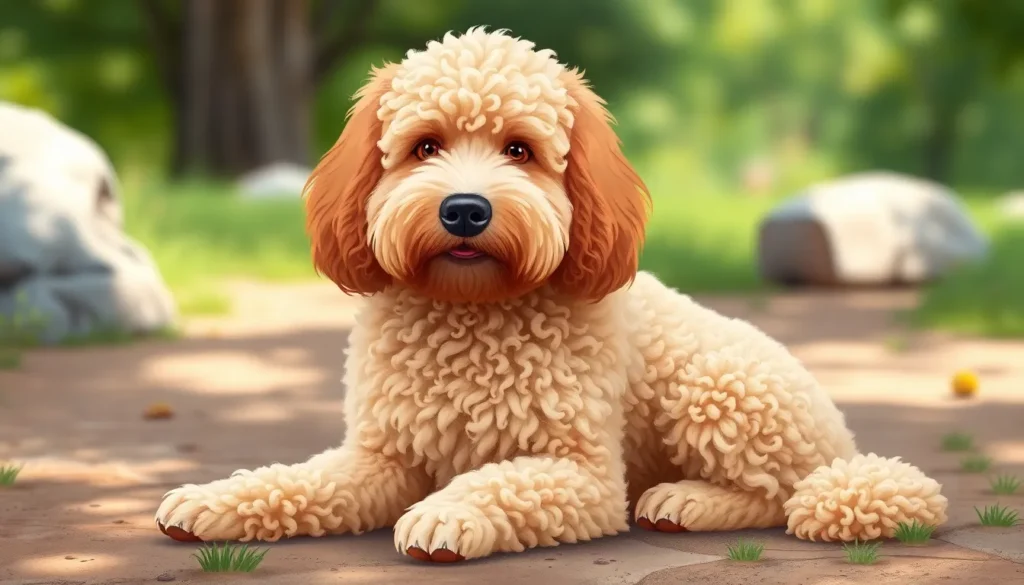
A Double Doodle dog is a hybrid or designer dog breed created by crossing two different Doodle breeds, such as the Labradoodle and the Goldendoodle. Both Labradoodles and Goldendoodles themselves are crossbreeds between Poodles and either Labrador Retrievers or Golden Retrievers, respectively. The Double Doodle aims to combine desirable traits from these breeds, particularly focusing on temperament, intelligence, and hypoallergenic coat qualities.
Detailed Explanation
The Double Doodle is not a purebred dog but rather a second-generation hybrid, often referred to as a multigenerational Doodle. By breeding two Doodle types, breeders hope to produce offspring with enhanced qualities including lower shedding, friendly disposition, and high trainability. These dogs are often sought after for families and individuals with allergies due to their Poodle heritage, which typically results in a curly or wavy, low-shedding coat.
Because the breed is a hybrid, physical and behavioral characteristics can vary significantly among individual dogs. This variability depends on the genetic influence from each parent breed. Commonly, Double Doodles display medium to large size, with coats ranging from curly to wavy, and colors that include cream, apricot, black, and chocolate.
How It Works
The creation of a Double Doodle involves breeding two first-generation Doodles, such as a Labradoodle and a Goldendoodle. Each of these parent breeds is itself a cross between a Poodle and a retriever breed. The resulting puppies inherit a mix of traits from all four original breeds (Poodle, Labrador Retriever, Golden Retriever), making their genetic makeup more complex than first-generation hybrids.
This breeding strategy aims to reinforce specific traits such as intelligence, sociability, and hypoallergenic coats by combining the best attributes of the parent Doodle breeds. However, because of genetic diversity, outcomes in appearance, coat type, and temperament can be unpredictable, requiring responsible breeding and socialization.
Examples
- Labradoodle x Goldendoodle: The most common Double Doodle combination, blending the Labrador Retriever and Golden Retriever ancestry through their respective Doodle breeds.
- Goldendoodle x Bernedoodle: A variation where a Goldendoodle is crossed with a Bernedoodle (a Poodle and Bernese Mountain Dog mix), creating a more diverse genetic background.
- Labradoodle x Aussiedoodle: Crossing Labradoodles with Aussiedoodles (Australian Shepherd and Poodle mix) to produce a hybrid with herding instincts and Poodle traits.
Why It Matters
Double Doodles are significant in the context of designer dog breeding due to their potential to offer desirable companion traits such as hypoallergenic coats and gentle temperaments. For allergy sufferers seeking family-friendly pets, these dogs provide an alternative to traditional breeds known for shedding and allergens. Additionally, their intelligence and sociability make them suitable for various roles, including therapy and assistance dogs.
Common Misconceptions
Misconception: All Double Doodles are hypoallergenic.
Correction: While Double Doodles often have low-shedding coats due to their Poodle ancestry, hypoallergenic qualities vary between individual dogs and cannot be guaranteed.
Misconception: Double Doodles have consistent appearance and temperament.
Correction: Due to their mixed heritage, Double Doodles exhibit a wide range of physical and behavioral traits, making consistency difficult to predict.
Pros and Cons
Pros:
- Potentially hypoallergenic coat, suitable for some allergy sufferers.
- Friendly and sociable temperament, good with families and children.
- Highly intelligent and trainable, often excelling in obedience and service roles.
- Low to moderate shedding compared to many non-Poodle breeds.
Cons:
- Variability in size, appearance, and temperament can be unpredictable.
- Requires regular grooming to maintain coat health and prevent matting.
- As hybrids, they may have health issues common to the parent breeds if not responsibly bred.
- Potentially higher cost due to designer breed status.
Comparison Table
| Aspect | Double Doodle Dog | Single Doodle (e.g., Labradoodle) |
|---|---|---|
| Meaning | Crossbreed of two Doodle breeds (e.g., Labradoodle x Goldendoodle) | Crossbreed of Poodle and one retriever breed (e.g., Labrador Retriever or Golden Retriever) |
| Coat | Varies from curly to wavy, often low-shedding but inconsistent | Generally curly or wavy, low-shedding |
| Temperament | Friendly and intelligent, but more variable | Consistently friendly, intelligent, and trainable |
| Size | Medium to large; varies depending on parent breeds | Medium to large; more predictable size range |
| Health | Mixed genetic background, variable health issues | Health risks related to Poodle and retriever traits |
Decision Checklist
What is the easiest way to understand Double Doodle Dogs?
The easiest way to understand Double Doodle dogs is to think of them as second-generation crossbreeds that combine the traits of two popular Doodle breeds, all originally derived from Poodles mixed with retriever breeds. Their appeal lies in their potential hypoallergenic coat and friendly disposition, but their mixed heritage means they can vary widely in appearance and personality.
FAQ
Are Double Doodle dogs hypoallergenic?
Double Doodles often have low-shedding coats due to their Poodle heritage, which may reduce allergens. However, hypoallergenic qualities vary among individual dogs, and no dog breed is completely hypoallergenic.
What size do Double Doodle dogs typically reach?
Double Doodles generally range from medium to large size, depending on the size of the parent Doodle breeds. They typically weigh between 40 to 70 pounds, but size can vary due to mixed genetics.
How much grooming do Double Doodle dogs require?
Double Doodles require regular grooming to maintain their curly or wavy coats. This includes brushing several times a week to prevent matting and professional grooming every six to eight weeks.






Leave a Reply