
Short Answer
Overview
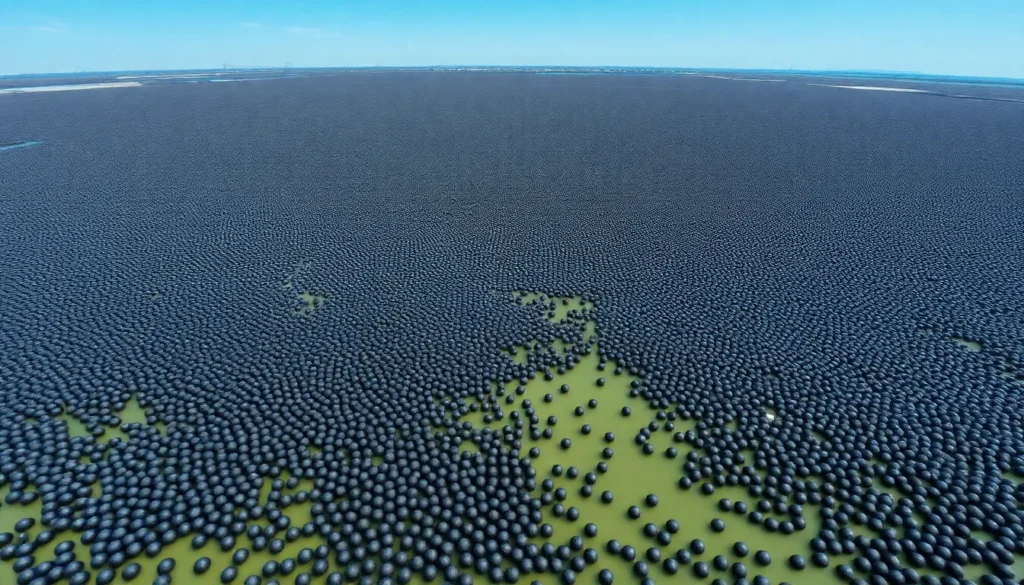
A shade ball is a small, hollow plastic sphere designed to float on the surface of bodies of water such as reservoirs, ponds, and treatment facilities. These balls serve primarily to reduce water evaporation, control algae growth, and improve water quality. By covering the water surface, shade balls block sunlight and limit the interaction between water and air, thereby helping to conserve water resources and prevent contamination.
Detailed Explanation
Shade balls are typically made from high-density polyethylene (HDPE) or similar durable plastic materials that are resistant to UV radiation and chemical degradation. Each ball is approximately the size of a baseball or slightly larger, often around 4 inches (10 cm) in diameter, and filled with inert gas or air to maintain buoyancy. When deployed, millions of these balls are spread across a water surface to form a floating layer.
The concept was initially developed as a response to water scarcity and contamination issues, particularly in arid regions where evaporation rates are high. The balls help to reduce water loss by providing physical coverage that limits direct exposure to sunlight and wind, which are major factors in evaporation. Additionally, by blocking sunlight, shade balls inhibit the photosynthesis process in algae and other aquatic plants, reducing their proliferation and thus improving water quality.
How It Works
Shade balls function by creating a physical barrier on the water surface. This barrier reduces the surface area exposed to sunlight and air, both of which contribute to evaporation. The balls are dark-colored, typically black or dark gray, to maximize the absorption of sunlight and prevent light penetration into the water below.
By limiting light penetration, shade balls inhibit the growth of algae and aquatic plants that rely on sunlight for photosynthesis. This helps prevent problems such as algal blooms, which can degrade water quality and produce toxins. Moreover, the balls reduce the formation of harmful chemical byproducts such as bromate in treated water reservoirs by limiting the interaction of sunlight with chemical disinfectants like bromide.
The deployment of shade balls is often carried out using specialized equipment to evenly distribute the balls across large water surfaces. Once in place, they require minimal maintenance and can remain effective for several years, depending on environmental conditions.
Examples
- Los Angeles Reservoir: In 2015, the Los Angeles Department of Water and Power deployed over 96 million shade balls to cover the Los Angeles Reservoir. This effort was aimed at reducing evaporation and limiting chemical reactions that could produce harmful byproducts in the drinking water supply.
- California Drought Response: During periods of severe drought, shade balls have been used in various California water bodies to conserve water by reducing evaporation rates, contributing to water resource management strategies.
- Industrial and Agricultural Applications: Shade balls are also utilized in industrial water storage and agricultural reservoirs to maintain water quality and reduce losses due to evaporation.
Why It Matters
Water scarcity is a critical global challenge, especially in arid and drought-prone regions. Shade balls offer a practical and cost-effective solution to reduce water losses caused by evaporation. By conserving water, they help ensure a more reliable supply for residential, agricultural, and industrial uses.
Furthermore, shade balls contribute to environmental protection by limiting algae growth and reducing harmful chemical byproducts in water supplies. This enhances water safety and reduces costs associated with water treatment and reservoir management.
Common Misconceptions
Misconception: Shade balls completely stop evaporation.
Correction: While shade balls significantly reduce evaporation, they do not entirely prevent it. Some water loss may still occur due to factors such as wind and temperature.
Misconception: Shade balls are harmful to aquatic life.
Correction: Shade balls are designed to float on the surface and do not typically interfere with aquatic ecosystems below the water surface. However, their environmental impact should be assessed based on specific local conditions.
Pros and Cons
Comparison Table
| Aspect | Shade Ball | Alternative: Floating Covers |
|---|---|---|
| Meaning | Small plastic spheres floating on water to reduce evaporation and block sunlight. | Large sheets or membranes placed over water surfaces serving a similar purpose. |
| Material | High-density polyethylene plastic balls. | Plastic or synthetic membrane sheets. |
| Deployment | Distributed evenly as individual units. | Laid or anchored over water areas. |
| Maintenance | Minimal, generally durable for several years. | Requires inspection and repair for tears or wear. |
| Effectiveness | Reduces evaporation and algae growth effectively. | Also reduces evaporation but can be less adaptable to surface changes. |
Decision Checklist
- Use this if: You need to reduce evaporation in large reservoirs with irregular surfaces.
- Avoid this if: You require complete evaporation prevention or have concerns about plastic pollution.
- Check this first: Local regulations on water body modifications and environmental impact assessments.
What is the easiest way to understand Shade Balls?
Think of shade balls as thousands of small plastic beach balls placed on the surface of a pool to cover it. Their dark color blocks sunlight and reduces water loss by evaporation while preventing algae from growing, making them a practical tool for conserving and protecting water resources.
FAQ
Do shade balls completely prevent water evaporation?
No, shade balls significantly reduce evaporation by covering the water surface and blocking sunlight; however, they do not stop evaporation entirely due to factors like wind and temperature.
Are shade balls environmentally safe?
Shade balls are made of durable plastics designed to be chemically inert and UV resistant. While they are generally safe, their environmental impact should be evaluated depending on local ecosystems and disposal methods.
How long do shade balls last once deployed?
Shade balls typically last several years, often between 5 to 10 years, depending on environmental conditions such as sunlight exposure and water chemistry.

Leave a Reply