
Short Answer
Overview
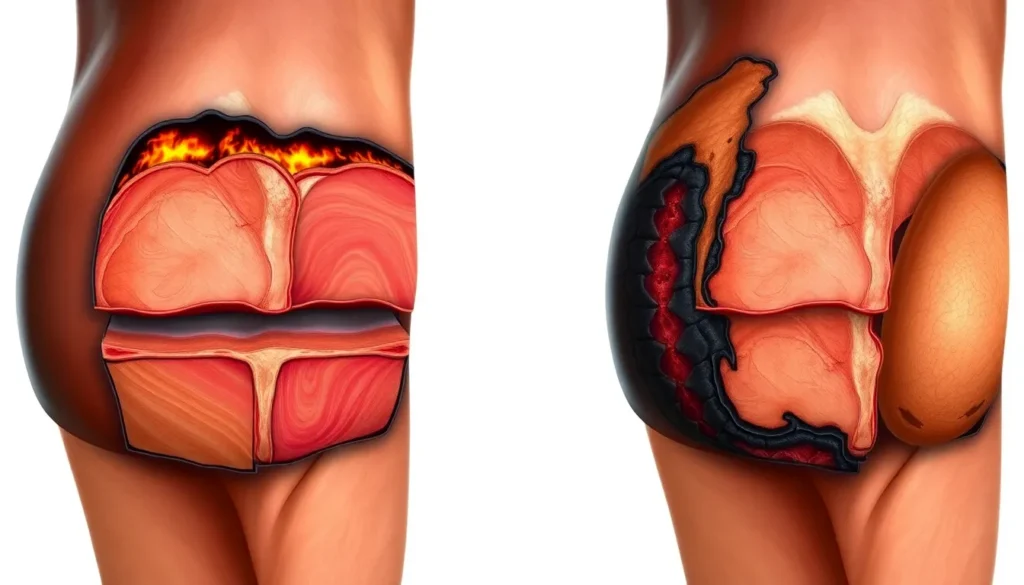
A 4th degree burn is the most severe classification of burn injury, involving full-thickness destruction of the skin and extending into underlying tissues such as muscle, tendons, and bone. Unlike 1st, 2nd, or 3rd degree burns, which affect only the superficial or deeper layers of the skin, 4th degree burns result in significant tissue necrosis and often lead to permanent damage or loss of function in the affected area. These burns are medical emergencies requiring immediate and intensive treatment.
Detailed Explanation
The degree classification of burns is based on the depth and severity of tissue damage. A 4th degree burn penetrates beyond the dermis and subcutaneous tissue, affecting muscle, ligaments, tendons, and sometimes bone. This level of injury results in charring, loss of sensation due to nerve destruction, and often exposes underlying structures. The skin in the affected area is typically blackened or charred and dry, with little to no possibility of natural healing.
Causes of 4th degree burns include prolonged exposure to high heat sources such as fire, electricity, chemicals, or extreme friction. Electrical burns are particularly noted for causing deep tissue damage without extensive surface injury, making diagnosis challenging.
How It Works
The mechanism of injury in 4th degree burns involves intense thermal or electrical energy that causes irreversible coagulation of proteins and destruction of cells in both the skin and deeper tissues. Blood vessels in the affected area are damaged, leading to compromised circulation, which further impedes healing. Nerve endings are destroyed, which may reduce pain sensation locally despite the severity of injury.
The body’s response to such deep tissue injury includes inflammation, risk of infection, fluid loss, and potential systemic complications such as shock. Prompt medical intervention aims to stabilize the patient, prevent infection, manage pain, and replace lost tissue through surgical methods.
Examples
- Severe contact with open flames or prolonged exposure to hot metal surfaces causing full-thickness charred skin and muscle damage.
- Electrical burns from high-voltage sources that penetrate skin and fat to damage underlying muscle and bone.
- Chemical burns involving strong acids or alkalis that deeply penetrate skin and destroy connective tissue and bone.
Why It Matters
Understanding 4th degree burns is essential because these injuries represent life-threatening conditions that require urgent and complex medical care. Without prompt treatment, patients are at risk for severe infections, amputation, and death. Awareness helps in early recognition and appropriate response, potentially improving outcomes and reducing long-term disability.
Common Misconceptions
Misconception: All burns are equally painful.
Correction: 4th degree burns often destroy nerve endings, which can reduce pain sensation in the affected area despite the severity.
Misconception: 4th degree burns can heal on their own.
Correction: These burns cause irreversible tissue damage and do not heal without surgical intervention such as debridement or amputation.
Pros and Cons
Pros: None inherent to the injury itself; however, knowledge of 4th degree burns can lead to faster diagnosis and treatment.
Cons: Extensive tissue destruction, high risk of infection, long-term disability, potential need for amputation, and significant medical costs.
Comparison Table
| Aspect | 4th Degree Burn | 3rd Degree Burn |
|---|---|---|
| Meaning | Full-thickness burn extending into muscle, bone, or deeper tissues | Full-thickness burn involving all skin layers but not extending beyond subcutaneous tissue |
| Appearance | Blackened, charred, dry, often with visible underlying structures | White, leathery, or charred but skin remains intact |
| Healing | Does not heal without surgical intervention | Requires grafting, no spontaneous healing |
| Pain Sensation | Often absent due to nerve destruction | Usually absent or minimal due to nerve damage |
| Common Causes | Prolonged flame, electrical, chemical burns | Severe burns from heat, chemicals, or scalds |
Decision Checklist
What is the easiest way to understand 4th Degree Burns?
Think of a 4th degree burn as the most extreme burn injury where not only the skin but also the muscles, tendons, and bones beneath are burnt, often appearing black and charred, requiring urgent surgical care and often resulting in permanent tissue loss.
FAQ
What distinguishes a 4th degree burn from other burns?
A 4th degree burn extends beyond the skin and fat layers into muscle, tendons, or bone, causing complete tissue destruction, whereas other burns affect only the skin layers.
Can 4th degree burns heal without surgery?
No, 4th degree burns do not heal naturally and require surgical intervention such as debridement or amputation to remove dead tissue and promote recovery.
Are 4th degree burns painful?
They may not be painful at the site of injury because nerve endings are destroyed, but surrounding tissues may still experience pain, and the injury is extremely serious.





Leave a Reply