
Short Answer
Overview
Anti-Müllerian hormone (AMH) is a protein hormone produced by cells in ovarian follicles. AMH levels in the blood are commonly measured as an indicator of a woman’s ovarian reserve, which reflects the quantity of remaining eggs. Understanding what constitutes a good AMH level is important for assessing fertility potential and planning for pregnancy.
Detailed Explanation
AMH levels vary naturally by age and individual biological factors. Typically, younger women have higher AMH levels, indicating a greater number of viable eggs. AMH levels are measured in nanograms per milliliter (ng/mL) or picomoles per liter (pmol/L). While exact cutoffs may differ slightly based on laboratory standards, general categories include:
- High AMH: Above approximately 4.0 ng/mL — often seen in younger women or those with polycystic ovary syndrome (PCOS).
- Normal (Good) AMH: Approximately 1.0 to 4.0 ng/mL — considered an adequate ovarian reserve for pregnancy in reproductive-age women.
- Low AMH: Below approximately 1.0 ng/mL — may suggest diminished ovarian reserve and potentially reduced fertility.
It is important to note that AMH alone does not determine fertility; factors such as egg quality, uterine health, and partner fertility also play significant roles.
How It Works
AMH is secreted by granulosa cells of early developing ovarian follicles. Since these follicles represent the pool of potential eggs, AMH levels correlate with the number of remaining follicles. Unlike other hormones such as follicle-stimulating hormone (FSH), AMH levels are relatively stable throughout the menstrual cycle, making AMH a convenient marker for ovarian reserve testing.
In the context of fertility assessment, measuring AMH helps estimate the ovarian response to stimulation in assisted reproductive technologies (ART) like in vitro fertilization (IVF). Higher AMH levels generally predict a better response to ovarian stimulation protocols.
Examples
- A 28-year-old woman with an AMH level of 3.2 ng/mL is typically considered to have a good ovarian reserve and a favorable chance of conception naturally or with fertility treatment.
- A 35-year-old woman with an AMH level of 0.8 ng/mL may have a diminished ovarian reserve, which could indicate a need for earlier fertility intervention.
- A woman with an AMH level above 5.0 ng/mL may have polycystic ovary syndrome (PCOS), which can affect ovulation and fertility despite high ovarian reserve.
Pros and Cons
- Pros: AMH testing is minimally invasive, cycle-independent, and provides useful information about ovarian reserve and fertility potential.
- Cons: AMH does not measure egg quality or guarantee pregnancy; normal or high AMH levels do not ensure fertility, and low levels do not confirm infertility.
Comparison Table
| Aspect | AMH Level | Alternative/Related Topic (FSH Level) |
|---|---|---|
| Meaning | Indicator of ovarian reserve based on early follicle count. | Follicle-stimulating hormone level, indicative of ovarian function, varies with cycle phase. |
| Measurement Stability | Relatively stable throughout menstrual cycle. | Varies significantly with cycle phase, typically measured on day 3. |
| Fertility Prediction | Predicts ovarian response to stimulation; does not directly measure egg quality. | Used to assess ovarian function but less predictive of response than AMH. |
Decision Checklist
- Use this if: You want to assess ovarian reserve to understand fertility potential or plan fertility treatment.
- Avoid this if: You seek a complete assessment of fertility; AMH should be part of a broader evaluation including other hormonal tests and clinical factors.
- Check this first: Your age and menstrual cycle regularity, and consult a healthcare provider for comprehensive fertility evaluation.
What is the easiest way to understand AMH levels?
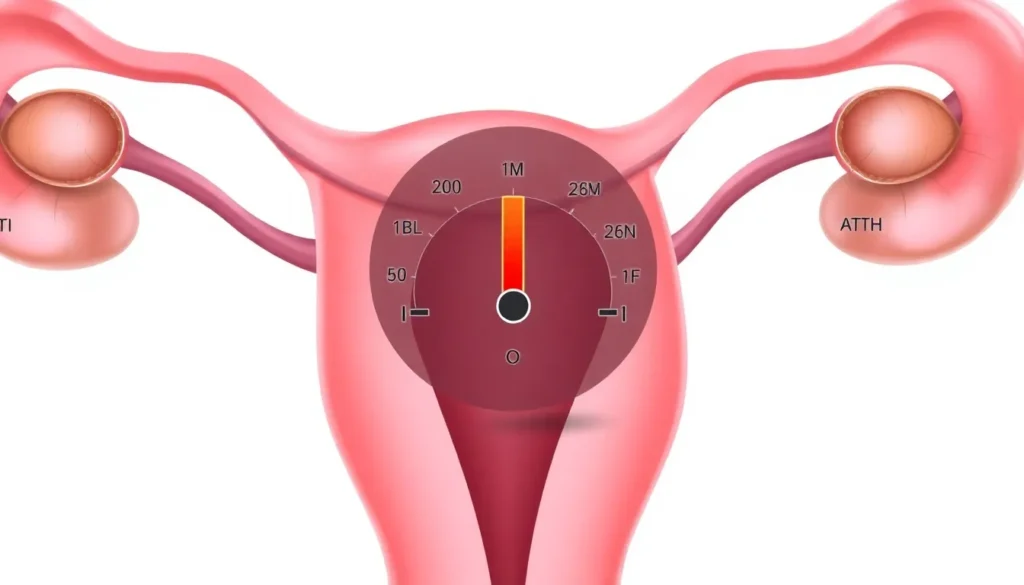
Think of AMH as a marker of how many eggs a woman has left, similar to a fuel gauge in a car. Higher AMH levels indicate more “fuel” for fertility, but just like fuel quality matters, egg quality and other health factors also influence the chances of pregnancy.
FAQ
What is considered a good AMH level for pregnancy?
Generally, an AMH level between 1.0 and 4.0 ng/mL is considered favorable for fertility in reproductive-age women, but this varies with age and individual health.
Can a low AMH level mean I cannot get pregnant?
A low AMH level indicates diminished ovarian reserve but does not definitively predict infertility. Many women with low AMH conceive naturally or with assisted reproduction.
Does AMH level change during the menstrual cycle?
AMH levels are relatively stable throughout the menstrual cycle, making it a convenient marker for assessing ovarian reserve at any cycle day.





Leave a Reply