
Short Answer
Overview
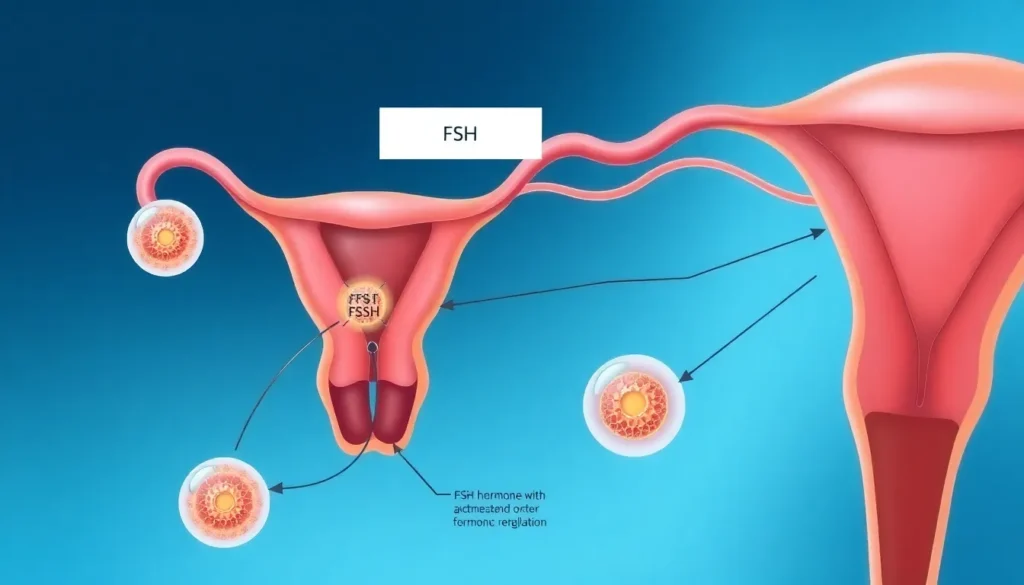
Follicle-stimulating hormone (FSH) is a glycoprotein hormone produced by the anterior pituitary gland that plays a critical role in human reproduction. In women, FSH regulates the development, growth, pubertal maturation, and reproductive processes of ovarian follicles. Monitoring FSH levels is a common method used by healthcare providers to assess fertility potential, particularly ovarian reserve, which is an indicator of a woman’s capacity to conceive.
Detailed Explanation
FSH levels fluctuate naturally throughout the menstrual cycle, peaking just before ovulation. Blood tests to measure FSH are typically performed on day 3 of the menstrual cycle (early follicular phase) to provide a standardized point for comparison. Normal FSH levels vary with age but generally fall within the range of 3 to 10 international units per liter (IU/L) for women of reproductive age.
Elevated FSH levels, especially above 10-12 IU/L on day 3, may indicate diminished ovarian reserve or reduced ovarian function, which can make conception more challenging. Conversely, very low FSH levels might suggest hypogonadotropic hypogonadism or other hormonal imbalances affecting fertility.

How It Works
FSH stimulates the growth of ovarian follicles, each containing an immature egg. As follicles develop, they produce estrogen, which provides feedback to the pituitary gland to regulate FSH secretion through a negative feedback loop. This hormonal interplay ensures that typically only one follicle reaches full maturation and ovulation each cycle.
When ovarian reserve declines, the ovaries produce less estrogen and inhibin, leading to less negative feedback and consequently higher FSH levels. Elevated FSH is thus a compensatory response indicating that the pituitary gland is signaling more strongly to stimulate the ovaries.
Examples
- A 28-year-old woman with an FSH level of 6 IU/L on day 3 is generally considered to have normal ovarian reserve, supporting good fertility potential.
- A 38-year-old woman with a day 3 FSH level of 15 IU/L may have diminished ovarian reserve, suggesting that fertility may be reduced and conception could be more difficult.
- In women undergoing fertility treatments, an FSH level above 15 IU/L is often associated with a lower response to ovarian stimulation medications.
Why It Matters
Understanding normal FSH levels is important for evaluating reproductive health and planning fertility treatments. Since FSH is a marker of ovarian reserve, its measurement helps clinicians provide individualized advice about fertility potential and the likelihood of successful conception. Early detection of abnormal FSH levels can guide timely interventions or alternative family planning options.
Common Misconceptions
Misconception: A single FSH test can definitively diagnose fertility problems.
Correction: FSH levels can vary between cycles and should be interpreted alongside other hormonal tests and clinical factors.
Misconception: Normal FSH guarantees pregnancy.
Correction: While normal FSH suggests good ovarian reserve, many factors affect fertility, and normal FSH does not ensure conception.
Pros and Cons
Pros: Provides useful information about ovarian reserve; helps guide fertility treatment decisions; easy to measure with a blood test.
Cons: Levels can vary between cycles; influenced by age and other hormonal factors; not a standalone predictor of fertility outcomes.
Comparison Table
| Aspect | FSH Level for Pregnancy | Alternative/Related Marker (AMH) |
|---|---|---|
| Meaning | Indicator of ovarian follicle-stimulating hormone activity and ovarian reserve | Anti-Müllerian Hormone (AMH) indicates quantity of remaining eggs in ovaries |
| Testing Time | Day 3 of menstrual cycle preferred | Can be measured any day of the cycle |
| Normal Range | Approximately 3-10 IU/L in reproductive-age women | Varies by assay; typically 1.0-4.0 ng/mL |
| Interpretation | High levels suggest diminished ovarian reserve | Low levels suggest diminished ovarian reserve |
Decision Checklist
What is the easiest way to understand FSH levels for pregnancy?
Think of FSH as a signal from the brain to the ovaries to stimulate egg development. Normal levels suggest the ovaries are responsive and have a good supply of eggs, while elevated levels may indicate the ovaries are less responsive, which can impact fertility. Measuring FSH early in the menstrual cycle provides a snapshot of this communication and helps evaluate reproductive health.
FAQ
What is considered a normal FSH level for pregnancy?
A normal FSH level for women trying to conceive is generally between 3 and 10 IU/L when measured on day 3 of the menstrual cycle. Levels within this range suggest normal ovarian function and reserve.
Can FSH levels change from cycle to cycle?
Yes, FSH levels can vary between menstrual cycles due to hormonal fluctuations. Therefore, a single elevated level does not definitively diagnose fertility issues and may require retesting or additional assessments.
How does age affect FSH levels?
As women age, ovarian reserve typically declines, leading to decreased estrogen and inhibin production. This reduction causes the pituitary gland to increase FSH secretion, often resulting in higher FSH levels in older women.






Leave a Reply