
Short Answer
Overview
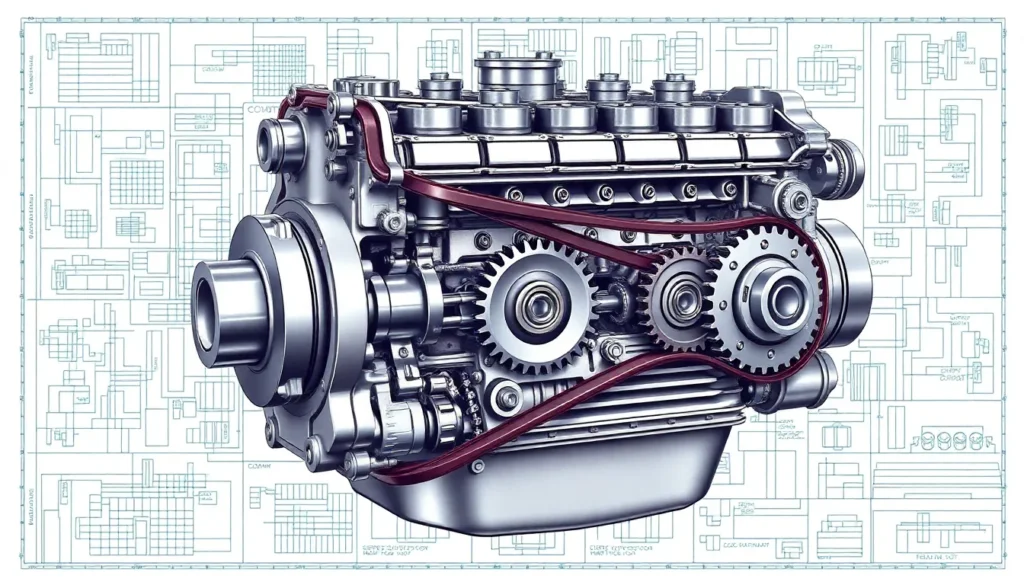
A timing belt is a reinforced rubber belt with teeth on its inner surface designed to connect the crankshaft and camshaft(s) in an internal combustion engine. Its primary purpose is to synchronize the rotation of these components to ensure the engine’s valves open and close at the correct times during each cylinder’s intake and exhaust strokes. This synchronization is vital to engine efficiency, performance, and preventing mechanical interference between pistons and valves.
Detailed Explanation
Timing belts typically consist of a high-strength rubber composite with fiberglass or Kevlar cords embedded for tensile strength and resistance to stretching. The toothed design allows the belt to mesh precisely with the gear teeth on the camshaft and crankshaft sprockets, maintaining accurate timing over extended use. Timing belts are favored in many modern engines due to their quiet operation, lower weight compared to timing chains, and cost-effectiveness.
The timing belt ensures that the crankshaft, which converts the linear motion of pistons into rotational motion, and the camshaft(s), which control the opening and closing of engine valves, operate in precise coordination. If this coordination is lost or disrupted, it can cause valves to collide with pistons, leading to serious engine damage, especially in interference engines.
How It Works
As the engine runs, the crankshaft turns, driving the timing belt. The belt, in turn, rotates the camshaft(s) at exactly half the crankshaft’s speed. This controlled rotation opens and closes the intake and exhaust valves at specific intervals relative to the pistons’ positions within the cylinders. The belt’s teeth engage with matching sprockets to prevent slippage, ensuring timing accuracy.
In addition to driving camshafts, timing belts may also operate other components such as the water pump or balance shafts, depending on engine design. Proper tension is maintained by a tensioner pulley to prevent the belt from slipping or jumping teeth.
Examples
- Automotive Engines: Many passenger vehicles utilize timing belts to coordinate camshaft and crankshaft movement. For instance, Honda, Volkswagen, and Subaru have historically employed timing belts in various models.
- Motorcycles: Some motorcycle engines use timing belts for valve timing due to their compact size and smooth operation.
- Industrial Machinery: Timing belts are also found in certain industrial and manufacturing equipment where precise rotational synchronization is necessary.
Why It Matters
The timing belt is essential for the safe and efficient operation of internal combustion engines. Accurate valve timing maximizes engine power, fuel efficiency, and emissions control. A failure or breakage of the timing belt can cause catastrophic engine damage, often requiring extensive repairs or engine replacement. Therefore, understanding the timing belt’s function and maintenance requirements is crucial for vehicle owners and mechanics.
Common Misconceptions
Misconception: Timing belts last the lifetime of the vehicle.
Correction: Timing belts have specific replacement intervals, typically between 60,000 and 100,000 miles, depending on manufacturer recommendations. Failure to replace the belt can lead to engine damage.
Misconception: Timing belts and timing chains serve the same purpose and are interchangeable.
Correction: While both components synchronize engine timing, timing belts are made of rubber and require regular replacement, whereas timing chains are metal and generally last longer but may be noisier.
Pros and Cons
Comparison Table
| Aspect | Timing Belt | Timing Chain |
|---|---|---|
| Meaning | A toothed rubber belt that synchronizes camshaft and crankshaft rotation. | A metal chain performing the same synchronization function in an engine. |
| Material | Reinforced rubber with fiberglass or Kevlar cords. | Metal (steel). |
| Durability | Typically 60,000-100,000 miles before replacement. | Often lasts the life of the engine. |
| Noise | Quieter operation. | Noisier due to metal components. |
| Maintenance | Requires periodic replacement. | Requires less frequent maintenance but can stretch. |
Decision Checklist
- Use this if you prefer quieter engine operation and lower initial replacement cost.
- Avoid this if you want a maintenance-free engine timing solution with longer durability.
- Check this first your vehicle manufacturer’s recommended timing belt replacement interval and engine type (interference vs. non-interference).
What is the easiest way to understand a Timing Belt?
Think of a timing belt as a precise conveyor belt inside the engine that keeps the camshaft and crankshaft rotating in perfect harmony. This harmony ensures the engine’s valves open and close exactly when they should, preventing collisions inside the engine and maintaining smooth performance.
FAQ
How often should a timing belt be replaced?
Most manufacturers recommend replacing timing belts between 60,000 and 100,000 miles, but this varies by vehicle model and usage conditions. It is important to consult the vehicle's maintenance manual.
What happens if a timing belt breaks while driving?
If a timing belt breaks, the camshaft and crankshaft lose synchronization, which can cause the engine's pistons to strike the valves in interference engines, leading to severe engine damage and potentially costly repairs.
Can a timing belt be repaired if it is damaged?
Timing belts cannot be repaired if damaged; they must be fully replaced to ensure proper engine function and avoid risk of failure.





Leave a Reply