
Short Answer
Overview
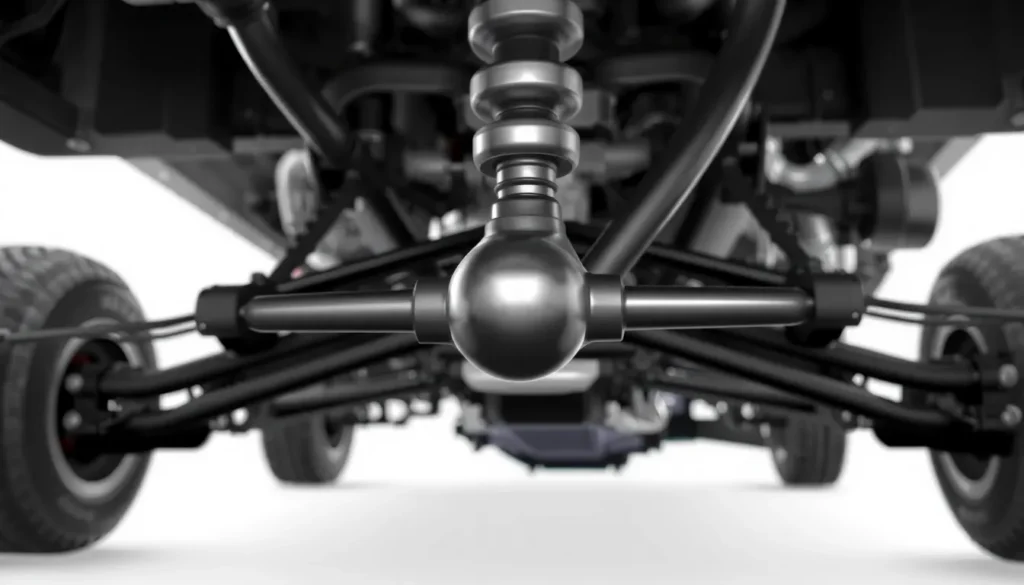
A ball joint is a critical component in the suspension system of a car, serving as a pivot between the wheels and the suspension. It functions similarly to a human hip joint, allowing for multidirectional movement and flexibility. Ball joints connect the control arms of the suspension to the steering knuckles, enabling the wheels to move up and down while also turning left or right for steering.
Detailed Explanation
Structurally, a ball joint consists of a bearing stud and socket enclosed in a metal casing, often with a protective rubber boot to keep out dirt and moisture. It allows controlled movement in multiple directions while bearing the vehicle’s weight. Most modern vehicles use two types of ball joints: upper and lower, each positioned differently within the suspension assembly. They are typically load-bearing and designed to withstand significant mechanical stress.
How It Works
Ball joints operate by permitting the suspension to move vertically as the vehicle travels over uneven surfaces, while simultaneously allowing the wheels to pivot horizontally for steering. When a driver turns the steering wheel, the ball joint enables the knuckle to rotate, directing the wheels accordingly. Simultaneously, as the suspension compresses or rebounds, the ball joint accommodates the vertical motion without compromising steering control or structural integrity. Proper lubrication and maintenance are essential to ensure smooth operation and prevent premature wear.
Examples
- In a MacPherson strut suspension setup, the lower ball joint connects the lower control arm to the steering knuckle.
- In double-wishbone suspensions, both upper and lower ball joints are used to provide greater control and flexibility.
- Heavy-duty trucks often have reinforced ball joints designed to handle increased loads and rougher terrain.
Why It Matters
Ball joints are essential for vehicle safety and handling. They maintain the alignment of the wheels, ensuring stable steering and proper tire wear. Failure or excessive wear of ball joints can lead to steering issues, uneven tire wear, and potentially dangerous situations such as loss of control. Regular inspection and timely replacement of worn ball joints help maintain vehicle performance and safety.
Common Misconceptions
Misconception: Ball joints only affect steering.
Correction: While ball joints play a critical role in steering, they also support the vehicle’s weight and allow suspension movement.
Misconception: Ball joints are maintenance-free.
Correction: Ball joints require periodic inspection and lubrication, and worn joints need replacement to maintain safety and performance.
Pros and Cons
Comparison Table
| Aspect | Ball Joint | Bushing (Alternative Suspension Component) |
|---|---|---|
| Meaning | A spherical bearing allowing multidirectional movement between suspension and steering components. | A flexible rubber or polyurethane component that cushions and reduces vibration between suspension parts. |
| Function | Facilitates steering and suspension articulation while bearing weight. | Absorbs shocks and reduces metal-to-metal contact. |
| Maintenance | Requires inspection for wear and lubrication; replacement needed if worn. | Typically low maintenance but may degrade over time and require replacement. |
| Failure Impact | Can cause steering problems and unsafe vehicle handling. | Leads to increased vibrations and noise, affecting ride comfort. |
Decision Checklist
- Use this if you need a suspension component that allows both steering and vertical movement with load-bearing capacity.
- Avoid this if you require only vibration damping without steering articulation.
- Check this first when experiencing symptoms like uneven tire wear, clunking noises when turning, or loose steering.
What is the easiest way to understand Ball Joints?
Think of a ball joint as a flexible pivot point similar to a human hip joint, allowing the suspension and wheels to move smoothly in multiple directions while supporting the car’s weight and enabling steering control.
FAQ
What does a ball joint do in a car?
A ball joint connects the control arms to the steering knuckles, allowing the wheels to move up and down with the suspension and pivot for steering.
How do I know if a ball joint is bad?
Symptoms include clunking noises when turning, uneven tire wear, loose or wandering steering, and vibrations during driving.
Can I drive with a worn ball joint?
Driving with a worn ball joint is unsafe as it can lead to loss of steering control and potential wheel detachment; it should be inspected and replaced promptly.



Leave a Reply