
Short Answer
Overview
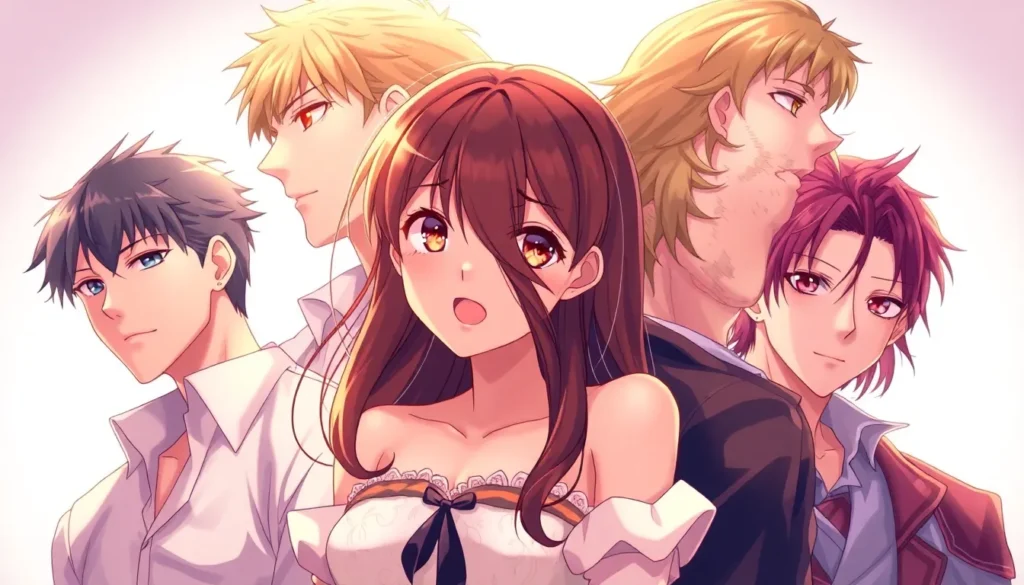
A reverse harem is a subgenre of romantic fiction and media characterized by a single female protagonist who is romantically involved with multiple male characters simultaneously. This concept is commonly found in anime, manga, literature, and related entertainment forms. The term “reverse harem” is derived from the traditional harem genre, which typically involves one male character surrounded by multiple female characters.
Detailed Explanation
In reverse harem narratives, the focus is on the interactions and relationships between the central female figure and her male suitors. These stories explore themes of romance, friendship, and sometimes supernatural or fantastical elements. The genre often emphasizes character development and the dynamics between the protagonist and her multiple companions, who may have distinct personalities, backgrounds, and roles in the story.
Reverse harem is popular in various cultures but has particular prominence in Japanese media, where it is often presented through manga (Japanese comics) and anime (animated series). The genre caters to audiences interested in romantic fantasy scenarios featuring multiple male characters vying for the affection of a single heroine.
How It Works
The structure of a reverse harem story typically involves a female lead who encounters several male characters, each of whom may develop romantic feelings for her. The narrative explores how these relationships evolve, often including elements of competition, camaraderie, or conflict among the male characters. Unlike traditional harem stories, where the male protagonist’s perspective is central, reverse harem stories usually focus on the female protagonist’s viewpoint and experiences.
While romantic entanglements are a core aspect, reverse harem plots can also involve other genres such as fantasy, science fiction, or drama, adding layers of complexity to the interactions between characters. The resolution of these stories varies; some may conclude with the protagonist choosing one partner, while others leave relationships ambiguous or open-ended.
Examples
- Anime and Manga: Titles like “Ouran High School Host Club,” “Fruits Basket,” and “Yona of the Dawn” are representative examples featuring reverse harem elements.
- Literature: Certain young adult and fantasy novels employ reverse harem tropes, focusing on a female protagonist and her multiple romantic interests.
- Visual Novels and Games: Some interactive media and dating simulators incorporate reverse harem scenarios, allowing players to engage with multiple male characters.
Pros and Cons
Pros: Provides diverse character interactions and romantic possibilities; appeals to audiences seeking female-centric romantic plots; encourages exploration of different personality types and relationship dynamics.
Cons: May rely on clichés or stereotypical character archetypes; potential for underdeveloped male characters due to multiple romantic interests; can perpetuate unrealistic expectations about relationships.
Comparison Table
| Aspect | Reverse Harem | Traditional Harem |
|---|---|---|
| Meaning | One female protagonist with multiple male romantic interests | One male protagonist with multiple female romantic interests |
| Perspective | Usually female protagonist’s viewpoint | Usually male protagonist’s viewpoint |
| Common Media | Anime, manga, young adult fiction | Anime, manga, light novels |
| Audience | Primarily female | Primarily male |
Decision Checklist
- Use this if: You want to explore romantic narratives centered on a female lead with multiple male characters.
- Avoid this if: You prefer stories focusing on a single romantic relationship or a male-centric perspective.
- Check this first: Whether the story balances character development among multiple partners and presents relationships respectfully.
What is the easiest way to understand Reverse Harem?
The simplest way to understand a reverse harem is to think of it as a romantic story where one woman is surrounded by several men who are all interested in her romantically, contrasting with traditional stories that usually focus on one man with many female admirers.
FAQ
What distinguishes reverse harem from traditional harem?
Reverse harem features one female character with multiple male romantic interests, whereas traditional harem features one male character with multiple female romantic interests.
Is reverse harem always romantic?
While romance is the central theme, some reverse harem stories also include elements of fantasy, adventure, or drama alongside romantic relationships.
Are reverse harem stories usually aimed at a specific audience?
Yes, reverse harem stories are typically targeted towards a female audience, especially in anime and manga contexts.




Leave a Reply