
Short Answer
Overview
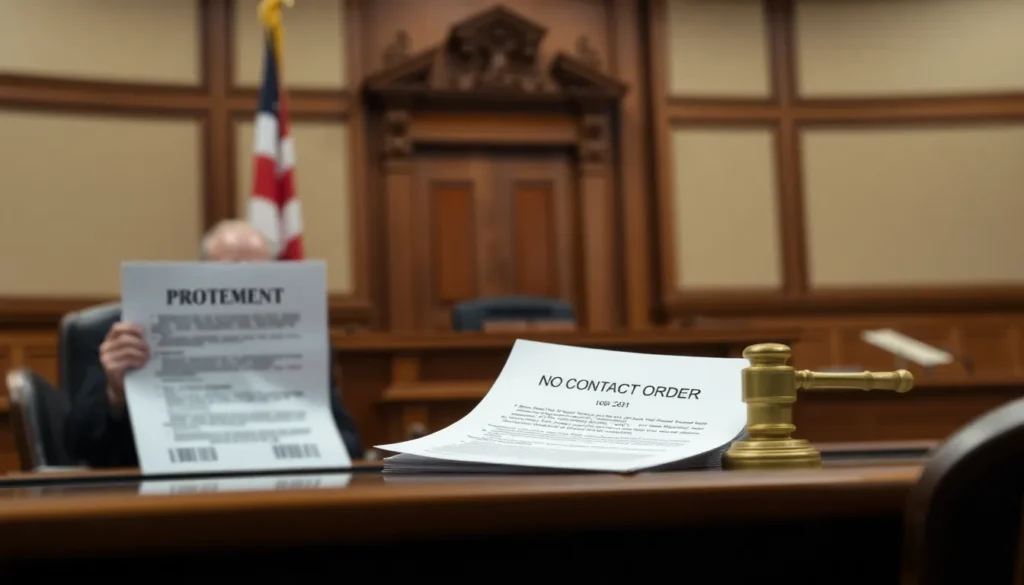
A no contact order is a legal mandate issued by a court or authorized agency that prohibits one person from contacting or approaching another person. These orders are commonly used as protective measures in cases involving domestic violence, harassment, stalking, or during criminal investigations. The primary purpose is to safeguard individuals from potential harm or intimidation by restricting the offender’s ability to communicate or physically approach the protected person.
Detailed Explanation
No contact orders are distinct from restraining orders but often share similar objectives. While restraining orders may include specific conditions regarding behavior, a no contact order explicitly forbids any form of direct or indirect communication, including in person, by phone, through electronic means, or via third parties. These orders can be temporary or long-term, depending on the severity of the situation and judicial discretion. Violation of a no contact order usually results in legal consequences such as fines, arrest, or additional charges.
How It Works
The process of obtaining a no contact order generally begins when a victim or law enforcement requests protection from the court. After reviewing the circumstances, a judge may issue the order either as part of criminal proceedings or as a standalone civil protection measure. The order specifies the individuals involved and the prohibited contact methods. Law enforcement agencies typically enforce these orders, and the protected person is often given a copy to present if needed. Compliance is monitored, and violations are subject to legal penalties.
Examples
- Domestic Violence Cases: A court issues a no contact order to prevent an alleged abuser from contacting or approaching the victim.
- Harassment or Stalking: After a complaint, a no contact order restricts communication between the harasser and the victim to prevent further intimidation.
- Criminal Investigations: Law enforcement may impose a no contact order on a suspect to avoid tampering with witnesses or evidence.
Pros and Cons
- Pros: Provides immediate protection to vulnerable individuals; legally enforceable; can deter further harmful behavior.
- Cons: May be difficult to enforce in some cases; potential for misuse in contentious personal disputes; does not address underlying issues.
Comparison Table
| Aspect | No Contact Order | Restraining Order |
|---|---|---|
| Meaning | A legal order prohibiting any form of contact between specified individuals. | A legal order restricting certain behaviors or contact, often broader in scope. |
| Purpose | To prevent communication or approach to protect safety. | To prevent harassment, abuse, or threats with specific conditions. |
| Enforcement | Violations typically result in criminal penalties. | Violations can result in civil or criminal penalties. |
Decision Checklist
- Use this if: You need to legally prevent any form of contact or communication with another individual for safety reasons.
- Avoid this if: The situation requires broader behavioral restrictions beyond contact, or if mediation is possible.
- Check this first: Whether a restraining order or another protective order might be more appropriate based on your circumstances.
What is the easiest way to understand a No Contact Order?
A no contact order is essentially a legal ‘do not disturb’ directive, meaning one person is legally barred from communicating or approaching another to ensure safety and prevent harm.
FAQ
Who can request a no contact order?
Typically, the victim or law enforcement can request a no contact order to protect an individual from harm.
How long does a no contact order last?
The duration varies; it can be temporary during a trial or extended for months or years based on court rulings.
What happens if someone violates a no contact order?
Violating a no contact order can lead to criminal charges, fines, or arrest depending on jurisdiction and severity.





Leave a Reply