
Short Answer
Overview
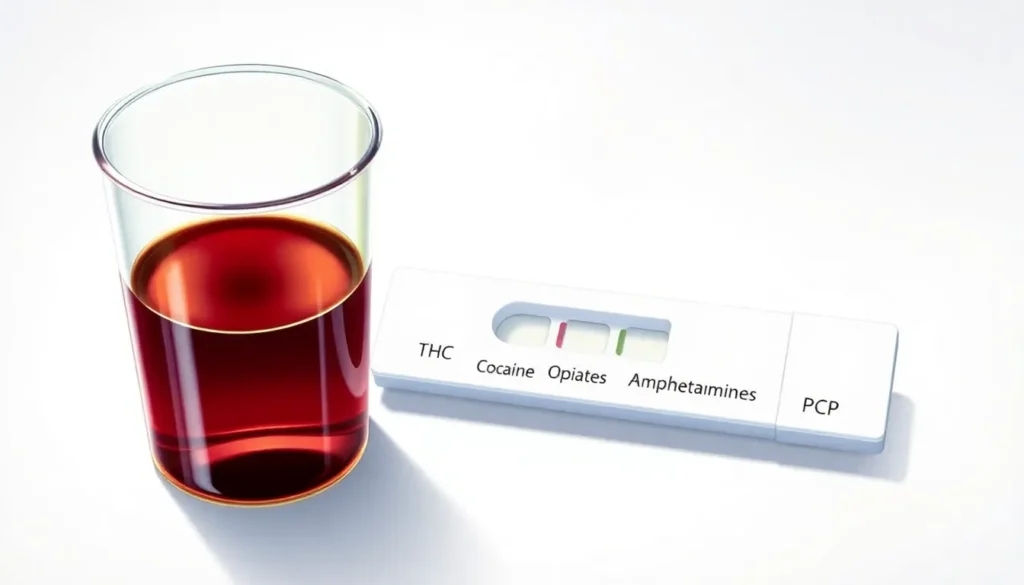
A 5 panel drug screen test is a standardized drug test designed to detect five specific categories of drugs in biological samples, typically urine. It is commonly used by employers, medical professionals, and legal authorities to identify recent drug use. The test screens for the presence of substances such as marijuana, cocaine, opiates, amphetamines, and phencyclidine (PCP). Due to its balance of cost-effectiveness and coverage, the 5 panel test is one of the most frequently administered drug tests in various settings.
Detailed Explanation
The 5 panel drug screen test focuses on five drug categories known for their prevalence in substance use and potential impact on safety and performance. These categories include:
- Marijuana (THC): Detects tetrahydrocannabinol, the psychoactive component in cannabis.
- Cocaine: Identifies metabolites of cocaine, a powerful stimulant.
- Opiates: Screens for natural opiates like morphine and codeine as well as semi-synthetic opioids.
- Amphetamines: Detects amphetamine and methamphetamine, stimulants affecting the central nervous system.
- Phencyclidine (PCP): Screens for PCP, a dissociative drug.
The selection of these substances reflects their common use and potential implications in workplace safety and legal compliance. The test is often conducted on urine samples, but can also be administered using other biological materials such as saliva or hair, depending on the testing protocol.
How It Works
The 5 panel drug screen test employs immunoassay techniques to detect the presence of drug metabolites in the sample. The process generally involves the following steps:
- Sample Collection: A urine sample is collected in a controlled setting to reduce the risk of tampering or substitution.
- Initial Screening: The sample undergoes an immunoassay test that uses antibodies to identify drug metabolites. This step provides rapid results but may produce false positives.
- Confirmatory Testing: If the initial screen is positive, a more specific and sensitive method such as gas chromatography-mass spectrometry (GC-MS) or liquid chromatography-tandem mass spectrometry (LC-MS/MS) is used to confirm the results.
The detection window varies depending on the drug, frequency of use, and individual metabolism, but generally ranges from a few days to a week for most substances screened in the 5 panel test.
Examples
- Employment Screening: A company requires new hires to undergo a 5 panel drug screen test to ensure a drug-free workplace.
- Probation Monitoring: Courts may order individuals on probation to complete periodic 5 panel drug tests to monitor compliance with substance use conditions.
- Medical Evaluation: Physicians might use a 5 panel drug screen to assess patients presenting with symptoms possibly related to drug use or to monitor prescribed medication adherence.
Pros and Cons
- Pros:
- Cost-effective compared to more extensive panels.
- Widely available and standardized, facilitating consistent results.
- Efficiently screens for the most commonly abused drugs.
- Cons:
- Limited scope; does not detect newer synthetic drugs or prescription medications outside the five categories.
- Potential for false positives due to cross-reactivity.
- Detection windows may miss infrequent or past drug use.
Comparison Table
| Aspect | 5 Panel Drug Screen Test | 10 Panel Drug Screen Test |
|---|---|---|
| Meaning | Test screening for 5 common drug categories: THC, cocaine, opiates, amphetamines, PCP. | Expanded test screening for 10 substances, including the 5 panel drugs plus others like benzodiazepines and barbiturates. |
| Scope | Limited to five drug classes. | Broader scope covering additional prescription and illicit drugs. |
| Cost | Generally lower cost. | Higher cost due to broader coverage and testing complexity. |
| Use Cases | Common in employment and basic screening. | Used when more comprehensive drug screening is required. |
Decision Checklist
- Use this if: You need a cost-effective, quick screening for common drugs.
- Avoid this if: You require detection of a wider range of substances including prescription medications.
- Check this first if: The testing purpose and regulatory requirements specify which substances must be screened.
What is the easiest way to understand a 5 panel drug screen test?
The simplest way to understand a 5 panel drug screen test is to think of it as a basic checklist that looks for traces of five common types of drugs in a person’s urine to determine recent drug use. It is a preliminary tool used most often in workplaces and legal settings to ensure individuals are not under the influence of commonly abused substances.
FAQ
What drugs does a 5 panel drug screen test detect?
It detects marijuana (THC), cocaine, opiates, amphetamines, and phencyclidine (PCP).
How long after drug use can a 5 panel drug test detect substances?
Detection times vary by drug, but generally range from a few days up to one week after use.
Can a 5 panel drug test detect prescription medications?
No, it typically does not detect most prescription medications unless they fall under the tested categories, such as some opiates.


Leave a Reply