
Short Answer
Overview
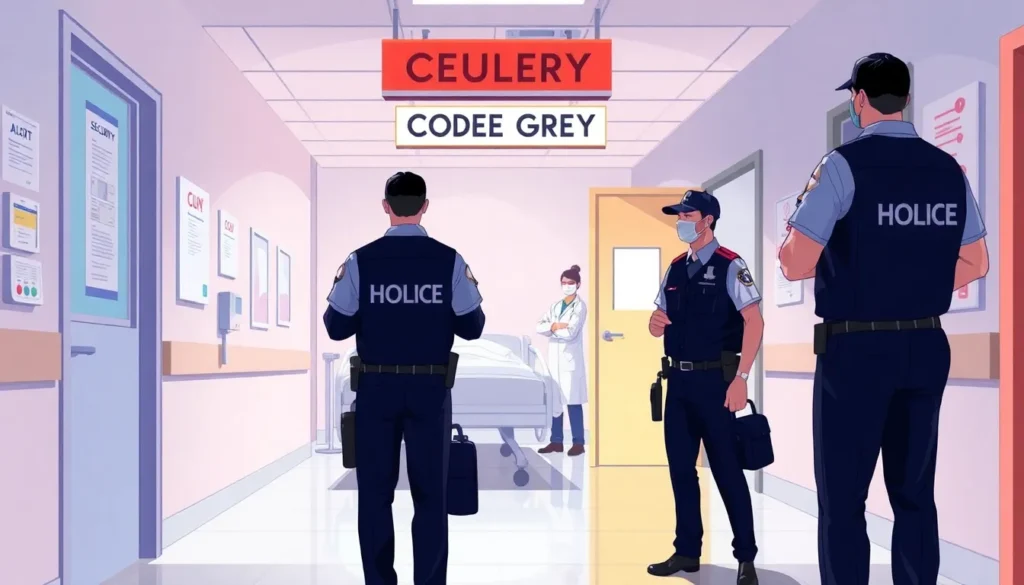
A Code Grey is an emergency alert code commonly used in healthcare facilities and other institutions to signify the presence of a violent or aggressive person. The code is designed to notify staff and security personnel that immediate intervention may be necessary to manage a potentially threatening situation. This protocol helps to maintain safety for patients, visitors, and employees.
Detailed Explanation
The term “Code Grey” varies slightly in definition depending on regional protocols and institutional policies but generally refers to incidents involving aggressive or disruptive behavior. These can include physical violence, threats, or other actions that compromise the safety of individuals within the facility. The response to a Code Grey often involves trained security staff, crisis intervention teams, or specially trained personnel who are equipped to de-escalate the situation.
How It Works
When a Code Grey is initiated, it typically involves a communication system such as a public address announcement, pager alert, or radio transmission to notify relevant personnel. The alert communicates the location of the incident so that responders can quickly reach the area. Staff are trained to follow specific procedures, including maintaining personal safety, avoiding escalation, and assisting security teams as needed. The goal is to resolve the situation with minimal harm and restore normal operations promptly.
Examples
- In a hospital setting, a patient exhibiting violent behavior towards staff or other patients may trigger a Code Grey.
- A visitor behaving aggressively or threatening others may also cause the activation of a Code Grey.
- In mental health facilities, a Code Grey may be called when a patient becomes uncontrollable or poses a danger.
Pros and Cons
Pros: Provides a standardized way to quickly alert staff to violent incidents; facilitates rapid, coordinated response; helps protect patients, staff, and visitors; promotes safety and order during emergencies.
Cons: Potential for overuse or false alarms leading to desensitization; may cause anxiety among staff and patients; reliance on proper staff training and communication systems for effectiveness.
Comparison Table
| Aspect | Code Grey | Alternative/Related Topic (Code Black) |
|---|---|---|
| Meaning | Alert for violent or aggressive person | Indicates a bomb threat or suspicious package |
| Use Context | Healthcare and institutional safety | Security and emergency response |
| Response Team | Security and trained staff for de-escalation | Security, bomb squad, emergency services |
Decision Checklist
- Use this if there is a violent or aggressive individual threatening safety.
- Avoid this if the situation involves fire, medical emergencies, or bomb threats (use respective codes).
- Check this first if unsure about the nature of the threat; verify with security protocols.
What is the easiest way to understand Code Grey?
The easiest way to understand a Code Grey is to think of it as a formal alert used within hospitals and similar environments to quickly mobilize help whenever a person becomes a threat due to aggressive or violent behavior. It is part of a system of codes designed to maintain safety and order by ensuring the right personnel respond promptly.
FAQ
What does Code Grey mean in a hospital?
In a hospital, Code Grey usually means that there is a violent or aggressive person who requires immediate attention from security and trained staff to ensure safety.
Who responds to a Code Grey?
Typically, security personnel and staff trained in crisis intervention respond to a Code Grey to manage the situation and de-escalate any violence.
Is Code Grey used outside of hospitals?
While primarily used in healthcare, some other institutions like mental health facilities or large public buildings may also use Code Grey to alert staff to aggressive behavior.





Leave a Reply