
Short Answer
Overview
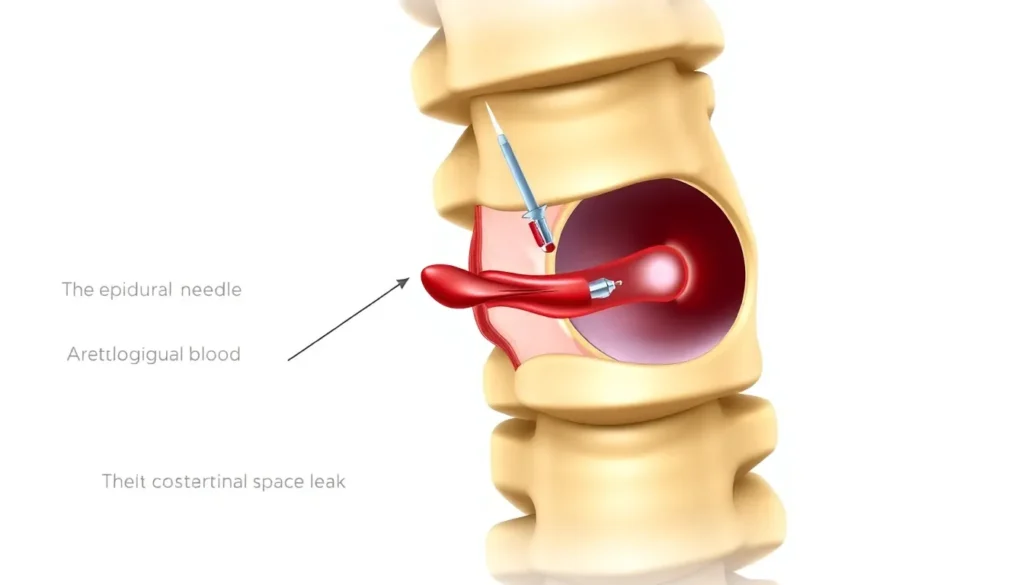
A blood patch is a therapeutic medical procedure primarily used to treat cerebrospinal fluid (CSF) leaks, which commonly occur after procedures such as lumbar punctures or spinal anesthesia. The procedure involves the injection of autologous blood (the patient’s own blood) into the epidural space surrounding the spinal cord. This injection aims to seal the site of the leak, restore normal CSF pressure, and relieve associated symptoms such as headaches.
Detailed Explanation
Cerebrospinal fluid leaks can result in post-dural puncture headaches or other neurological symptoms due to decreased CSF pressure. A blood patch is typically considered when conservative treatments like bed rest, hydration, and analgesics fail to resolve symptoms. During the procedure, a small volume of the patient’s blood is drawn, usually from a vein in the arm, and then carefully injected into the epidural space near the site of the CSF leak. The blood clots and forms a seal at the leak site, preventing further leakage.
How It Works
The efficacy of a blood patch relies on the blood’s clotting ability to physically plug the dural tear or puncture causing the CSF leak. Once injected, the blood spreads within the epidural space and forms a clot that adheres to the dura mater, the membrane enclosing the spinal cord and CSF. This clot acts as a biological sealant, preventing further loss of cerebrospinal fluid. Additionally, the volume of injected blood can increase epidural space pressure temporarily, which helps restore CSF pressure and alleviates symptoms like postural headaches.
Examples
- Post-dural puncture headache (PDPH): A common complication after lumbar puncture or spinal anesthesia where a blood patch is used to relieve severe headaches caused by CSF leakage.
- Spontaneous intracranial hypotension: Some patients develop CSF leaks without prior procedures, and blood patches can be employed as a minimally invasive treatment.
- Persistent CSF leaks after surgery: Blood patches may be used when conventional treatments fail to close dural defects following spinal surgery.
Pros and Cons
- Pros: Minimally invasive; uses patient’s own blood reducing risk of allergic reactions; effective in sealing CSF leaks and relieving symptoms; relatively quick procedure; can be repeated if necessary.
- Cons: Possible complications include back pain, infection, nerve irritation; not always immediately effective; may require multiple treatments; risk of failure if the leak is large or in a difficult location.
Comparison Table
| Aspect | Blood Patch | Conservative Treatment |
|---|---|---|
| Meaning | Injection of autologous blood into epidural space to seal CSF leak. | Non-invasive measures such as bed rest, hydration, and medications to manage symptoms. |
| Effectiveness | High success rate in sealing leaks and relieving symptoms. | Variable; may be insufficient for persistent or severe leaks. |
| Invasiveness | Minimally invasive procedure requiring epidural injection. | Non-invasive. |
| Risks | Potential for infection, nerve irritation, or bleeding. | Minimal risk but possibly prolonged symptoms. |
Decision Checklist
- Use this if the patient has persistent CSF leak symptoms such as post-dural puncture headache unresponsive to conservative treatment.
- Avoid this if there is an active infection at the injection site or patient has clotting disorders.
- Check this first prior conservative management effectiveness and confirm the diagnosis of CSF leak.
What is the easiest way to understand a Blood Patch?
A blood patch can be understood as a natural ‘sealant’ procedure where a patient’s own blood is used like a biological glue to close a leak of cerebrospinal fluid in the spinal area, thus stopping fluid loss and relieving symptoms.
FAQ
What is a blood patch used for?
A blood patch is primarily used to treat cerebrospinal fluid leaks, especially those causing post-dural puncture headaches after spinal procedures.
How is a blood patch performed?
A small amount of the patient's own blood is drawn and injected into the epidural space near the site of the CSF leak to form a clot that seals the leak.
Are there risks associated with a blood patch?
While generally safe, risks include back pain, infection, nerve irritation, and in rare cases, failure to seal the leak requiring additional treatment.


Leave a Reply