
Short Answer
Overview
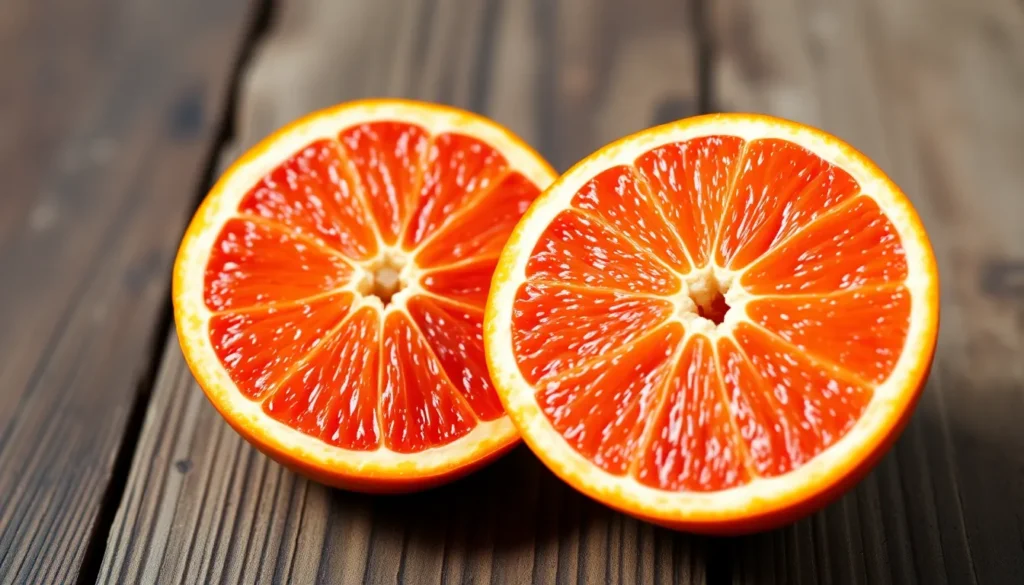
The Cara Cara navel orange is a variety of navel orange notable for its pink to red flesh and sweet, tangy flavor. It is a natural mutation of the standard Washington navel orange, first discovered in Venezuela in the mid-1970s. This citrus fruit is seedless, easy to peel, and has a distinctively vibrant color that sets it apart from other orange varieties.
Detailed Explanation
Cara Cara navel oranges distinguish themselves by their unique pigmentation, which results from higher concentrations of carotenoids, specifically lycopene, the same pigment responsible for the red color in tomatoes and watermelons. This biochemical difference gives the fruit its characteristic pinkish-red interior. Unlike blood oranges, which derive their color from anthocyanins, Cara Cara oranges have a different pigment composition leading to their distinctive hue.
The fruit is typically medium to large in size, with a thick, bright orange rind that is easy to peel. The flesh is juicy and sweet, with less acidity compared to other navel oranges, making it favorable for fresh consumption. The absence of seeds and minimal bitterness also contribute to its popularity among consumers.
How It Works
The Cara Cara navel orange develops through the process of natural mutation, where genetic changes in a single branch or bud of a tree produce fruit with altered characteristics. This mutation was discovered in a Washington navel orange tree in Venezuela around 1976. Propagation of the Cara Cara variety is achieved through grafting, ensuring that the unique traits of the fruit are preserved in subsequent generations.
From a physiological perspective, the accumulation of lycopene and other carotenoids occurs during the fruit’s maturation, influencing both its color and nutritional profile. The fruit’s lower acidity and higher sugar content are the result of its specific genetic makeup, which affects flavor development during ripening.
Examples
- Fresh Consumption: Cara Cara oranges are often eaten raw due to their sweet flavor and appealing color.
- Juicing: Their juice is prized for its vibrant color and balanced sweetness, making it a popular choice for fresh orange juice blends.
- Culinary Uses: The fruit is used in salads, desserts, and garnishes, where its color and flavor can enhance the presentation and taste.
Pros and Cons
- Pros: Distinctive pinkish-red flesh; sweet, low-acid flavor; seedless; easy to peel; high in vitamin C and antioxidants.
- Cons: Seasonal availability limited to winter and early spring; slightly more expensive than common oranges due to specialized cultivation; not as widely available worldwide.
Comparison Table
| Aspect | Cara Cara Navel Orange | Washington Navel Orange |
|---|---|---|
| Meaning | Natural mutation variety of navel orange with pinkish-red flesh | Standard navel orange variety with orange flesh |
| Color | Pink to red interior | Bright orange interior |
| Flavor | Sweet with low acidity | Sweet with moderate acidity |
| Seed Content | Seedless | Seedless |
| Availability | Winter to early spring | Winter to early spring |
Decision Checklist
- Use this if: You want a sweeter, less acidic orange with a unique color for fresh eating or juicing.
- Avoid this if: You require oranges year-round or at a lower cost, as availability and price can be limiting.
- Check this first: Verify seasonal availability and local supply before purchase.
What is the easiest way to understand Cara Cara Navel Orange?
The simplest way to understand a Cara Cara navel orange is to recognize it as a naturally occurring variety of navel orange that stands out due to its pinkish-red flesh and sweeter, less acidic flavor compared to typical oranges. It is essentially a visually and flavor-wise distinct mutation of the common navel orange, prized for fresh consumption and juicing.
FAQ
What makes Cara Cara oranges different from regular navel oranges?
Cara Cara oranges have pink to red flesh due to higher lycopene content, and they are sweeter with less acidity compared to regular navel oranges.
Are Cara Cara oranges available year-round?
No, Cara Cara oranges are typically available only during the winter to early spring months.
Can Cara Cara oranges be used in cooking?
Yes, they can be used fresh, juiced, or incorporated into salads, desserts, and garnishes due to their appealing color and sweet flavor.






Leave a Reply