
Short Answer
Overview
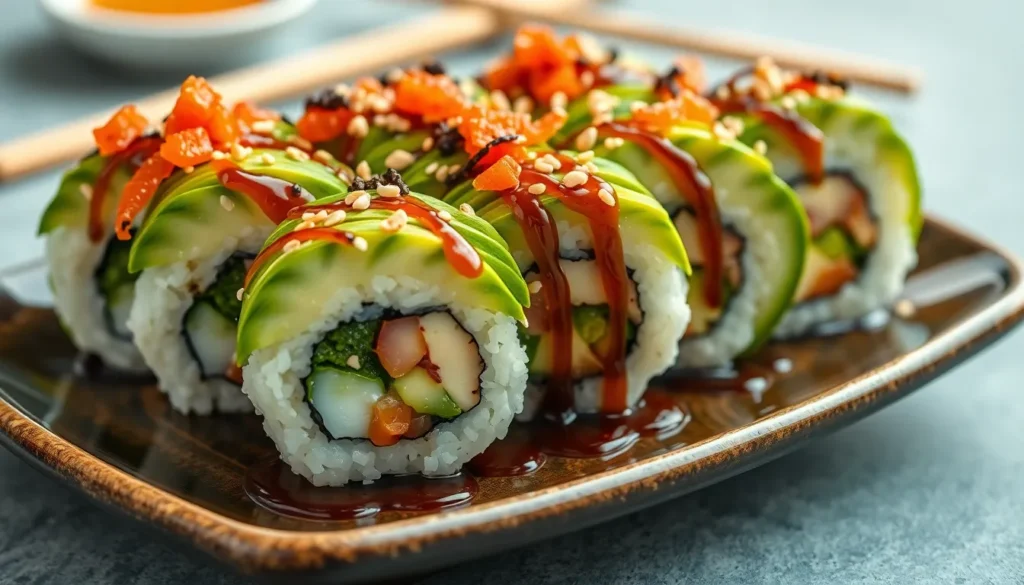
A Dragon Roll is a type of sushi roll known for its distinctive appearance and rich combination of flavors. Typically served in Japanese restaurants, particularly outside Japan, the roll is named for its visual resemblance to a dragon, often achieved through the layering of avocado slices and other decorative ingredients on top. The Dragon Roll is considered a form of maki sushi, which involves rolling rice and fillings in seaweed (nori).
Detailed Explanation
The Dragon Roll generally consists of a core filling of eel (unagi) or sometimes shrimp tempura, combined with cucumber and sometimes crab meat or imitation crab (kanikama). The roll is then topped with thinly sliced avocado, which is arranged to resemble dragon scales. Additional garnishes such as eel sauce (a sweet soy-based glaze), tobiko (flying fish roe), and sesame seeds are often applied to enhance flavor and presentation.
Although the Dragon Roll is commonly associated with American-style sushi, it reflects the trend of fusion cuisine where traditional Japanese dishes are adapted to suit local tastes and aesthetics. Unlike traditional Japanese sushi, which tends to emphasize simplicity and subtlety, the Dragon Roll is often viewed as a more elaborate and visually striking creation.
How It Works
To prepare a Dragon Roll, sushi chefs first prepare the sushi rice, seasoning it with vinegar, sugar, and salt. A sheet of nori is placed on a bamboo rolling mat, followed by an even layer of sushi rice. The fillings—typically eel and cucumber or shrimp tempura—are placed in the center. The roll is then carefully rolled into a cylindrical shape.
After rolling, thin slices of avocado are layered on top of the roll to create the appearance of scales. The roll is then sliced into bite-sized pieces and drizzled with eel sauce. Additional toppings such as tobiko or sesame seeds may be sprinkled on top for added texture and flavor.
Examples
- Classic Dragon Roll: Eel and cucumber filling with avocado on top, drizzled with eel sauce.
- Shrimp Tempura Dragon Roll: Tempura-fried shrimp inside, avocado on top, often accompanied by spicy mayo or eel sauce.
- Spicy Dragon Roll: Incorporates spicy tuna or spicy crab inside with avocado and eel sauce topping.
Pros and Cons
Pros: The Dragon Roll offers a flavorful combination of textures and tastes, featuring both creamy avocado and savory eel or tempura. Its visual appeal makes it popular among sushi enthusiasts and casual diners alike. It also provides a creative variation on traditional sushi.
Cons: Because of its rich ingredients and sauces, the Dragon Roll tends to be higher in calories and sodium compared to simpler sushi types. It may not appeal to purists who prefer traditional Japanese sushi styles. Additionally, the inclusion of cooked eel or fried shrimp makes it unsuitable for vegetarians or those seeking raw fish options.
Comparison Table
| Aspect | Dragon Roll | California Roll |
|---|---|---|
| Meaning | Named for its dragon-like appearance, combining eel or shrimp tempura with avocado and sauces. | A sushi roll containing crab meat (or imitation), avocado, and cucumber, named after California where it was popularized. |
| Main Ingredients | Eel or shrimp tempura, avocado, cucumber, eel sauce. | Crab meat, avocado, cucumber, often with mayonnaise. |
| Flavor Profile | Rich, savory, slightly sweet due to eel sauce, creamy avocado. | Mild, fresh, slightly sweet and creamy. |
| Presentation | Decorative avocado slices resembling dragon scales on top. | Simple roll, often with sesame seeds on the outside. |
Decision Checklist
- Use this if: You enjoy sushi with a combination of cooked and fresh ingredients and appreciate visually appealing dishes.
- Avoid this if: You prefer traditional Japanese sushi styles or need vegetarian or low-calorie options.
- Check this first: Verify ingredient preferences and dietary restrictions, especially regarding eel, shellfish, and sauces.
What is the easiest way to understand Dragon Roll?
The easiest way to understand a Dragon Roll is to think of it as a creatively presented sushi roll that combines cooked eel or fried shrimp with avocado slices layered on top to mimic the scales of a dragon. It is both visually striking and flavorful, representing a fusion-style sushi popular in Western adaptations of Japanese cuisine.
FAQ
What ingredients are typically in a Dragon Roll?
A Dragon Roll typically includes eel or shrimp tempura as the main filling, along with cucumber and avocado slices on top, finished with eel sauce and sometimes tobiko or sesame seeds.
Is the Dragon Roll a traditional Japanese sushi?
No, the Dragon Roll is primarily a Western adaptation of sushi, created to appeal to local tastes with an emphasis on elaborate presentation and fusion ingredients.
Can the Dragon Roll be made vegetarian?
While traditionally containing eel or shrimp, a vegetarian version can be made by substituting the protein with vegetables like tempura asparagus or cucumber and retaining the avocado topping.






Leave a Reply