
Short Answer
Overview
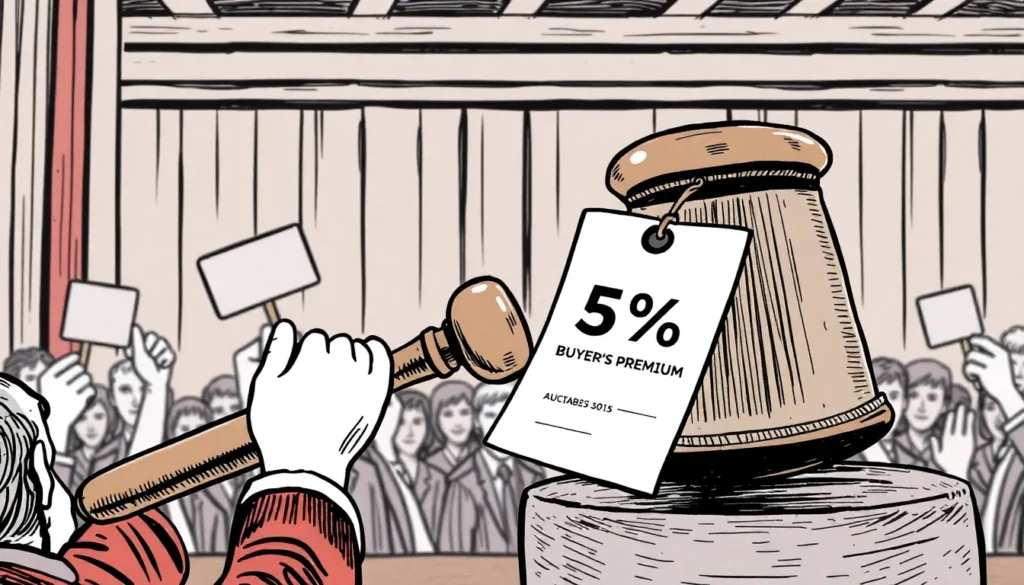
A buyer’s premium is an additional charge levied by an auction house on the final bid price of an auctioned item. This fee is paid by the winning bidder in addition to the hammer price (the winning bid) and is typically expressed as a percentage of that price. The buyer’s premium helps auction houses cover administrative expenses, operational costs, and sometimes contributes to their profit margin. It is a common practice across various types of auctions, including art, antiques, collectibles, real estate, and vehicles.
Detailed Explanation
The buyer’s premium is a contractual fee disclosed to bidders before an auction begins. It is not part of the bidding process itself but is added after the hammer falls. The percentage charged can vary widely depending on the auction house, the type of auction, and sometimes the value of the item sold. For example, some auction houses may charge a flat rate percentage, while others use a sliding scale where the premium decreases as the item’s price increases.
This fee is distinct from any seller’s commission, which is a charge to the seller for facilitating the auction. The buyer’s premium directly affects the total cost to the buyer and should be considered carefully when placing bids.
How It Works
During an auction, bidders place bids on items of interest. When the auctioneer accepts the highest bid and the hammer falls, that amount becomes the hammer price. The auction house then applies the buyer’s premium percentage to this hammer price to calculate the additional fee.
The total amount payable by the buyer is the sum of the hammer price plus the buyer’s premium. For example, if an item sells for $1,000 and the buyer’s premium is 15%, the buyer must pay $1,150.
Payment terms, including the buyer’s premium, are typically outlined in the auction catalog or the auction house’s terms and conditions. Buyers are encouraged to review these details before participating to avoid surprises after bidding.
Examples
- Art Auction: An artwork sells for $50,000 with a buyer’s premium of 20%. The buyer pays $50,000 plus $10,000 (20% of $50,000), totaling $60,000.
- Car Auction: A vehicle sells for $10,000 with a buyer’s premium of 10%. The final amount payable is $11,000.
- Estate Auction: Smaller estate auctions may charge a lower buyer’s premium, such as 5%, on items sold.
Pros and Cons
- Pros:
- Provides auction houses with necessary revenue to cover costs and maintain services.
- Allows sellers to potentially pay lower commissions since the buyer covers part of the fees.
- Encourages transparent pricing when clearly disclosed upfront.
- Cons:
- Can increase the total cost to buyers unexpectedly if not fully understood.
- May discourage bidding activity due to added fees.
- Varied rates and structures across auction houses can cause confusion.
Comparison Table
| Aspect | Buyer’s Premium | Seller’s Commission |
|---|---|---|
| Meaning | Fee paid by the winning bidder in addition to the hammer price. | Fee paid by the seller to the auction house for facilitating the sale. |
| Charged To | Buyer | Seller |
| Typical Rate | Varies, commonly 10% to 25% | Varies, typically 5% to 15% |
| Effect on Final Price | Increases total amount payable by buyer | Reduces net amount received by seller |
Decision Checklist
- Use this if: Participating in auctions where the buyer’s premium is clearly disclosed and manageable within your budget.
- Avoid this if: You are unwilling or unable to pay additional fees beyond the hammer price.
- Check this first: Review the auction house’s terms and premium rates before bidding to understand total potential costs.
What is the easiest way to understand a Buyer’s Premium?
The simplest way to understand a buyer’s premium is to think of it as a service fee added to the price you pay when you win an auction. It is a percentage of the final bid and is added on top of the winning amount to cover the auction house’s expenses. Always consider this fee when budgeting for auction purchases to avoid unexpected costs.
FAQ
Is the buyer's premium negotiable?
Generally, the buyer's premium is set by the auction house and is non-negotiable. However, in private sales or specialized auctions, terms may sometimes be flexible.
Does the buyer's premium apply to all auction items?
Most auction houses apply a buyer's premium to all items, but some may waive it for certain lots or types of auctions. It is important to verify in the auction terms.
Can the buyer's premium be a flat fee instead of a percentage?
While less common, some auctions may charge a flat fee as a buyer's premium, but typically it is calculated as a percentage of the final bid price.






Leave a Reply