
Short Answer
Overview
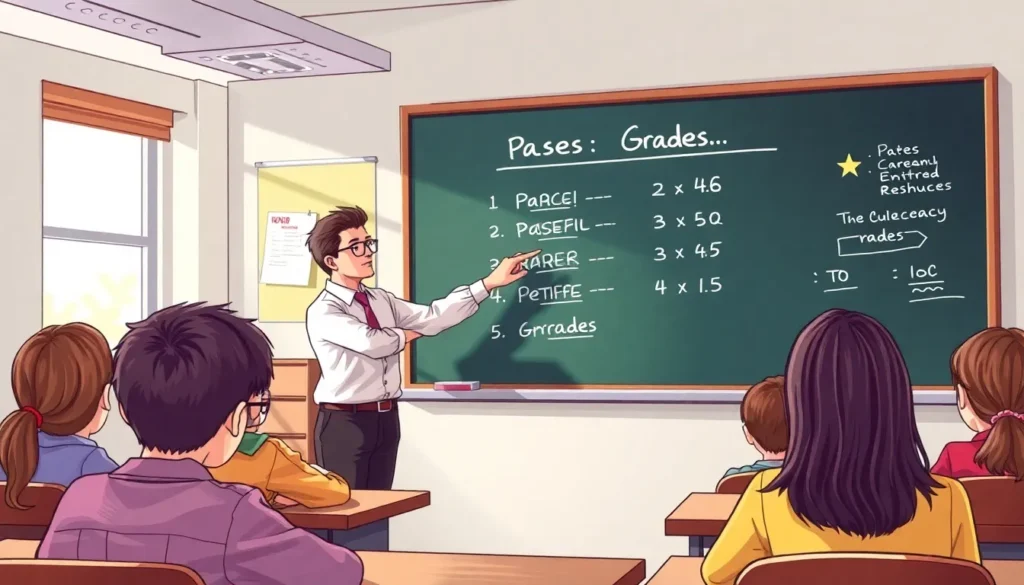
A passing grade in middle school indicates that a student has achieved sufficient proficiency in a subject to be considered successful and eligible to progress academically. Middle school typically includes grades 6 through 8, and passing criteria are set by educational authorities, such as school districts or states. These criteria serve as benchmarks to ensure students meet basic educational standards before advancing.
Detailed Explanation
Passing grades in middle school are usually expressed as letter grades, percentages, or standards-based ratings. The most common numerical threshold for passing is between 60% and 70%, depending on the institution. Letter grades often reflect this range, with a “D” or “C” typically representing a passing grade. Some schools use standards-based grading, where students must meet or exceed specified competencies to pass.
The passing grade can vary by subject, with some schools requiring higher standards for core subjects such as math and language arts. Additionally, policies may differ regarding remedial options for students who do not pass, including summer school, tutoring, or retention.
How It Works
Teachers assign grades based on assessments, homework, projects, class participation, and exams. These grades are then averaged to determine the final grade for a course. If the final grade meets or exceeds the passing threshold, the student is considered to have passed the subject. Passing all required subjects is usually necessary for promotion to the next grade level.
Schools often have progress monitoring systems to identify students at risk of failing. Interventions may be implemented to support these students before final grades are assigned.
Examples
- A student receives a 65% average in mathematics; if the school’s passing grade is 60%, the student passes the class.
- A school requires a minimum of 70% to pass English; a student scoring 68% would not pass and may need to retake the course or attend remedial classes.
- In a standards-based system, a student must demonstrate proficiency in key skills rather than a numerical grade to pass.
Pros and Cons
- Pros: Provides clear benchmarks for academic achievement; helps identify students needing additional support; fosters accountability.
- Cons: Variability between schools can cause confusion; may not fully reflect student learning or effort; strict passing thresholds can contribute to student stress.
Comparison Table
| Aspect | Passing Grade in Middle School | Alternative/Related Topic: High School Passing Grade |
|---|---|---|
| Meaning | Minimum achievement to progress to next grade (often 60%-70%) | Usually a higher threshold (often 65%-70%) with graduation requirements |
| Grade Scale | Letter grades (D or C) or percentage-based | Letter grades (C or above) or GPA-based |
| Consequences of Failing | May require course repetition or remediation | More stringent consequences including potential grade retention or summer school |
Decision Checklist
- Use this if you want to understand the academic standards required for middle school advancement.
- Avoid this if you are seeking information on college-level grading or post-secondary education standards.
- Check this first by consulting your specific school or district’s grading policies, as passing criteria can vary.
What is the easiest way to understand a passing grade in middle school?
The easiest way is to view it as the minimum score a student must earn to demonstrate adequate understanding of a subject and to move on to the next grade. Typically, this means achieving at least 60% to 70% on graded work, but it is important to confirm the exact threshold with your local educational institution.
FAQ
What is generally considered a passing grade in middle school?
A passing grade in middle school generally ranges from 60% to 70%, depending on the school's grading policies. Letter grades such as C or D often represent passing marks.
Can passing grades vary between subjects?
Yes, some schools have different passing grade requirements for core subjects like math or language arts compared to elective courses.
What happens if a student does not achieve a passing grade?
Students who fail to meet passing criteria may need to repeat the course, attend summer school, or receive additional support through tutoring or remedial programs.






Leave a Reply