
Short Answer
Overview
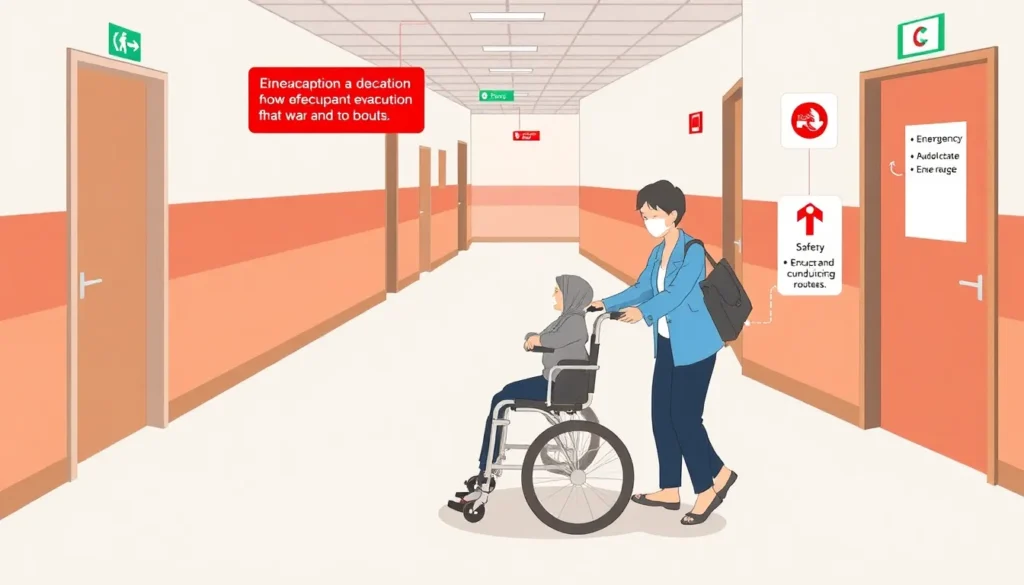
A Personal Emergency Evacuation Plan (PEEP) is a customized plan developed to assist individuals who may require additional support during an emergency evacuation. These plans are generally designed for people with disabilities, mobility impairments, or other specific needs that could hinder their ability to evacuate quickly and safely in case of fire, natural disaster, or other urgent situations. The PEEP ensures that such individuals have a clear, practical strategy that addresses their unique requirements and coordinates necessary assistance and resources.
Detailed Explanation
A PEEP typically includes detailed information about the individual’s specific needs, such as mobility aids, communication requirements, or medical devices. It identifies the safest evacuation routes, assembly points, and personnel assigned to assist during the evacuation. The plan is often created in collaboration between the individual, emergency services, employers, building managers, or care providers to ensure all relevant factors are considered. It may also include instructions for the use of evacuation equipment like evacuation chairs or alarms adapted for those with hearing impairments.
How It Works
When an emergency occurs, the PEEP is activated to guide the individual and any assisting personnel through the evacuation process. This involves alerting the individual in an accessible manner, coordinating with designated helpers, and utilizing identified evacuation routes and equipment. Training and drills are usually conducted to familiarize all parties with the plan and ensure its effectiveness. The PEEP is a living document, reviewed and updated regularly to accommodate any changes in the individual’s condition or the environment.
Examples
- Office Setting: An employee with limited mobility has a PEEP that designates a colleague to assist them to the nearest accessible emergency exit using an evacuation chair.
- Residential Building: A resident with a hearing impairment uses visual alarms linked to their PEEP, ensuring they receive timely evacuation signals and assistance.
- Educational Institution: A student with respiratory issues has a PEEP that includes the presence of a caregiver and access to medical equipment during evacuation.
Pros and Cons
- Pros: Enhances safety for individuals with specific needs, ensures compliance with legal safety obligations, provides clear evacuation procedures, promotes independence and confidence.
- Cons: Requires regular updates and training, potential dependency on designated helpers, may be challenging to implement in large or complex environments.
Comparison Table
| Aspect | Personal Emergency Evacuation Plan | General Emergency Evacuation Plan |
|---|---|---|
| Meaning | Customized plan addressing individual evacuation needs | Standard plan for general population evacuation |
| Focus | Specific personal requirements and assistance | Broad procedures for all occupants |
| Implementation | Involves personal coordination and specialized equipment | Involves general alarms and mass evacuation routes |
| Update Frequency | Regular updates based on individual needs | Periodic updates based on building or policy changes |
Decision Checklist
- Use this if: You or someone you support has mobility, sensory, or medical needs that affect evacuation.
- Avoid this if: The environment has no accessible evacuation options or lacks resources for personalized plans.
- Check this first: Assess the individual’s specific needs, available assistance, and evacuation routes before formulating the plan.
What is the easiest way to understand a Personal Emergency Evacuation Plan?
The easiest way to understand a Personal Emergency Evacuation Plan is to view it as a tailored safety strategy designed specifically for individuals who cannot use standard evacuation procedures. It identifies who needs help, what type of help is required, and how that help will be provided during an emergency to ensure safe and timely evacuation.
FAQ
Who needs a Personal Emergency Evacuation Plan?
Individuals who have mobility challenges, sensory impairments, or medical conditions that may impede their ability to evacuate safely without assistance generally require a Personal Emergency Evacuation Plan.
How often should a PEEP be updated?
A Personal Emergency Evacuation Plan should be reviewed and updated regularly, especially whenever the individual's needs change or the physical environment or emergency procedures are altered.
Can a PEEP be used in all types of buildings?
While PEEPs can be designed for various environments, their effectiveness depends on the availability of accessible evacuation routes, trained personnel, and appropriate equipment within the building.




Leave a Reply