
Short Answer
Overview
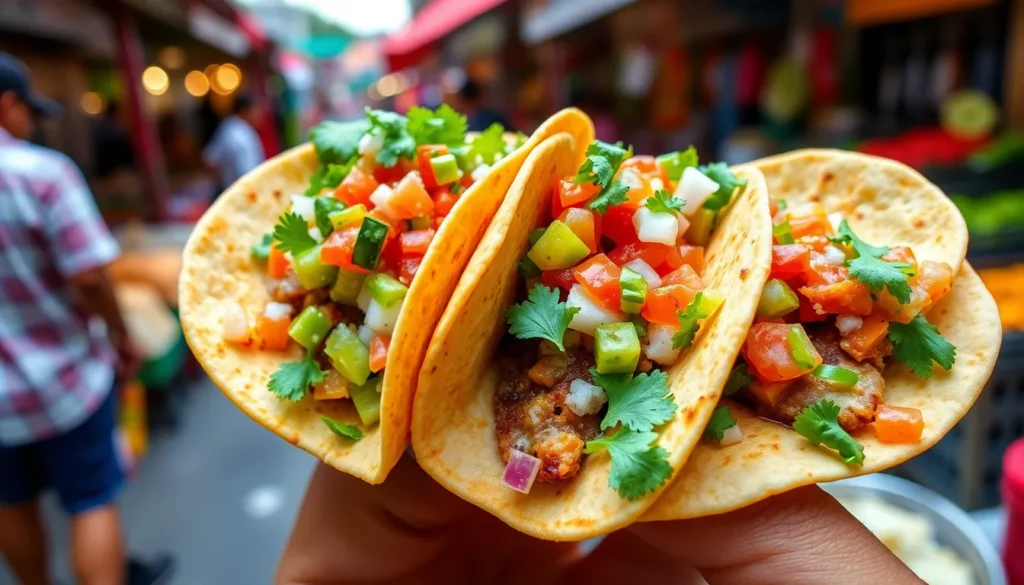
A street taco is a small, traditional Mexican taco typically served on one or two small corn tortillas. Known for its simplicity and focus on quality ingredients, the street taco is a staple of Mexican street food culture. It is usually filled with a variety of meats, such as carne asada, al pastor, or carnitas, and topped with fresh garnishes like cilantro, onions, and salsa. Its size and portability make it ideal for quick consumption, often from street vendors or small taquerias.
Detailed Explanation
Street tacos are distinguished from other types of tacos primarily by their size and ingredient composition. Generally, a street taco uses tortillas that are approximately 4 to 6 inches in diameter, smaller than the larger flour tortillas used in many Americanized taco variations. The focus is often on a few key ingredients rather than a multitude of toppings. Typical fillings include various grilled or roasted meats, often marinated or seasoned with traditional Mexican spices. Additional toppings are kept minimal and fresh, enhancing the flavor of the meat rather than overwhelming it.
The street taco reflects the culinary traditions of Mexico, where tacos have long been a versatile and everyday food item. They are commonly sold by street vendors, known as taqueros, who prepare the tacos on-site and serve them quickly to customers. This accessibility contributes to their popularity both within Mexico and internationally.
How It Works
To prepare a street taco, the tortillas are typically warmed on a comal (a flat griddle) to make them pliable and enhance their flavor. The meat is cooked separately, often grilled or slow-cooked, and then chopped into small pieces to fit neatly on the small tortilla. Once the meat is placed, the taco is garnished with finely chopped onions, fresh cilantro, a squeeze of lime, and a variety of salsas or hot sauces depending on regional preferences.
Street tacos are designed to be eaten with the hands, making them a convenient food for eating on the go. Their small size encourages consuming multiple tacos in one sitting, allowing for a variety of fillings and flavors.
Examples
- Carne Asada Taco: Made with grilled beef, usually skirt or flank steak, seasoned and chopped, topped with onions, cilantro, and salsa verde.
- Al Pastor Taco: Made with pork marinated in a mixture of chilies, spices, and pineapple, cooked on a vertical spit, and served with pineapple, onions, and cilantro.
- Carnitas Taco: Featuring slow-cooked pork that is tender and flavorful, garnished with onions, cilantro, and sometimes a drizzle of salsa roja.
Why It Matters
Street tacos are significant as a cultural and culinary symbol of Mexican cuisine and street food culture. They represent the accessibility and tradition of Mexican cooking, emphasizing simplicity, fresh ingredients, and bold flavors. Their popularity has grown globally, influencing food trends and introducing authentic Mexican flavors to diverse audiences. Additionally, street tacos contribute to local economies and social interactions in urban spaces where street vendors operate.
Common Misconceptions
Misconception: Street tacos are the same as all tacos.
Correction: Street tacos are a specific style characterized by small corn tortillas and simple, traditional fillings, distinct from larger or heavily garnished tacos often found in Americanized versions.
Misconception: Street tacos always contain beef.
Correction: While beef is common, street tacos can be made from various meats including pork, chicken, fish, and vegetarian options depending on the region and vendor.
Pros and Cons
Pros: Authentic flavor, portability, affordability, variety of fillings, cultural significance.
Cons: Limited portion size may require multiple tacos to satisfy hunger; street vendors may vary in hygiene and quality standards.
Comparison Table
| Aspect | Street Taco | American Taco |
|---|---|---|
| Meaning | Small, traditional Mexican taco served on corn tortillas with simple toppings. | Larger tacos often served on flour tortillas, with more toppings and varied fillings. |
| Tortilla Type | Corn tortillas, 4-6 inches in diameter. | Often flour tortillas, larger in size. |
| Typical Fillings | Grilled or roasted meats like carne asada, al pastor, carnitas. | Ground beef, shredded chicken, cheese, lettuce, tomatoes, sour cream. |
| Serving Style | Often from street vendors or small taquerias, eaten by hand. | Frequently served in restaurants, sometimes eaten with utensils. |
Decision Checklist
What is the easiest way to understand a Street Taco?
The easiest way to understand a street taco is to think of it as a small, handheld Mexican taco that emphasizes simplicity and flavor through a few high-quality ingredients—traditionally served on soft corn tortillas and eaten quickly as a snack or light meal, often from street vendors.
FAQ
What distinguishes a street taco from other tacos?
Street tacos are typically smaller, served on corn tortillas, and feature simple, traditional fillings and garnishes, unlike larger or more heavily topped tacos.
Are street tacos always made with meat?
While meat is common in street tacos, variations include poultry, fish, and vegetarian options depending on regional availability and vendor preferences.
Why are street tacos often served with just onions and cilantro?
Onions and cilantro provide fresh, complementary flavors that enhance the seasoned meat without overpowering it, maintaining the taco's traditional simplicity.






Leave a Reply