
Short Answer
Overview
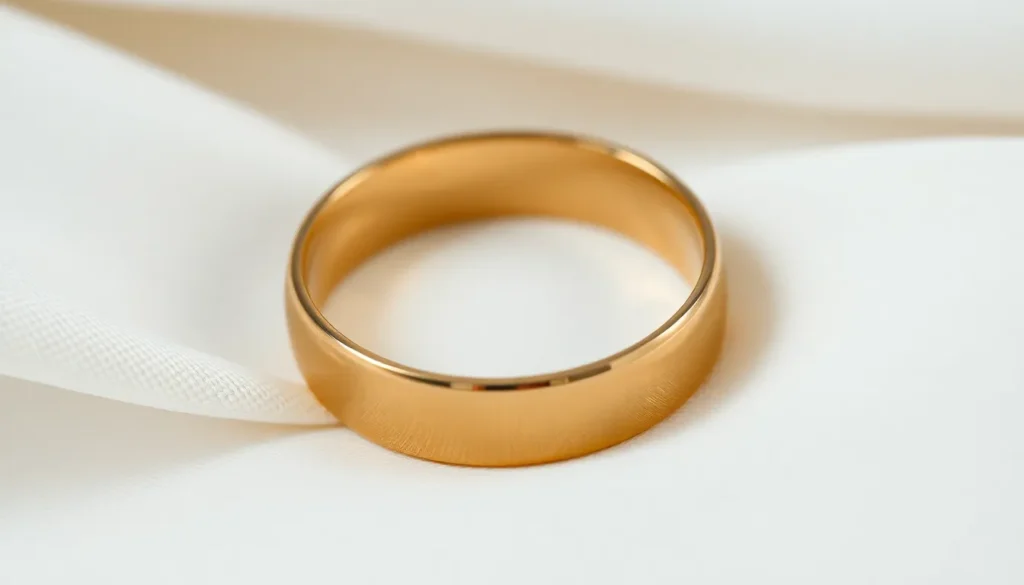
A wedding band is a ring that symbolizes marriage and commitment between partners. It is customarily exchanged during a wedding ceremony and worn thereafter as a constant reminder of the marital bond. Wedding bands are typically made from metals such as gold, platinum, or silver, and they are usually plain or minimally decorated to represent the simplicity and eternity of the marriage.
Detailed Explanation
The wedding band is distinct from an engagement ring, although in some cultures the two rings are worn together. The tradition of wearing a wedding band dates back to ancient times, with various cultures assigning different symbolic meanings to the ring. The circular shape of the band is often interpreted as a symbol of eternal love and unending commitment. Materials used for wedding bands vary widely, from traditional precious metals to modern alternatives such as titanium or tungsten. Some wedding bands are adorned with gemstones or intricate designs, while others maintain a minimalist appearance.
How It Works
During the wedding ceremony, the wedding band is typically placed on the ring finger of the partner’s hand by the other partner or officiant. This act is accompanied by vows or declarations of commitment. The ring finger is commonly chosen based on the ancient belief that a vein in this finger, known as the “vena amoris” or “vein of love,” is directly connected to the heart. After the ceremony, the ring is worn continuously as a public and personal symbol of the marriage. In some cultures, wedding bands are worn on the right hand, and customs regarding when to wear the ring can vary.
Examples
- Classic Gold Band: A simple, unadorned gold band, often 14 or 18 karat, widely used in Western weddings.
- Platinum Ring with Diamonds: A platinum band featuring small inset diamonds for added elegance and durability.
- Titanium or Tungsten Band: Modern, durable metals chosen for their strength and contemporary style, popular among men.
Why It Matters
Wedding bands serve as a tangible and visible expression of marital commitment and cultural tradition. They often hold sentimental value and represent the promises made between partners. Beyond symbolism, wedding bands can also signify social recognition of the marriage and function as a personal keepsake. The choice of a wedding band can reflect individual tastes, cultural heritage, and the nature of the relationship.
Common Misconceptions
Misconception: Wedding bands must always be plain gold rings.
Correction: While traditionally many wedding bands are plain gold, modern wedding bands come in a variety of metals, styles, and designs to suit personal preferences.
Misconception: Wedding bands are only worn by women.
Correction: Both partners commonly wear wedding bands after marriage in most cultures, with styles often differing by gender or personal choice.
Pros and Cons
Pros: Wedding bands are durable symbols of commitment, often comfortable to wear daily, and come in a wide range of styles to suit individual preferences.
Cons: Some metals may cause allergic reactions; simpler bands might be perceived as less unique; costs can vary significantly depending on material and design.
Comparison Table
| Aspect | Wedding Band | Engagement Ring |
|---|---|---|
| Meaning | Symbolizes marital commitment and union. | Represents a promise to marry or engagement. |
| Typical Materials | Gold, platinum, silver, titanium, tungsten. | Often gold or platinum with a prominent gemstone, usually a diamond. |
| When Worn | Exchanged during wedding ceremony and worn afterward. | Given during proposal or engagement period, worn until wedding. |
| Design | Usually simple and plain, though can be ornate. | Typically features a central gemstone. |
Decision Checklist
What is the easiest way to understand a Wedding Band?
The simplest way to understand a wedding band is to view it as a circular ring that represents the commitment between two people in marriage, worn continuously as a symbol of their union and promise to each other.
FAQ
What is the difference between a wedding band and an engagement ring?
A wedding band is exchanged during the marriage ceremony and symbolizes marital commitment, typically a simple band. An engagement ring is given during a proposal and usually features a prominent gemstone, symbolizing the intent to marry.
Why is the wedding band worn on the fourth finger?
Historically, it was believed that the fourth finger contains the 'vena amoris' or 'vein of love,' a vein directly connected to the heart, making it a symbolic choice for wearing a wedding band.
Can wedding bands be made from materials other than gold?
Yes, wedding bands can be made from various materials including platinum, silver, titanium, tungsten, and even alternative materials depending on personal preference and budget.



Leave a Reply