
Short Answer
Overview
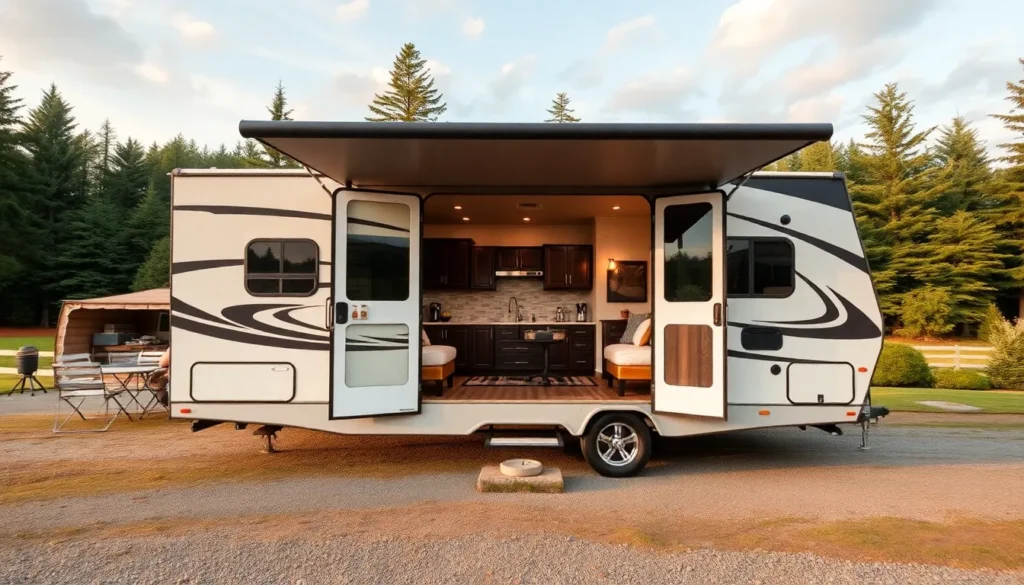
A destination trailer is a specific category of recreational vehicle (RV) designed primarily for long-term or semi-permanent placement at a chosen site. Unlike travel trailers or fifth wheels that are built for frequent towing and mobility, destination trailers prioritize comfort, spaciousness, and residential-style amenities over portability. They are typically towed to a campsite or property and remain stationary for extended periods, serving as a vacation home, guest accommodation, or even permanent residence in some cases.
Detailed Explanation
Destination trailers are constructed with heavier materials and often larger dimensions compared to standard travel trailers. Their design reflects a focus on livability, featuring higher ceilings, full-size appliances, enhanced insulation, and more elaborate interior finishes. Because they are not intended for regular travel, they may lack some of the ruggedness or specialized suspension systems found in trailers designed for frequent road use.
These trailers can vary in size, with some models approaching the dimensions of small houses, and they often include multiple rooms such as bedrooms, kitchens, bathrooms, and living areas. The emphasis on comfort and durability makes destination trailers suitable for use in RV parks, private land, or seasonal campsites where they can remain for months or years.
How It Works
Destination trailers are towed to a desired location using a suitable vehicle, such as a pickup truck. Upon arrival, they are typically stabilized with leveling jacks or blocks to ensure a steady foundation. Because they remain in place for long durations, utilities like water, electricity, and sewage are connected to appropriate external sources, similar to a permanent home setup.
Unlike travel trailers, destination trailers are not designed for frequent detachment and movement; their weight and size can make towing more complex, and their construction may not withstand continuous travel stresses. Owners usually plan to move these trailers infrequently, focusing instead on creating a comfortable and stable living environment.
Examples
- Park Models: Often classified as destination trailers, park models are designed for extended stays at RV parks or resorts. They typically range from 400 to 500 square feet and include residential-style amenities.
- Luxury Destination Trailers: Higher-end models may feature full kitchens with large appliances, spacious bathrooms, separate bedrooms, and elaborate interior designs intended for long-term comfort.
- Seasonal Vacation Trailers: Some destination trailers serve as seasonal vacation homes, placed at lakeside properties or mountain resorts for use during particular months of the year.
Why It Matters
Destination trailers provide an alternative to traditional housing and standard RV living by offering a balance between mobility and permanence. They cater to individuals or families seeking a recreational lifestyle without the need for constant relocation. Their enhanced comfort and residential features make them suitable for seasonal living, extended vacations, or transitional housing solutions.
Common Misconceptions
Misconception: Destination trailers are the same as travel trailers.
Correction: Destination trailers are generally larger, heavier, and designed for infrequent movement, whereas travel trailers prioritize portability and frequent relocation.
Misconception: Destination trailers cannot be moved once set up.
Correction: While they are intended for long-term placement, destination trailers can be relocated if necessary, though the process may require specialized equipment and planning.
Pros and Cons
Comparison Table
| Aspect | Destination Trailer | Travel Trailer |
|---|---|---|
| Meaning | RV designed for long-term placement with residential features | RV designed for frequent towing and mobility |
| Mobility | Low; infrequent relocation | High; designed for regular travel |
| Size | Larger, often house-sized | Smaller, compact |
| Construction | Heavier, more durable, residential materials | Lighter, optimized for towing |
| Living Features | Full kitchens, bathrooms, multiple rooms | Basic to mid-range amenities |
Decision Checklist
- Use this if: You want a comfortable, semi-permanent living space at a fixed location.
- Avoid this if: You need a trailer for frequent travel or short-term camping trips.
- Check this first: Towing capacity of your vehicle and availability of utilities at the intended site.
What is the easiest way to understand Destination Trailers?
Think of destination trailers as mobile homes designed to be parked in one place for a long time rather than moved regularly. They combine aspects of traditional housing and RV living, prioritizing comfort and residential-style amenities over frequent mobility.
FAQ
Can a destination trailer be used for full-time living?
Yes, many destination trailers are equipped with residential-style amenities and insulation that make them suitable for full-time living, especially when placed at a location with utility connections.
How are destination trailers different from mobile homes?
While both can serve as semi-permanent residences, mobile homes are typically permanently installed structures with foundations, whereas destination trailers are towable units intended to remain stationary but can be relocated if necessary.
What kind of vehicle is needed to tow a destination trailer?
Due to their size and weight, destination trailers usually require a heavy-duty pickup truck or similar vehicle with sufficient towing capacity, often exceeding that needed for a standard travel trailer.






Leave a Reply