
Short Answer
Overview
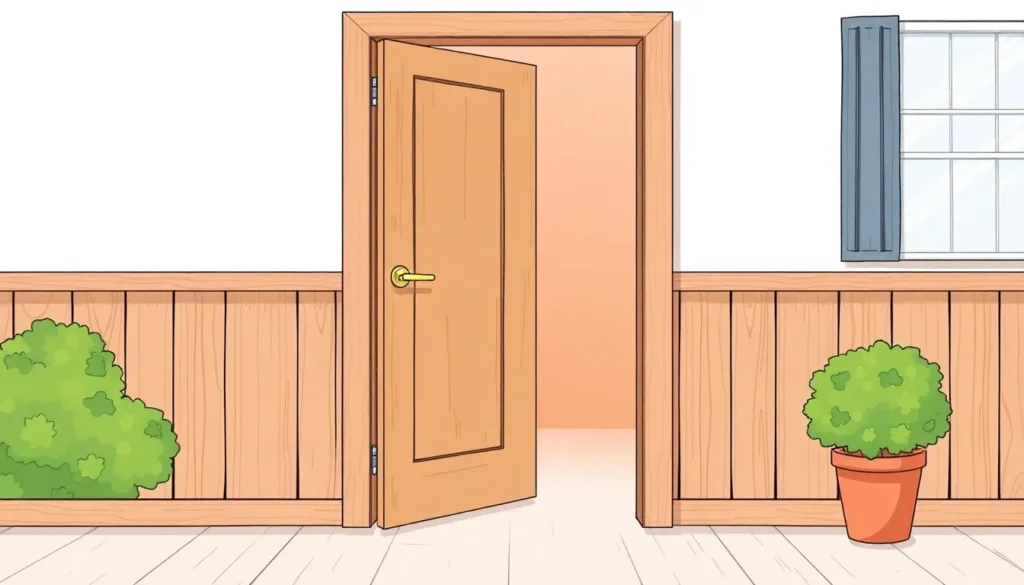
A door jam is a condition or situation where a door becomes stuck, obstructed, or fails to open or close as intended. This can result from various factors including physical obstructions, mechanical failure, misalignment of door components, or damage to the door frame or hardware. Door jams can occur in residential, commercial, or industrial settings and may range from minor inconveniences to serious safety hazards.
Detailed Explanation
The term “door jam” generally describes any scenario where a door is impeded from moving freely. This impediment may arise from several causes such as swelling of wooden doors due to moisture, warped frames, broken or faulty hinges, or objects lodged in the door’s pathway. In some instances, door jams are intentional, for example, a door jammed shut as a security measure or as a result of locking mechanisms. However, unintentional door jams often require repair or adjustment to restore proper function.
How It Works
When a door is designed to open and close smoothly, it relies on precise alignment of the door slab within the door frame, functioning hinges, and hardware like locks and handles. A door jam occurs when any of these elements are compromised. Misalignment can cause the door to rub against the frame, making it difficult to open or close. Physical blockages such as debris or objects stuck in the gap between the door and frame also prevent movement. In mechanical terms, a jam can be caused by seized hinges or damaged locking components that restrict the door’s motion.
Examples
- Residential Door Jam: A wooden front door swells after exposure to rain, causing it to stick and become difficult to open.
- Commercial Door Jam: A metal door in an office building becomes misaligned due to loose hinges, preventing it from closing properly.
- Emergency Door Jam: A fire exit door is jammed shut due to debris blocking the frame, posing a safety risk.
Pros and Cons
Pros:
- Intentional door jams can enhance security by preventing unauthorized entry.
- Door jams caused by locking mechanisms provide controlled access.
Cons:
- Unintentional door jams can cause inconvenience and restrict access.
- They may present safety hazards, especially in emergency exit routes.
- Repairs can involve time, cost, and may require professional assistance.
Comparison Table
| Aspect | Door Jam | Door Lock |
|---|---|---|
| Meaning | An obstruction or mechanical failure preventing door movement. | A device designed to secure a door by controlling access. |
| Purpose | Often unintentional; may restrict door movement. | Intentional; to secure premises. |
| Cause | Physical obstruction, misalignment, damage. | Installed hardware like deadbolts, latches. |
| Effect | Door stuck or difficult to open/close. | Door secured against unauthorized access. |
Decision Checklist
- Use this if you encounter a door that will not move freely due to obstruction or mechanical failure.
- Avoid this if the door is intentionally locked or secured with proper locking hardware.
- Check this first for physical blockages, hinge alignment, and door frame condition before assuming mechanical failure.
What is the easiest way to understand door jams?
The simplest way to understand a door jam is to think of it as anything that stops a door from opening or closing smoothly, whether it’s a physical object stuck in the door’s path, a door that has swollen or warped, or mechanical parts like hinges or locks that are not functioning properly.
FAQ
What causes a door to jam?
A door can jam due to physical obstructions, misalignment of the door or frame, swelling of the door material, damaged hinges, or faulty locking mechanisms.
How can I fix a jammed door?
Fixing a jammed door may involve removing any physical obstructions, adjusting or tightening hinges, sanding swollen wood, or repairing damaged hardware. In some cases, professional help may be necessary.
Are door jams dangerous?
Door jams can be hazardous, especially if they block emergency exits or prevent quick access in urgent situations. It is important to address door jams promptly to ensure safety.


Leave a Reply