
Short Answer
Overview
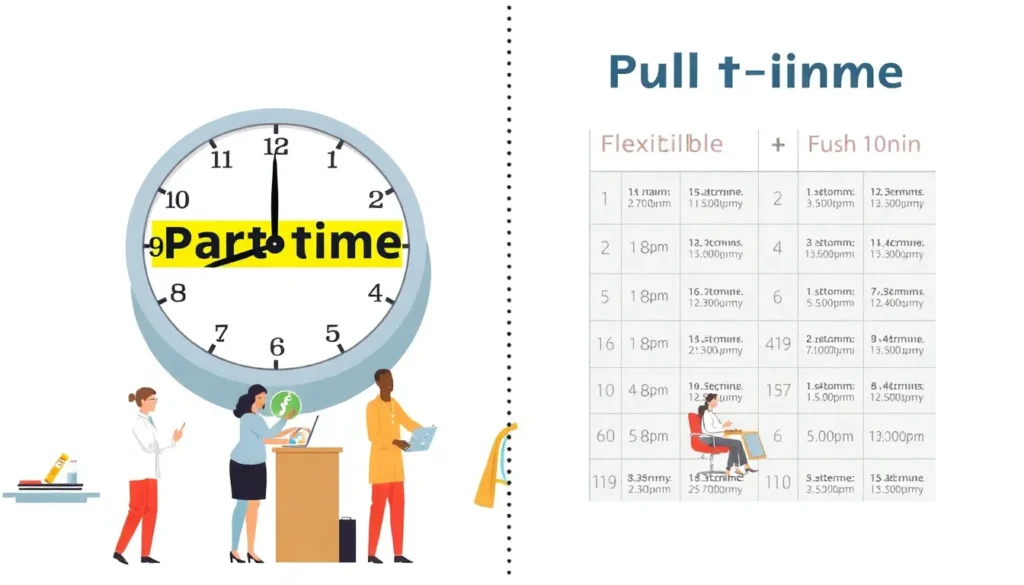
Part time job hours denote the amount of time an employee works that is less than the hours established for full-time employment. Although the specifics can vary by country, industry, and employer, part-time work generally involves fewer than 35 to 40 hours per week. Part-time jobs often offer flexibility in scheduling and are common among students, retirees, or individuals seeking supplementary income.
Detailed Explanation
There is no universally fixed number of hours that defines a part time job. In many jurisdictions, full-time employment is considered to be approximately 35 to 40 hours per week, and working fewer hours than this threshold qualifies as part-time. For example, in the United States, the Fair Labor Standards Act (FLSA) does not define full-time or part-time employment, leaving it to employers to set their own standards. However, many employers consider under 30 hours per week as part-time.
Legally, part-time workers may receive different benefits compared to full-time employees, which can include variations in health insurance, paid leave, and retirement benefits. The exact number of hours to qualify as part-time work may also influence eligibility for such benefits.
How It Works
Part-time job hours are typically scheduled based on the needs of the employer and the availability of the employee. These hours can be fixed or variable, often spread across fewer days or fewer hours per day than full-time roles. Employers may offer part-time positions to maintain operational flexibility or reduce labor costs.
The scheduling of part-time hours can vary widely, including morning shifts, evening shifts, or weekend work. Some part-time roles are ongoing, while others may be seasonal or temporary.
Examples
- A retail employee working 20 hours per week, spread over four 5-hour shifts, is considered to have part-time job hours.
- A college student working 15 hours weekly in a campus library position typically holds a part-time job.
- A healthcare assistant working three 8-hour days per week (24 hours total) qualifies as part-time in many healthcare settings.
Why It Matters
Understanding part-time job hours is important for both employers and employees to ensure compliance with labor laws, correct payroll processing, and appropriate benefit administration. For workers, knowing the definition helps in selecting jobs that fit their schedules and financial needs. For employers, it assists in workforce planning and managing labor costs.
Common Misconceptions
Misconception: Part-time jobs always mean working less than 20 hours per week.
Correction: The number of hours constituting part-time work varies widely; many part-time roles range up to 30 or even 35 hours per week depending on employer or legal definitions.
Misconception: Part-time employees are not entitled to any benefits.
Correction: While part-time employees may receive fewer benefits than full-time workers, many jurisdictions require prorated or specific benefits for part-time staff, depending on hours worked and tenure.
Pros and Cons
Pros: Flexibility in scheduling, opportunities for work-life balance, ability to gain experience or supplement income without full-time commitment.
Cons: Potentially limited access to benefits, lower income compared to full-time roles, less job security or career advancement opportunities.
Comparison Table
| Aspect | Part-Time Job Hours | Full-Time Job Hours |
|---|---|---|
| Meaning | Working fewer hours than full-time, often under 35-30 hours weekly | Working standard full-time hours, typically around 35-40 hours weekly |
| Benefits | Often limited or prorated | Usually full benefits package |
| Flexibility | More flexible scheduling | Generally fixed schedule |
| Income | Lower total earnings due to fewer hours | Higher total earnings due to more hours worked |
Decision Checklist
What is the easiest way to understand Part Time Job Hours?
The simplest way to understand part-time job hours is to compare them to full-time hours: part-time means working fewer hours per week than what an employer or law defines as full-time, usually providing greater flexibility but often with fewer benefits and lower income.
FAQ
How many hours are considered part-time?
Part-time hours typically range from a few hours per week up to around 30-35 hours, depending on the employer or legal definitions in a given country.
Do part-time employees receive benefits?
Part-time employees may receive prorated or limited benefits depending on the employer and local labor laws, but they generally receive fewer benefits than full-time employees.
Can part-time hours vary week to week?
Yes, part-time work schedules can be fixed or variable, with hours that may change weekly depending on employer needs and employee availability.






Leave a Reply