
Short Answer
Overview
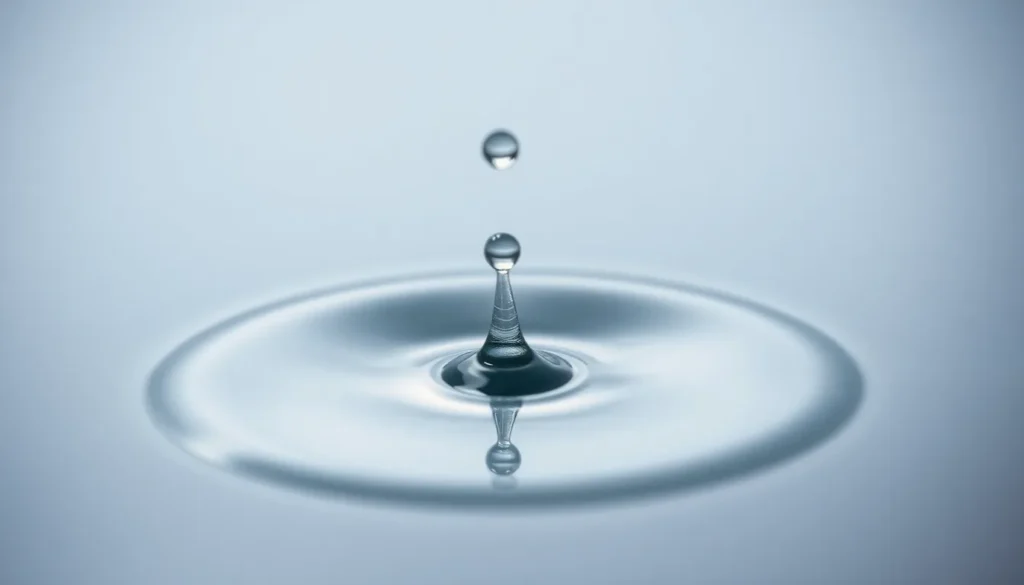
A drip stain is a type of stain created when a liquid falls freely onto a surface and forms a mark due to the impact and subsequent pooling or spreading of the fluid. The stain is characterized by its shape, size, and distribution, which are influenced by factors such as the height from which the liquid falls, the volume of the liquid, the surface texture, and the liquid’s viscosity. Drip stains are commonly analyzed in forensic science to reconstruct events involving bloodshed, but they also appear in everyday contexts such as cleaning, painting, and household accidents.
Detailed Explanation
Drip stains form when drops of liquid separate from a source and fall under the influence of gravity onto a surface. Upon impact, the kinetic energy of the droplet causes it to spread out, creating a stain that may be roughly circular but can vary in shape depending on the angle of impact and surface texture. The edges of a drip stain often display irregularities, and satellite stains may form as smaller droplets splash outward from the main stain. The size of the stain is generally proportional to the volume of the droplet and the height from which it falls, as higher drops gain more velocity and produce larger stains.
In forensic bloodstain pattern analysis, drip stains are particularly important because they can help determine the position of a bleeding victim or the dynamics of a violent event. The shape and distribution of drip stains can indicate the height and angle of the drop, as well as whether the source was moving or stationary.
How It Works
The formation of a drip stain begins with a liquid detaching from a source, such as a faucet, wound, or brush. Gravity accelerates the droplet downward until it impacts a surface. Upon contact, the droplet’s momentum causes it to deform and spread, creating a stain whose diameter depends on the droplet’s velocity and volume, and the surface’s absorbency and texture. Surface tension and viscosity influence how the liquid spreads or beads. After initial impact, evaporation or absorption may alter the stain’s appearance over time.
In controlled environments, understanding these factors allows scientists and analysts to interpret drip stains for reconstructive purposes. For example, forensic experts use mathematical models and empirical data to estimate the height and angle of blood drip stains at a crime scene.
Examples
- Forensic Analysis: Blood drip stains found at crime scenes help forensic investigators determine the position of a victim or assailant, as well as the nature of an injury.
- Artistic Techniques: Artists may intentionally create drip stains by allowing paint or ink to drip onto a canvas, producing abstract patterns and textures.
- Household Incidents: Drip stains from spilled coffee or water on furniture or floors are common and often require cleaning or stain removal.
Pros and Cons
Pros:
- Provide valuable information in forensic investigations by indicating position and movement.
- Can be used creatively in art to produce unique visual effects.
- Help in understanding fluid dynamics on surfaces for scientific studies.
Cons:
- May cause damage or unwanted marks on surfaces, requiring cleaning.
- Interpretation can be complex and requires expertise, especially in forensic contexts.
- Environmental factors such as surface texture and evaporation can alter the stain, complicating analysis.
Comparison Table
| Aspect | Drip Stain | Splash Stain |
|---|---|---|
| Meaning | A stain formed by liquid droplets falling freely and impacting a surface, creating relatively circular marks. | A stain formed by liquid impacting a surface at high velocity, causing irregular shapes and satellite stains. |
| Formation | Single droplets falling due to gravity. | High-speed impact causing liquid to disperse. |
| Typical Use | Forensic analysis, art, cleaning. | Forensic analysis of violent impacts. |
Decision Checklist
- Use this if: You need to analyze or understand stains created by droplets falling from a height, such as in bloodstain pattern analysis or paint techniques.
- Avoid this if: The stain results from splashing or smearing rather than discrete droplets.
- Check this first: Confirm the stain’s shape and distribution to differentiate drip stains from other stain types.
What is the easiest way to understand Drip Stain?
The easiest way to understand a drip stain is to visualize a drop of liquid falling from a height onto a surface, creating a roughly circular mark that varies in size based on how far the drop fell and how much liquid it contained. Observing common examples like water droplets on a table or paint drips helps grasp the concept intuitively.
FAQ
What causes a drip stain to form a circular shape?
A drip stain typically forms a circular shape because the liquid droplet impacts the surface perpendicularly and spreads evenly in all directions, influenced by surface tension and the liquid’s properties.
How are drip stains used in forensic investigations?
Forensic experts analyze the size, shape, and distribution of drip stains, especially blood, to determine the height, angle, and movement of the source, helping reconstruct the events of a crime.
Can drip stains be prevented or cleaned effectively?
Prevention involves controlling the source of the liquid to avoid drops falling freely. Cleaning depends on the liquid type and surface but often requires prompt action to prevent permanent staining.




Leave a Reply