
Short Answer
Overview
A kosher kitchen is designed and maintained according to the Jewish dietary laws known as kashrut. These laws dictate which foods are permissible and how they must be prepared and handled to be considered “kosher”. The primary features of a kosher kitchen include the separation of meat and dairy products, the use of specific utensils and appliances, and adherence to rituals that ensure the food’s kosher status is preserved. The concept stems from religious texts, particularly the Torah, and has been elaborated upon through rabbinic interpretation and tradition.
Detailed Explanation
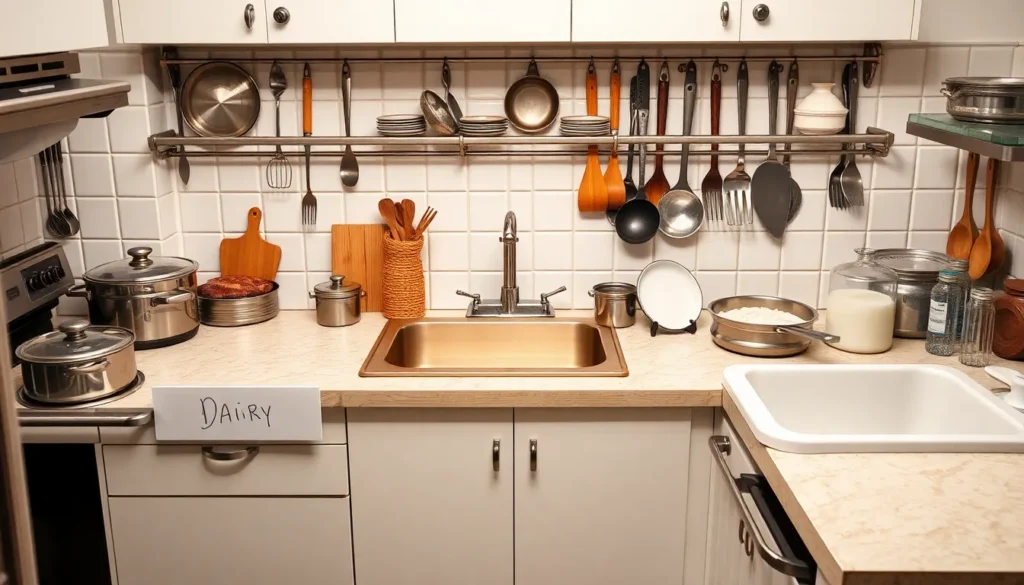
At its core, a kosher kitchen is structured to prevent the mixing of meat and dairy, a central tenet of kashrut. This separation extends to not only the foods themselves but also to the utensils, pots, pans, sinks, and sometimes even ovens and refrigerators used in their preparation and storage. Typically, a kosher kitchen will have entirely separate sets of dishes and cookware for meat and dairy. Additionally, certain foods, such as pork and shellfish, are prohibited, and kosher animals must be slaughtered and processed according to specific rules.
Utensils and appliances that come into contact with non-kosher food or with both meat and dairy require a ritual cleansing process called kashering before they can be used again in a kosher kitchen. The kitchen layout often reflects these requirements, with clearly marked areas or separate spaces to ensure compliance.
How It Works
The operation of a kosher kitchen involves strict protocols from food selection through cooking and serving. Meat and dairy foods are purchased separately, and their preparation areas are kept distinct. For example, a kosher kitchen might have two sinks: one for meat and one for dairy, to avoid cross-contamination. Cooking vessels are often designated for meat or dairy use exclusively.
Before cooking, utensils and surfaces must be clean and free from residue of forbidden foods. The kosher certification of ingredients is critical, as only products that meet kosher standards are used. During cooking, careful attention is paid to timing and processes, such as waiting periods between consuming meat and dairy products.
Examples
- Separate Dish Sets: In many kosher homes, there are two complete sets of dishes, cutlery, and cookware — one for meat meals and another for dairy meals.
- Dual Ovens or Microwave Use: Some kosher kitchens have two ovens or microwaves to maintain strict separation of meat and dairy.
- Use of Kosher Salt and Specific Utensils: Salt is often used to remove blood from meat as part of the koshering process, and special knives and cutting boards are used exclusively for either meat or dairy.
Why It Matters
A kosher kitchen is important for those who observe kashrut because it allows them to maintain religious dietary laws consistently and avoid inadvertent violations. It also fosters a sense of spiritual discipline and community identity. For many Jewish families, adhering to kosher law is a way to honor tradition, religious commandments, and cultural heritage, influencing daily life and communal practices.
Common Misconceptions
Misconception: A kosher kitchen just means food is “clean” or “healthy.”
Correction: Kosher laws focus on ritual and religious requirements, not necessarily on health or hygiene standards, although they may overlap in some cases.
Misconception: All kosher kitchens look identical.
Correction: Kosher kitchen setups can vary widely depending on community customs, level of observance, space, and resources available.
Pros and Cons
Pros: Helps maintain religious observance; prevents cross-contamination of forbidden food combinations; strengthens cultural and spiritual identity.
Cons: Can be costly and complex to maintain; requires significant space and equipment; may limit food choices and complicate meal preparation.
Comparison Table
| Aspect | Kosher Kitchen | Non-Kosher Kitchen |
|---|---|---|
| Meaning | Adheres to Jewish dietary laws separating meat and dairy, using kosher ingredients and utensils | No specific religious dietary restrictions; utensils and food types mixed freely |
| Food Restrictions | Prohibits non-kosher animals and mixing meat/dairy | No inherent restrictions based on religious law |
| Utensil Use | Separate sets for meat and dairy; ritual cleaning required | Single set used for all foods |
| Certification | Ingredients often bear kosher certification | No certification necessary |
Decision Checklist
What is the easiest way to understand a Kosher Kitchen?
The easiest way to understand a kosher kitchen is to view it as a space organized to respect religious laws that mandate the separation of meat and dairy foods, using distinct utensils and appliances, and following specific preparation methods to ensure all food is kosher. It is both a physical and ritual system designed to maintain spiritual purity in food consumption.
FAQ
Why must meat and dairy be separated in a kosher kitchen?
The separation of meat and dairy stems from a biblical injunction against cooking a kid in its mother's milk. This has been interpreted by rabbinic authorities to prohibit consuming or cooking meat and dairy together.
Can a non-Jewish kitchen be kosher?
A kitchen must follow the laws of kashrut, including supervision and adherence to ritual processes, to be considered kosher. While a non-Jewish person can maintain kosher practices, formal certification and supervision are often required for commercial kitchens.
What happens if meat and dairy accidentally mix in a kosher kitchen?
If meat and dairy mix accidentally, depending on the extent and type of contact, utensils or food may need to be kashered or discarded according to halachic rulings. The kitchen user typically consults a rabbi for guidance.






Leave a Reply