
Short Answer
Overview
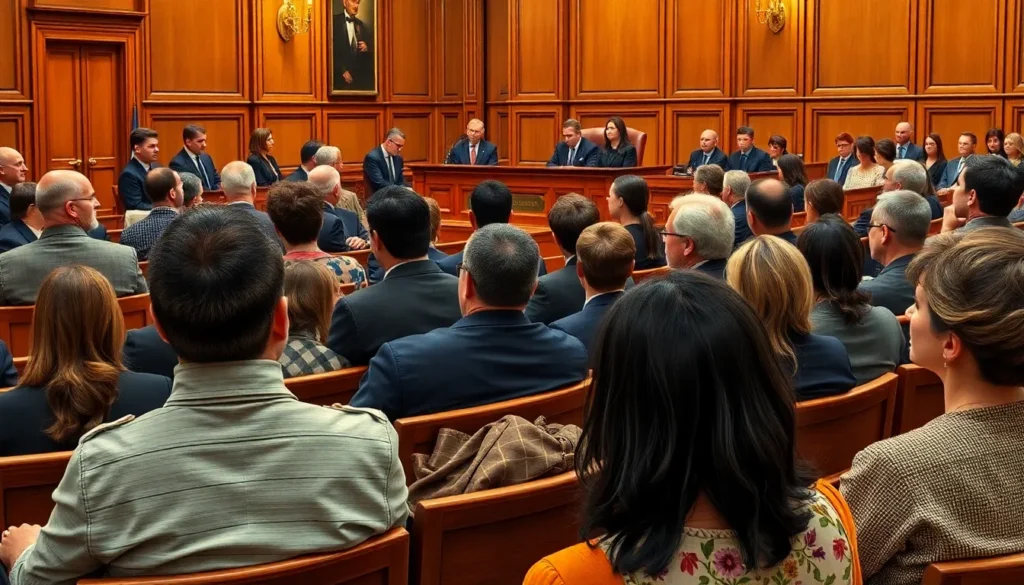
A petit jury—sometimes called a trial jury—is a group of citizens convened in a court of law to hear evidence and decide the facts in a civil or criminal case. The jury’s primary responsibility is to assess the evidence presented during a trial and render a verdict, such as guilty or not guilty in criminal cases or liable or not liable in civil cases. Petit juries are distinct from grand juries, which primarily determine whether there is sufficient evidence to indict a suspect before trial.
Detailed Explanation
The petit jury typically consists of a panel of 6 to 12 members, depending on the jurisdiction and type of case. Jurors are selected through a process called voir dire, where potential jurors are questioned by attorneys and the judge to assess their suitability to serve impartially. Once selected, petit jurors listen to witness testimony, review evidence, and receive instructions from the judge regarding the relevant law.
After the presentation of all evidence and closing arguments, the jury deliberates privately to reach a consensus or majority verdict, depending on legal requirements. In criminal cases, the verdict often must be unanimous to convict or acquit, while in some civil cases, a majority decision may suffice.
How It Works
During a trial, the petit jury operates as the trier of fact. Its members are tasked with evaluating the credibility of witnesses, the reliability of evidence, and whether the prosecution or plaintiff has met the burden of proof. The judge oversees the trial, rules on matters of law, and provides the jury with legal instructions.
Deliberations are conducted without the presence of the judge, attorneys, or parties involved. Jurors discuss the case and apply the law as instructed to the facts they have determined. Upon reaching a verdict, the jury returns to the courtroom where the verdict is read publicly.
Examples
- Criminal Trial: In a murder case, a petit jury listens to witness testimonies, forensic evidence, and legal arguments before deciding whether the defendant is guilty beyond a reasonable doubt.
- Civil Trial: In a personal injury lawsuit, a petit jury evaluates the evidence and determines whether the defendant is liable for damages and the amount to be awarded.
- Mixed Cases: Some trials involve both criminal and civil elements, where a petit jury may be tasked with rendering separate verdicts for each aspect.
Pros and Cons
- Pros: Petit juries provide a community-based check on legal proceedings, promote fairness by involving impartial citizens, and enhance public confidence in the justice system.
- Cons: Jurors may lack legal expertise, be influenced by biases or emotions, and deliberations can sometimes be time-consuming or inconsistent.
Comparison Table
| Aspect | Petit Jury | Grand Jury |
|---|---|---|
| Meaning | A group of citizens who determine guilt or liability in a trial | A group that decides if there is enough evidence to charge someone with a crime |
| Size | Typically 6 to 12 members | Typically 16 to 23 members |
| Function | Decides verdict in civil or criminal trials | Investigates and issues indictments |
| Decision Requirement | Usually unanimous or majority verdict | Majority vote required |
| Public Involvement | Verdict announced publicly | Proceedings often secret |
Decision Checklist
- Use this if: You need an impartial group to evaluate evidence and render a verdict in a trial.
- Avoid this if: The issue concerns preliminary criminal indictment decisions, which require a grand jury.
- Check this first: The jurisdiction’s legal requirements regarding jury size, unanimity, and case type.
What is the easiest way to understand Petit Jury?
The easiest way to understand a petit jury is to think of it as an impartial group of everyday citizens who listen to all sides of a court case, review the evidence, and then decide the outcome based on the facts and the law as explained by the judge.
FAQ
How many jurors are in a petit jury?
A petit jury typically consists of between 6 and 12 jurors, depending on the jurisdiction and whether the case is civil or criminal.
What is the difference between a petit jury and a grand jury?
A petit jury decides the verdict in a trial, while a grand jury determines whether there is enough evidence to indict a suspect and proceed to trial.
Do petit juries have to be unanimous in their verdict?
In most criminal cases, petit juries must reach a unanimous verdict. However, in some civil cases, a majority verdict may be acceptable, depending on jurisdiction.





Leave a Reply