
Short Answer
Overview
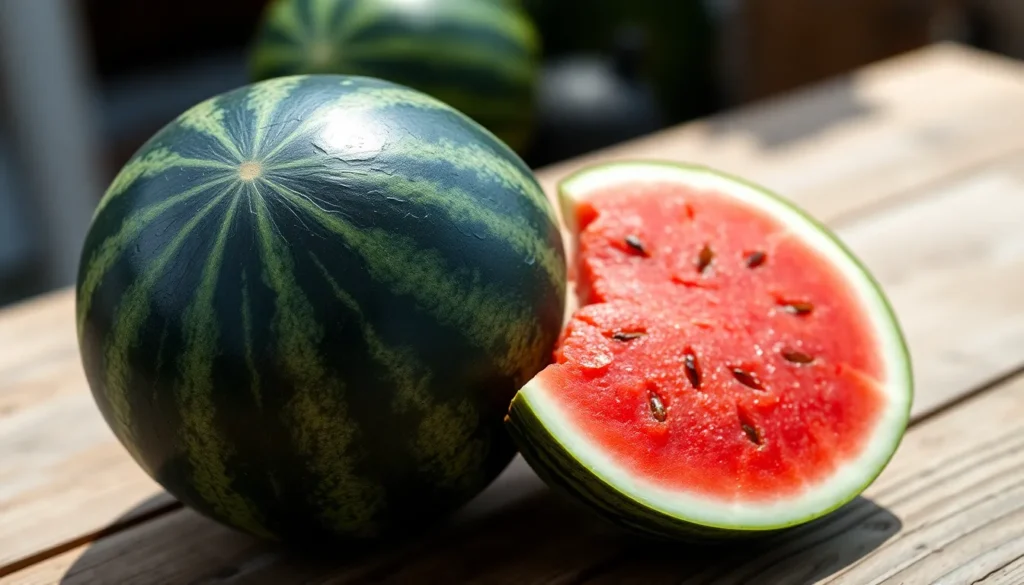
The Black Diamond watermelon is a distinct variety of watermelon characterized by its dark green to nearly black rind. It is known for its large size, typically ranging from 15 to 25 pounds, and its bright red, sweet flesh. This variety is commonly grown in warm climates and is appreciated for its balance of sweetness and crisp texture. The thick rind of the Black Diamond watermelon makes it particularly suitable for shipping and storage compared to some other watermelon types.
Detailed Explanation
The Black Diamond watermelon belongs to the species Citrullus lanatus, the common watermelon. It stands out among other varieties due to its deep coloration and size. The rind’s dark coloration results from higher concentrations of chlorophyll and other pigments, which can help protect the fruit from sun damage during growth. Inside, the flesh is bright red, firm, and juicy, containing a typical watermelon seed pattern.
It is cultivated primarily in regions that offer a long growing season with warm temperatures, such as parts of the southern United States and some Mediterranean climates. The fruit requires ample water and nutrients during its development to achieve its characteristic size and flavor profile.
How It Works
The growth of a Black Diamond watermelon involves standard agricultural practices similar to other watermelon varieties. Seeds are planted in warm soil and require consistent irrigation. As the fruit develops, its thick rind forms to protect the inner flesh from pests and environmental stressors.
The dark rind color develops naturally due to genetic traits and environmental factors such as sunlight exposure. The dense flesh develops sugars through photosynthesis and nutrient uptake, which contributes to the sweet taste upon ripening. Harvesting is typically done when the fruit reaches maturity, indicated by the yellowing of the underside where the melon rests on the ground and the drying of the tendril closest to the fruit.
Examples
- A fully ripe Black Diamond watermelon weighing approximately 20 pounds, showcasing the signature dark rind and vivid red flesh upon slicing.
- Black Diamond watermelons grown in Texas, where warm conditions and long summers provide an ideal environment.
- Use of Black Diamond watermelons in fresh fruit salads and as a refreshing summer snack, appreciated for their sweetness and texture.
Pros and Cons
- Pros: Large size provides ample serving portions; thick rind offers protection during transport; sweet and juicy flesh; visually distinctive appearance.
- Cons: Larger size may be cumbersome for casual consumption; requires warm climate and long growing season; rind thickness requires more effort to cut through.
Comparison Table
| Aspect | Black Diamond Watermelon | Alternative/Related Topic (Sugar Baby Watermelon) |
|---|---|---|
| Meaning | A watermelon variety with a dark rind and large size | A smaller watermelon variety with a dark green rind and sweeter flesh |
| Size | Large (15-25 pounds) | Small to medium (6-12 pounds) |
| Rind Color | Dark green to nearly black | Dark green, less intense than Black Diamond |
| Flesh | Bright red, sweet, juicy | Deep red, very sweet |
| Growing Conditions | Warm climates, long season | Warm climates, shorter season |
Decision Checklist
- Use this if you want a large watermelon with a thick rind suitable for transport and storage.
- Avoid this if you prefer smaller, more convenient watermelons for casual eating.
- Check this first if your growing conditions are warm enough and if you have sufficient space for larger fruit.
What is the easiest way to understand Black Diamond Watermelon?
The easiest way to understand a Black Diamond watermelon is to recognize it as a large, dark-rinded watermelon variety known for its sweet red flesh and thick protective skin, typically grown in warm climates with a long growing season.
FAQ
What distinguishes a Black Diamond watermelon from other types?
The Black Diamond watermelon is distinguished by its dark green to nearly black rind, large size, thick rind, and sweet, bright red flesh. These characteristics make it different in appearance and handling compared to other watermelon varieties.
Where is the Black Diamond watermelon typically grown?
It is typically grown in warm climates with long growing seasons, such as the southern United States and regions with similar environmental conditions.
How do you know when a Black Diamond watermelon is ripe?
Ripe Black Diamond watermelons usually have a yellowish spot on the underside where they rest on the ground, and the tendril nearest the fruit turns brown and dries up. These signs indicate maturity and readiness for harvest.






Leave a Reply