
Short Answer
Overview
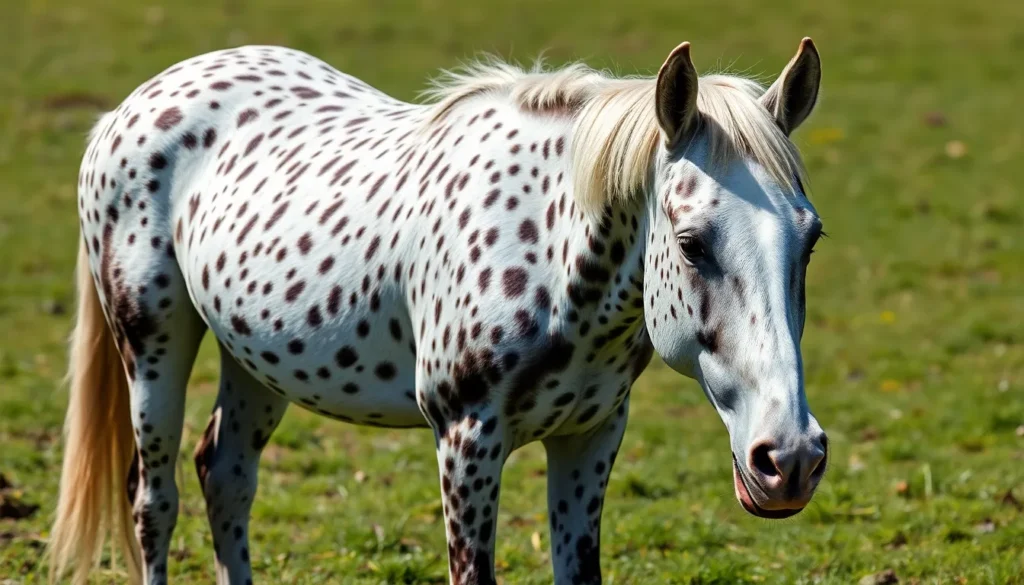
A roan horse is defined by its unique coat coloration, which consists of an even mixture of white and colored hairs on the body, while the head, mane, tail, and lower legs generally retain a solid color. This coat pattern is genetically inherited and is found in many horse breeds worldwide. Roan is considered a distinct coat pattern rather than a color, and it is often confused with other similar patterns such as gray or flea-bitten gray horses.
Detailed Explanation
The roan pattern arises from the presence of the roan gene, which causes white hairs to be evenly interspersed throughout the base coat color. This results in a coat that appears lighter and speckled, but the horse’s underlying base color remains visible. The distribution of white hairs is consistent over the horse’s body, and unlike grays, roan horses do not progressively lighten with age. The head and lower limbs typically show minimal or no roaning.
How It Works
The roan pattern is caused by a dominant gene, meaning that only one copy of the gene is necessary for the trait to be expressed. When a horse inherits the roan gene, it will exhibit the mixture of white and colored hairs, but the intensity can vary slightly between individuals. The roan gene affects hair pigmentation but does not alter the horse’s skin color. It is important to note that roan should not be confused with graying or other white spotting patterns, which have different genetic causes and visual characteristics.
Examples
- Bay Roan: A horse with a bay base coat that has white hairs evenly mixed throughout the body, resulting in a reddish-brown speckled appearance.
- Blue Roan: A black-based horse exhibiting the roan pattern, giving it a bluish or slate-gray appearance due to the mix of black and white hairs.
- Red Roan: A chestnut or sorrel horse with roaning, creating a reddish and white mixed coat.
Why It Matters
Understanding the roan pattern is significant for horse breeders, owners, and enthusiasts because it influences breeding decisions and aids in accurate identification of horses. The roan gene affects coat color inheritance, which can impact the appearance and value of horses in various disciplines. Additionally, distinguishing roan from other patterns helps prevent misclassification and misunderstanding of a horse’s genetics and phenotype.
Common Misconceptions
Misconception: Roan horses lighten progressively with age like gray horses.
Correction: Unlike gray horses, roan horses maintain a consistent coat pattern and color intensity throughout their lives.
Misconception: Roan is a color rather than a pattern.
Correction: Roan is a coat pattern caused by the distribution of white hairs mixed with base coat color, not a color itself.
Pros and Cons
Pros: Roan horses have a distinctive and attractive coat pattern that can be desirable for aesthetic reasons; the pattern is stable over time, aiding in identification.
Cons: Roan can be confused with other patterns, complicating genetic predictions; some registries may have specific rules regarding roan classification.
Comparison Table
| Aspect | Roan Horse | Gray Horse |
|---|---|---|
| Meaning | A coat pattern with an even mixture of white and colored hairs over the body. | A coat color that progressively lightens with age due to the gray gene. |
| Genetic Basis | Dominant roan gene causing white hair interspersion. | Gray gene causing gradual depigmentation of hair. |
| Appearance Over Time | Coat remains stable; does not lighten. | Coat lightens progressively, often turning nearly white. |
| Areas Affected | Body mainly; head and legs usually retain base color. | Entire coat, including head and legs. |
Decision Checklist
What is the easiest way to understand Roan Horses?
The simplest way to understand roan horses is to recognize that their coat is a mixture of white and colored hairs evenly spread across the body, giving a speckled or frosted appearance, with the head and legs typically remaining solid-colored. Unlike gray horses, roans do not lighten with age, and the pattern remains consistent throughout the horse’s life.
FAQ
What causes a horse to have a roan coat?
A horse's roan coat is caused by a dominant gene that produces an even mixture of white and colored hairs across the body, resulting in the distinctive speckled appearance.
How can you tell a roan horse from a gray horse?
Roan horses have a stable coat pattern with mixed hairs that do not lighten over time, while gray horses progressively lose pigment and lighten as they age.
Are all roan horses the same color?
No, roan is a pattern that can occur on various base colors, such as bay, black, or chestnut, producing different roan variants like bay roan, blue roan, and red roan.





Leave a Reply