
Short Answer
Overview
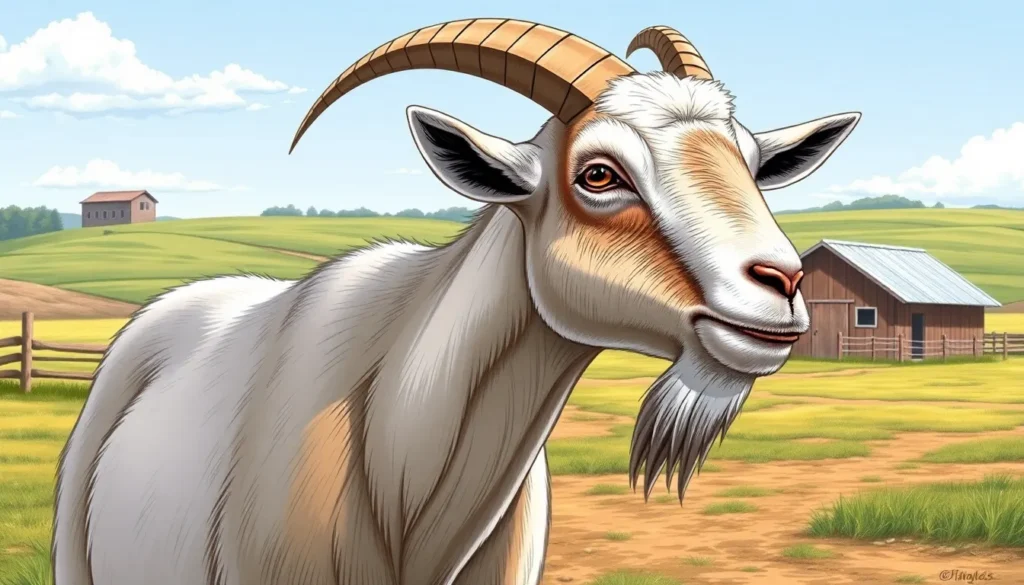
A male goat is typically referred to by specific terms that distinguish it from female goats and young goats. The most widely used names for male goats are “buck” and “billy.” These terms apply primarily to adult male goats, while younger males may be called “bucklings.” Understanding these terms is important for those involved in agriculture, animal husbandry, and goat breeding.
Detailed Explanation
The terminology for goats varies somewhat by region and context, but in general, an adult male goat is called a “buck” or “billy.” The term “buck” is often used in formal or agricultural contexts, while “billy” is more colloquial. A young male goat is known as a “buckling,” similar to how a young female goat is called a “doeling” or “kid.” The female goat is called a “doe” or “nanny,” and a baby goat is simply called a “kid.”
Male goats are biologically distinguished by their reproductive anatomy and secondary sexual characteristics. Bucks typically have a stronger odor during the breeding season, which is used to attract females. They also tend to be more aggressive and territorial than females or young goats.
How It Works
The naming conventions for male goats help farmers and breeders communicate effectively about their herds. When managing goats, it is important to identify the sex and maturity of the animals for breeding, health, and care purposes. For example, bucks are often separated from does except during the breeding season to control reproduction. Knowing the difference between a buck and a buckling can affect decisions about feeding, housing, and veterinary care.
In addition to terminology, the behavior and physical traits of male goats during certain times, such as rutting season, are important for managing the animals. Bucks may display increased vocalizations, urine spraying, and other behaviors associated with mating readiness.
Examples
- Buck: An adult male goat used for breeding in a farm setting.
- Billy: A colloquial term for an adult male goat, often used interchangeably with buck.
- Buckling: A young male goat, usually under one year of age.
- Doe/Nanny: Female goats, adult and mature.
- Kid: A baby goat of either sex, usually under one year old.
Why It Matters
Correctly identifying and naming male goats is important for effective animal management, breeding programs, and veterinary care. Understanding the distinctions between bucks, billys, and bucklings helps farmers optimize herd health and productivity. It also aids in communication within agricultural communities and in educational contexts where knowledge of livestock terminology is necessary.
Common Misconceptions
Misconception: All male goats are called “billys.”
Correction: While “billy” is a common colloquial term for an adult male goat, “buck” is equally accurate and often used in formal contexts.
Misconception: The term “buck” refers to young male goats only.
Correction: “Buck” usually refers to an adult male goat, while a young male is more accurately called a “buckling.”
Pros and Cons
Comparison Table
| Aspect | Male Goat | Female Goat |
|---|---|---|
| Meaning | Adult male goat; called “buck” or “billy” | Adult female goat; called “doe” or “nanny” |
| Young | Buckling | Doeling or kid |
| Behavior | More territorial and aggressive, especially during rut | Generally less aggressive |
| Purpose | Breeding males | Milk production, breeding |
Decision Checklist
- Use this if you need to identify or refer to an adult male goat in farming or breeding contexts.
- Avoid this if you are referring to a young male goat—use “buckling” instead.
- Check this first to ensure you are using the correct term based on the goat’s age and sex to avoid confusion.
What is the easiest way to understand what a male goat is called?
The easiest way to understand what a male goat is called is to remember that adult males are “bucks” or “billys,” and young males are “bucklings.” These terms distinguish them from females (does or nannies) and young goats (kids). This basic classification helps in recognizing the roles and characteristics of goats in agricultural and domestic settings.
FAQ
What is the difference between a buck and a billy?
Both terms refer to an adult male goat. 'Buck' is more commonly used in formal or agricultural contexts, while 'billy' is a colloquial term, often used interchangeably.
What do you call a young male goat?
A young male goat is called a 'buckling,' which distinguishes it from an adult male goat, called a buck or billy.
Why do male goats have a strong odor?
Male goats, especially during the breeding season (rut), emit a strong musky odor used to attract females and assert dominance over other males.




Leave a Reply