
Short Answer
Overview
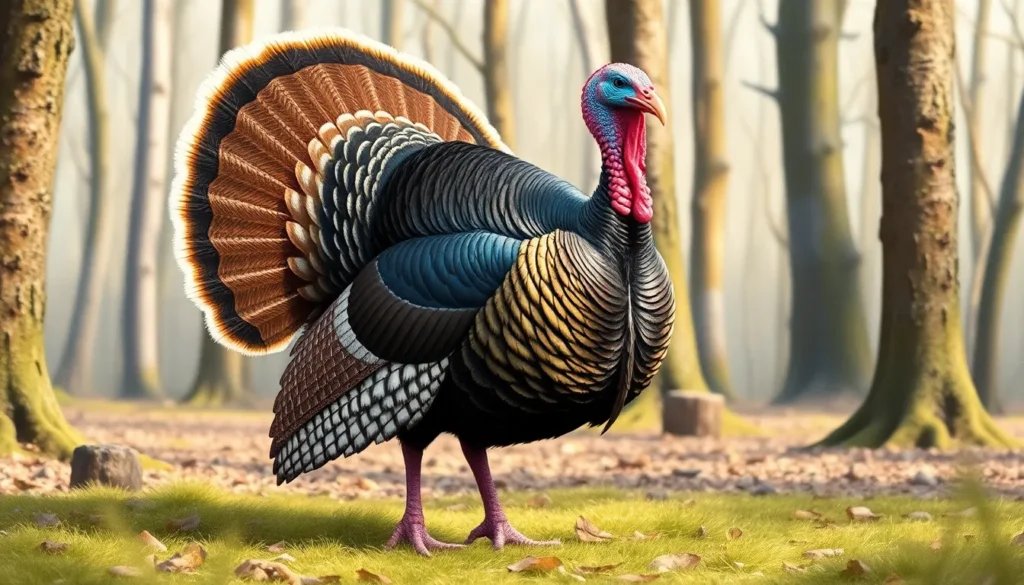
The term used to describe a male turkey varies depending on context, but the most common names include tom, gobbler, and strutter. These terms identify the adult male bird of the species Meleagris gallopavo, which is native to North America. Male turkeys are notable for their larger size, distinctive plumage, and their role in mating displays and territorial behavior.
Detailed Explanation
A male turkey is typically called a tom, a term widely used in both farming and wildlife contexts. The name “tom” dates back centuries and is used to distinguish males from females, which are known as hens. Another common term used especially during hunting season is gobbler, derived from the gobbling sound males produce as part of their courtship and territorial displays. The term strutter highlights the male’s distinctive behavior of puffing up its body feathers, spreading its tail fan, and dragging its wings while moving in a showy manner to attract females and intimidate rivals.
Male turkeys reach sexual maturity around their first year and develop physical traits such as a larger body size, a beard (a tuft of coarse hair-like feathers projecting from the chest), and spurs on their legs. They also display vivid coloration on the head and neck, which can change based on mood and environmental factors.

How It Works
The naming conventions for male turkeys arise from their biological and behavioral characteristics. The term “tom” is a straightforward designation to differentiate the male from the female. The “gobbler” refers explicitly to the male’s vocalization, a loud gobbling call used primarily during the mating season to attract females and establish dominance among other males.
The term “strutter” reflects the male’s unique courtship behavior. During the breeding season, males engage in elaborate displays that involve spreading their tail feathers into a fan, puffing out their bodies, and making specific movements accompanied by gobbling sounds. These behaviors are critical for reproductive success and social hierarchy within turkey populations.
Examples
- Wild Turkeys: In natural habitats, male wild turkeys (toms) are often observed performing their strutting displays in early spring to attract hens.
- Domesticated Turkeys: Male turkeys raised on farms are also called toms; they are generally larger and bred for meat production.
- Hunting Context: Hunters often refer to male turkeys as gobblers, especially during the spring season when males are most vocal and visible.
Why It Matters
Understanding the terminology used for male turkeys is important for wildlife biology, hunting, farming, and cultural references. These terms help clarify communication about turkey behavior, biology, and management. Additionally, recognizing the male’s unique characteristics aids in conservation efforts and sustainable hunting practices.
Common Misconceptions
Misconception: All turkeys make the gobbling sound.
Correction: Only male turkeys (gobblers or toms) produce the characteristic gobbling sound; females (hens) do not.
Misconception: The term “gobbler” refers to any turkey.
Correction: “Gobbler” specifically refers to a male turkey, not females or juvenile birds.
Pros and Cons
Pros: Using specific terms like tom, gobbler, and strutter allows for precise communication about turkey sex, behavior, and role in reproduction.
Cons: These terms can sometimes be confusing to those unfamiliar with turkey biology or hunting vernacular, leading to misuse or misunderstanding.
Comparison Table
| Aspect | Male Turkey | Female Turkey |
|---|---|---|
| Meaning | Adult male turkey, called tom, gobbler, or strutter | Adult female turkey, called hen |
| Physical Traits | Larger size, beard, spurs, colorful head | Smaller size, no beard or spurs, duller coloration |
| Behavior | Gobbling calls, strutting displays | Less vocal, no strutting display |
Decision Checklist
What is the easiest way to understand a male turkey?
The easiest way to understand a male turkey is to recognize the common terms—tom, gobbler, and strutter—and associate them with the male bird’s distinctive size, behavior, and vocalizations, especially during the mating season when these traits are most prominent.
FAQ
What is the difference between a tom and a gobbler?
Both terms refer to the adult male turkey, but "gobbler" specifically highlights the male's vocalization during mating season, while "tom" is a more general term.
Do female turkeys gobble?
No, only male turkeys produce the characteristic gobbling sound. Female turkeys, called hens, make different, quieter vocalizations.
Why do male turkeys strut?
Male turkeys strut as part of their courtship display to attract females and to assert dominance over other males during the breeding season.



Leave a Reply