
Short Answer
Overview
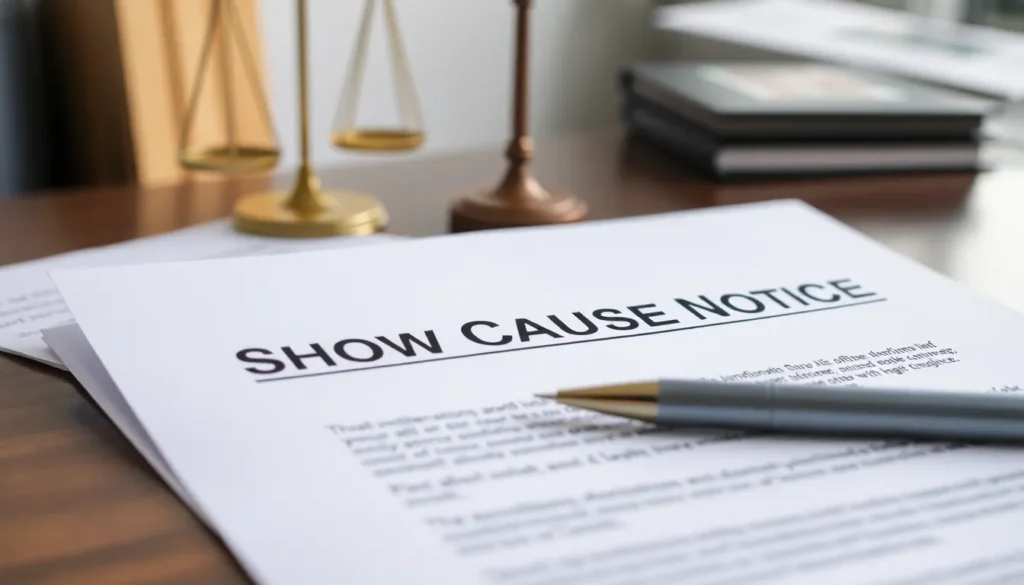
A show cause notice is a formal written communication issued by an authority, such as an employer, government agency, or regulatory body, requesting an individual or entity to explain or justify a particular action, behavior, or situation. The purpose of the notice is to provide the recipient an opportunity to respond to allegations, complaints, or observations before any punitive or corrective action is taken.
Detailed Explanation
Show cause notices are typically used in disciplinary, regulatory, or legal settings. They serve as a procedural step to ensure fairness and transparency by allowing the concerned party to present their side of the story. The notice outlines the issues or charges that need explanation and often specifies a deadline by which the response must be submitted. Failure to respond or an unsatisfactory explanation may lead to further action such as penalties, suspension, dismissal, or legal proceedings.
How It Works
The process generally begins when an authority identifies a potential breach of rules, unsatisfactory performance, misconduct, or other concerns. A show cause notice is then issued, detailing the reasons for concern and requesting a written explanation. Upon receiving the response, the authority reviews the explanation and decides whether to proceed with disciplinary or corrective measures or to close the matter if the explanation is found adequate.
Examples
- Employment: An employer issues a show cause notice to an employee suspected of violating company policies, asking the employee to explain their conduct before termination or suspension.
- Regulatory Compliance: A government agency sends a show cause notice to a business found potentially violating regulations, requiring justification before penalties or license revocation.
- Academic Institutions: A university might issue a show cause notice to a student accused of academic dishonesty, requesting an explanation prior to disciplinary hearings.
Pros and Cons
- Pros: Ensures procedural fairness, provides an opportunity for defense, promotes transparency, and prevents arbitrary decisions.
- Cons: Can delay resolution, may be perceived as intimidating, and if misused, could be employed to harass or pressure individuals.
Comparison Table
| Aspect | Show Cause Notice | Alternative/Related Concept |
|---|---|---|
| Meaning | A formal request for explanation to justify actions or conduct. | Warning Letter: A formal notification of a breach without necessarily requiring a detailed response. |
| Purpose | To seek explanation before taking disciplinary or corrective action. | To inform or caution about undesirable behavior or performance. |
| Common Usage | Legal, employment, regulatory, and administrative proceedings. | Employment and administrative contexts, often as a preliminary step. |
Decision Checklist
- Use this if you need a formal explanation before proceeding with disciplinary action.
- Avoid this if the issue can be resolved informally or through direct communication.
- Check this first to ensure the notice clearly states the concerns and specifies a reasonable deadline for response.
What is the easiest way to understand a Show Cause Notice?
The simplest way to understand a show cause notice is as a formal question from an authority asking, “Why should we not take action against you?” It is an opportunity to explain or defend oneself before any penalties are imposed.
FAQ
What is the primary purpose of a show cause notice?
The primary purpose is to request an explanation or justification from the recipient regarding alleged misconduct or non-compliance before any adverse action is taken.
Is a response to a show cause notice mandatory?
While it is generally advisable and often required to respond within the specified deadline, failure to respond can lead to decisions being made in the absence of the recipient's explanation, possibly resulting in penalties.
Can a show cause notice be issued verbally?
Typically, show cause notices are issued in writing to ensure a clear record of the concerns and to provide a formal opportunity to respond; verbal notices are uncommon and less enforceable.





Leave a Reply