
Short Answer
Overview
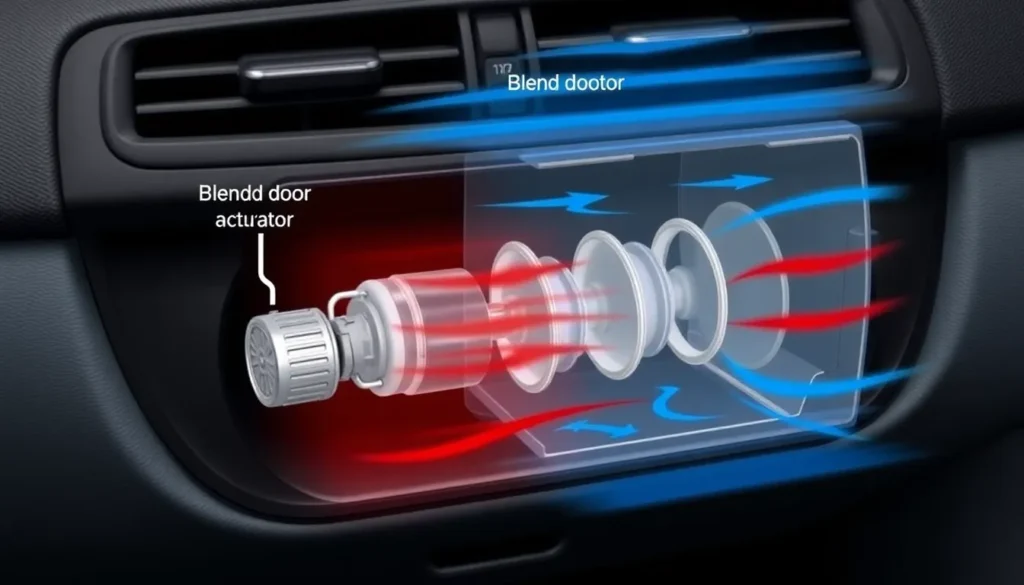
A blend door actuator is an essential component of a vehicle’s heating, ventilation, and air conditioning (HVAC) system. It is an electric motor responsible for controlling the position of blend doors that regulate the mix of hot and cold air entering the vehicle’s passenger compartment. By adjusting these blend doors, the actuator helps maintain the desired cabin temperature and airflow distribution according to user settings.
Detailed Explanation
The blend door actuator operates by moving small internal doors, known as blend doors, within the HVAC system’s air distribution box. These doors alter the path of airflow to mix varying amounts of heated and cooled air. The actuator receives signals from the climate control module, which processes input from temperature sensors and user controls. This mechanism ensures that the air temperature and direction meet the set preferences for comfort.
How It Works
The actuator contains a small electric motor coupled with a gear assembly that translates motor rotation into door movement. When the climate control system sends a voltage or digital signal, the actuator motor turns to position the blend door accordingly. For example, to increase heating, the actuator moves the blend door to allow more air to pass through the heater core. Conversely, to cool the cabin, it positions the door to route air through the evaporator. The actuator continuously adjusts to maintain consistent temperature and airflow as conditions change.
Examples
- Manual Climate Control Systems: In older vehicles with manual knobs, a blend door actuator responds to user inputs, adjusting blend doors to mix air temperatures.
- Automatic Climate Control: Modern vehicles use electronically controlled blend door actuators integrated with sensors and microcomputers for precise temperature regulation.
- Dual-Zone HVAC Systems: Vehicles equipped with separate driver and passenger temperature controls utilize multiple blend door actuators to independently adjust airflow for each zone.
Why It Matters
The blend door actuator is vital for maintaining passenger comfort and proper HVAC function. A malfunctioning actuator may result in inconsistent cabin temperatures, inability to switch between heating and cooling, or unwanted airflow patterns. This can lead to discomfort and reduced vehicle usability, especially in extreme weather conditions.
Common Misconceptions
Misconception: The blend door actuator controls the fan speed.
Correction: Fan speed is controlled by the blower motor and its resistor or control module, not the blend door actuator.
Misconception: If the HVAC system is not blowing hot or cold air, the blend door actuator is always the cause.
Correction: While actuator failure can cause airflow issues, other potential causes include refrigerant levels, heater core problems, or electrical faults.
Pros and Cons
Pros:
- Provides precise control over cabin air temperature and airflow direction.
- Enables automatic and manual climate control systems to function effectively.
- Improves passenger comfort and HVAC efficiency.
Cons:
- Susceptible to mechanical failure or motor burnout over time.
- Replacement can be complex due to difficult access in some vehicle models.
- Failure can lead to inconsistent temperature control and reduced HVAC performance.
Comparison Table
| Aspect | Blend Door Actuator | Alternative/Related Topic (Blower Motor) |
|---|---|---|
| Meaning | Electric motor controlling blend doors to regulate air temperature and flow. | Electric motor controlling the speed of air pushed through the HVAC system. |
| Function | Adjusts air mix by positioning internal doors. | Controls airflow volume by varying fan speed. |
| Location | Inside HVAC air distribution box near blend doors. | Mounted near the HVAC intake or air filter housing. |
| Common Issues | Failure causes improper temperature blending. | Failure results in no airflow or fixed fan speed. |
Decision Checklist
What is the easiest way to understand a Blend Door Actuator?
Think of the blend door actuator as a small motorized gatekeeper inside your car’s climate system that opens or closes pathways to mix hot and cold air, ensuring the cabin temperature matches your selected setting.
FAQ
What happens if a blend door actuator fails?
If a blend door actuator fails, it may cause the HVAC system to blow air at an incorrect temperature or only from a single source, as the blend doors may get stuck in one position.
Can I fix a blend door actuator myself?
Fixing or replacing a blend door actuator can be challenging due to its location inside the dashboard or HVAC housing. It often requires removal of panels and components, so professional service is recommended unless you have mechanical experience.
How can I tell if my blend door actuator is malfunctioning?
Signs include inconsistent cabin temperature, clicking noises from behind the dashboard, or inability to switch between hot and cold air settings despite proper HVAC control inputs.



Leave a Reply