
Short Answer
Overview
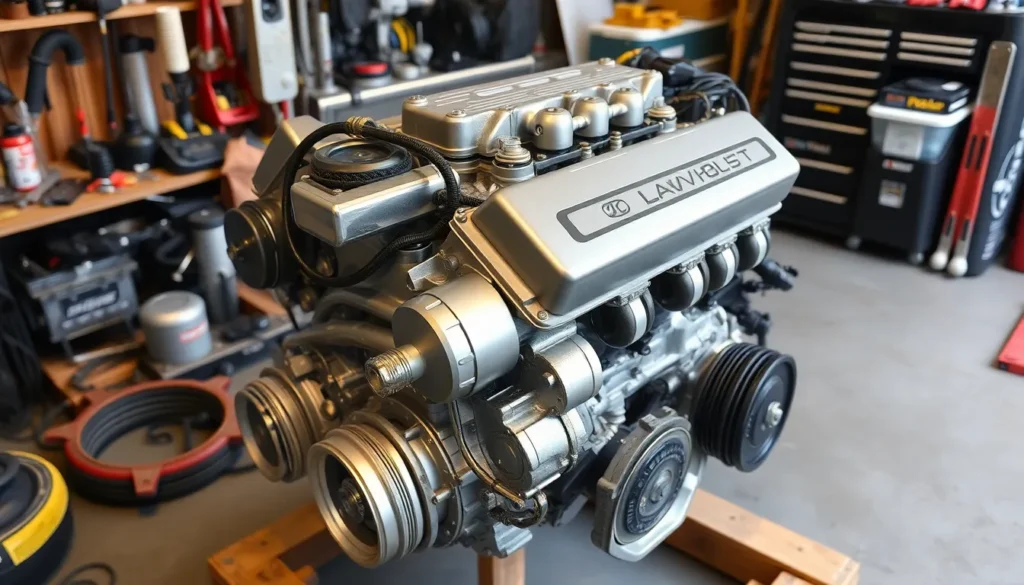
The LS engine is a family of V8 engines produced by General Motors (GM) starting in the late 1990s. Originating as a successor to the Chevrolet small-block engine series, the LS engines are known for their compact design, high performance potential, and durability. These engines have been widely used in a variety of vehicles, including passenger cars, trucks, and performance vehicles, and have also become a popular choice for engine swaps and custom automotive applications.
Detailed Explanation
The LS engine family includes multiple variations differing in displacement, configuration, and technology. Most LS engines feature an aluminum or cast-iron block, with an overhead valve (OHV) or pushrod design utilizing two valves per cylinder. Displacements typically range from 4.8 to 7.0 liters, depending on the specific model and application. The design emphasizes a short engine length and efficient airflow, contributing to better power-to-weight ratios compared to previous engine families.
LS engines often incorporate modern technologies such as electronic fuel injection, variable valve timing (in later models), and advanced ignition systems. The architecture allows for significant aftermarket support and ease of modification, which has made the LS engine a favorite among car builders and motorsport enthusiasts.
How It Works
The LS engine operates on the four-stroke internal combustion principle: intake, compression, power, and exhaust strokes. Fuel and air are drawn into the combustion chamber during the intake stroke, compressed by the piston, ignited by a spark plug during the power stroke, and then expelled during the exhaust stroke. The pushrod OHV design uses a camshaft located within the engine block that actuates rocker arms, which then open and close the valves in the cylinder heads.
Fuel delivery is managed by an electronic fuel injection system, which precisely controls the amount of fuel entering the combustion chamber to maximize efficiency and power output. LS engines typically use a coil-on-plug ignition system to deliver spark to each cylinder independently.
Examples
- LS1: Introduced in 1997 in the Chevrolet Corvette and Camaro, the LS1 is a 5.7-liter V8 known for its performance and reliability.
- LS3: A 6.2-liter V8 introduced in 2008, used in vehicles such as the Chevrolet Camaro SS and Corvette C6, offering increased displacement and power.
- LS6: A high-performance 5.7-liter variant used in the Corvette Z06 from 2001 to 2004, featuring improved heads and camshaft for greater output.
- LS7: A 7.0-liter V8 engine designed for the Corvette Z06 (C6), known for its large displacement and high-revving capabilities.
Pros and Cons
- Pros: Compact design, strong aftermarket support, high power potential, relatively lightweight, durable construction, and compatibility with various vehicles.
- Cons: Pushrod design may limit high-RPM efficiency compared to overhead cam engines, some variants have higher emissions, and installation can require specialized knowledge for swaps.
Comparison Table
| Aspect | LS Engine | Alternative/Related Topic (e.g., Small-Block Chevy) |
|---|---|---|
| Meaning | GM’s modern V8 engine series featuring OHV design and advanced materials. | Earlier Chevrolet small-block V8 engines with simpler design and less advanced technology. |
| Design | Pushrod OHV, aluminum or iron blocks, 2 valves per cylinder. | Pushrod OHV, primarily cast iron blocks, less optimized combustion chambers. |
| Performance | High horsepower and torque with efficient combustion and lightweight components. | Reliable but generally lower power output and heavier construction. |
| Applications | Passenger cars, trucks, performance vehicles, engine swaps. | Older GM vehicles, classic cars, some performance models. |
Decision Checklist
- Use this if you want a powerful, compact, and widely supported V8 engine for performance or custom projects.
- Avoid this if you require an overhead cam design or need an engine with extremely high RPM capability for specialized racing.
- Check this first compatibility with your vehicle’s transmission, electronics, and chassis before selecting an LS engine for a swap.
What is the easiest way to understand LS Engines?
The easiest way to understand LS engines is to recognize them as a modern evolution of Chevrolet’s small-block V8 engines, designed for improved power, efficiency, and versatility. They maintain the traditional pushrod architecture but incorporate advanced materials and electronics, making them both reliable and adaptable for a wide range of automotive uses.
FAQ
What does LS stand for in LS engine?
The LS designation does not officially stand for a specific phrase but is used by General Motors to identify a particular family of V8 engines that succeeded the earlier small-block series.
Can LS engines be used in engine swaps?
Yes, LS engines are popular choices for engine swaps due to their compact size, power potential, and extensive aftermarket support, making them adaptable to a variety of vehicle platforms.
Are LS engines reliable for daily driving?
LS engines are generally considered reliable for daily driving due to their durable design and robust construction, provided they are properly maintained.



Leave a Reply