
Short Answer
Overview
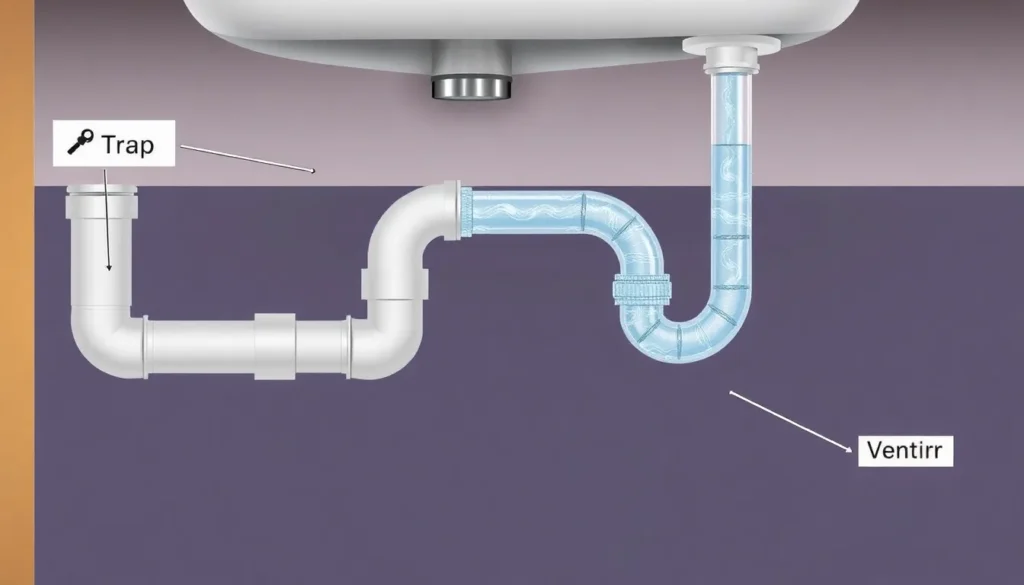
A P trap is a plumbing device commonly used in residential and commercial drainage systems. It is a curved pipe section shaped like the letter ‘P’ (when viewed from the side), positioned beneath sinks, bathtubs, toilets, and other plumbing fixtures. The primary function of a P trap is to create a water seal that prevents the backflow of sewer gases into living spaces while allowing wastewater to flow out to the sewer or septic system.
Detailed Explanation
The P trap is named for its distinctive shape, which consists of a curved section of pipe connected to a straight section that leads away from the fixture. This design traps a small amount of water in the curve, acting as a barrier between the drainage system and the environment. Without this water seal, unpleasant and potentially harmful sewer gases could travel back through the plumbing into the room.
Typically made from materials such as PVC, ABS, or metal (like brass or chrome-plated brass), P traps are standard components in most plumbing codes worldwide. They come in various sizes to fit different types of fixtures and are often designed for easy removal to clear clogs or perform maintenance.
How It Works
When water flows from a sink or other fixture, it passes through the drain and enters the P trap. The curvature of the trap holds a small amount of water at all times, which effectively seals the pipe and blocks sewer gases from passing back into the room. This water barrier is crucial because sewer gases can contain methane, hydrogen sulfide, and other potentially harmful or noxious substances.
As wastewater continues to flow through the plumbing system, the water in the P trap is replenished, maintaining the seal. However, if a fixture is unused for an extended period, this water can evaporate, breaking the seal and allowing gases to enter the space. In such cases, running water through the fixture restores the trap’s function.
Examples
- Kitchen sink: A P trap is installed beneath the sink basin to prevent kitchen odors and sewer gases from entering the room.
- Bathroom sink: The P trap captures water to block odors from the wastewater drain line.
- Bathtub: Bathtub drains commonly use larger P traps to maintain the water seal against sewer gases.
- Floor drains: P traps are also used in floor drains in basements or laundry rooms to prevent gases from the sewer system from rising into the building.
Why It Matters
The P trap is essential for maintaining indoor air quality and sanitation in buildings. By preventing sewer gases from entering occupied spaces, it protects occupants from exposure to harmful gases and unpleasant odors. Additionally, the water seal helps prevent pests and insects from traveling through the drainage system into living areas. Proper installation and maintenance of P traps are critical for effective plumbing system performance and health safety.
Common Misconceptions
Misconception: A P trap is only needed for sinks.
Correction: P traps are used for a variety of plumbing fixtures, including sinks, bathtubs, floor drains, and more.
Misconception: P traps never need maintenance.
Correction: P traps can become clogged or dry out if unused, requiring occasional cleaning or water flow to maintain the water seal.
Pros and Cons
Pros:
- Effectively blocks sewer gases and odors.
- Simple and inexpensive to install.
- Provides a water seal that also prevents pests.
- Easy access for cleaning and maintenance.
Cons:
- Water in the trap can evaporate if unused, breaking the seal.
- Can become clogged with debris, causing drainage issues.
- Improper installation can lead to leaks or insufficient sealing.
Comparison Table
| Aspect | P Trap | S Trap |
|---|---|---|
| Meaning | A curved pipe configuration designed to trap water and prevent sewer gases from entering a building. | Another type of trap with a different shape; typically deeper and less common in modern plumbing due to venting issues. |
| Shape | Curved like the letter ‘P’ when viewed from the side. | Curved in an ‘S’ shape, extending deeper below the fixture. |
| Usage | Commonly used under sinks, tubs, and lavatories in modern plumbing. | Historically used but often replaced due to venting and siphoning problems. |
| Ventilation | Typically vented to prevent siphoning. | More prone to siphoning and loss of water seal without proper venting. |
Decision Checklist
What is the easiest way to understand a P Trap?
The simplest way to understand a P trap is to think of it as a curved section of pipe beneath a sink or fixture that always holds some water. This water acts like a barrier, stopping bad smells and gases from the sewer line from coming back into your home, while still allowing wastewater to flow out.
FAQ
Why is it called a P trap?
It is called a P trap because the shape of the pipe resembles the letter 'P' when viewed from the side, featuring a curved section that traps water.
Can a P trap dry out?
Yes, if a fixture is unused for a long period, the water in the P trap can evaporate, breaking the seal and allowing sewer gases to enter the space. Running water through the fixture restores the water seal.
How do you clean a clogged P trap?
A P trap can be cleaned by removing the trap section beneath the fixture, clearing any debris or buildup, and then reinstalling it. Many traps are designed with slip nuts for easy removal.




Leave a Reply