
Short Answer
Overview
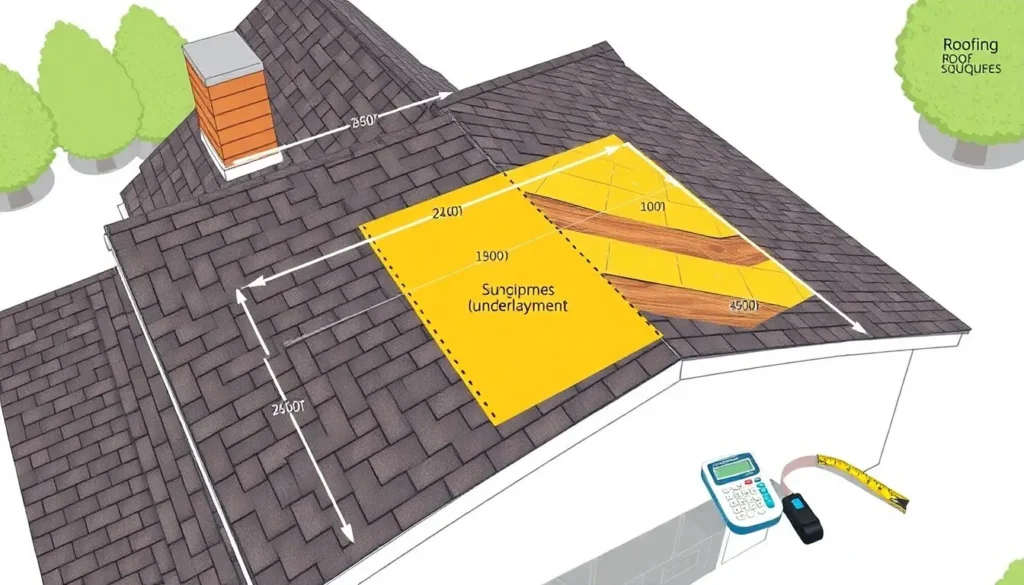
A roofing square is a unit of measurement commonly used in the roofing and construction industries to quantify the amount of roofing material required for a given surface area. One roofing square is equivalent to 100 square feet of roof surface. This measurement helps contractors, suppliers, and homeowners estimate the quantity of materials, such as shingles or underlayment, needed for roofing projects.
Detailed Explanation
The concept of a roofing square simplifies the process of measuring and ordering roofing materials. Rather than dealing with raw square footage numbers, which can be cumbersome and prone to errors, roofing professionals use squares as a standardized unit. This allows for easier communication, pricing, and inventory management. For example, if a roof measures 2,000 square feet, it is said to be 20 roofing squares.
How It Works
To calculate the number of roofing squares needed, the total roof area in square feet is measured or estimated. This total area is then divided by 100 to convert the measurement into squares. Roofing materials are often packaged and sold by the square, making it straightforward to order the correct amount. This measurement accounts for factors such as roof pitch and waste, which may require adjustments to the basic calculation.

Examples
- A single-family home with a roof area of 2,500 square feet would require 25 roofing squares of shingles.
- A small shed with a roof area of 600 square feet would need 6 roofing squares of roofing felt.
- If a contractor is estimating materials for a commercial building with a 10,000 square foot roof, they would calculate 100 roofing squares.
Why It Matters
The roofing square is vital because it standardizes measurements across the industry, facilitating clear communication between contractors, suppliers, and clients. It simplifies material estimation, helps prevent over-ordering or under-ordering, and assists in budgeting and project planning. Using roofing squares ensures more efficient procurement and reduces waste.
Common Misconceptions
Misconception: A roofing square refers to a physical square piece of roofing material.
Correction: A roofing square is a measurement unit equal to 100 square feet, not a physical object.
Misconception: One roofing square always equals the same number of shingles.
Correction: The number of shingles per square can vary depending on the type and size of shingles used.
Pros and Cons
Pros: Standardizes measurement, simplifies ordering, facilitates accurate material estimation, reduces waste, enhances communication within the industry.
Cons: May require adjustments for complex roof shapes or pitches, can lead to confusion if misunderstood by non-professionals, does not account for all installation factors such as overlaps or waste without additional calculations.
Comparison Table
| Aspect | Roofing Square | Square Foot |
|---|---|---|
| Meaning | Unit equal to 100 square feet of roof area | Basic unit of area measurement (1 ft x 1 ft) |
| Usage | Used specifically in roofing for material estimation | General measurement of area in any context |
| Convenience | Simplifies large area calculations | Requires large numbers for big areas |
Decision Checklist
What is the easiest way to understand Roofing Square?
The easiest way to understand a roofing square is to think of it as a simple counting unit for roofing materials where one square equals 100 square feet of roof. Instead of saying “2,300 square feet,” one can say “23 squares,” making it easier to calculate and order roofing supplies.
FAQ
How do I calculate the number of roofing squares for my roof?
Measure the total area of your roof in square feet and then divide that number by 100. The result is the number of roofing squares needed.
Why is a roofing square used instead of square feet?
Roofing squares simplify communication and estimation by reducing large numbers into manageable units, making it easier to order materials and estimate costs.
Does one roofing square mean the same amount of shingles for every roof?
No, the number of shingles per square varies depending on the size and style of shingles used, so this should be confirmed with the manufacturer or supplier.

Leave a Reply