
Short Answer
Overview
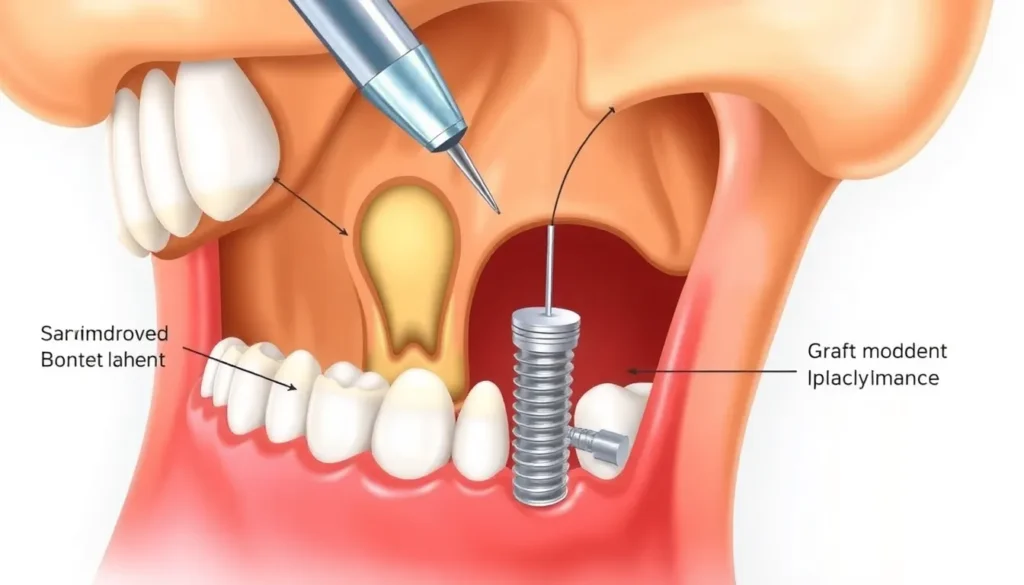
A bone graft for teeth is a surgical procedure in dentistry aimed at augmenting or regenerating bone in the jaw. This procedure is commonly performed when the existing bone is insufficient or deteriorated, often due to tooth loss, periodontal disease, trauma, or congenital defects. The goal of a bone graft is to provide a stable foundation for dental implants, dentures, or other restorative dental treatments by promoting new bone growth in the affected area.
Detailed Explanation
Bone grafting involves transplanting bone tissue to an area where the bone is deficient. The graft material can be obtained from the patient (autograft), a donor (allograft), an animal source (xenograft), or can be synthetic. Each type has its own indications, benefits, and potential risks. The graft serves as a scaffold that encourages the natural bone to regenerate and integrate with the existing jawbone over time.
The process is often necessary when tooth extraction or other factors have led to bone resorption, which can compromise the placement and longevity of dental implants or the fit of dentures. Adequate bone volume is critical for anchoring implants securely and maintaining oral function and aesthetics.

How It Works
During the procedure, the surgeon exposes the affected jawbone and places the graft material at the site of bone loss. The graft material acts as a framework for new bone cells to grow and gradually replace the graft over several months. Healing times vary depending on the graft type, the patient’s health, and the extent of the bone deficiency.
Following the grafting procedure, patients typically undergo a healing period that allows the graft to integrate with the natural bone. After sufficient healing and bone regeneration, dental implants or other restorative treatments can be performed.
Examples
- Sinus Lift: A bone graft procedure performed in the upper jaw to increase bone height beneath the sinus cavity for implant placement.
- Ridge Augmentation: A graft to rebuild the natural contour of the jawbone after tooth loss or trauma.
- Socket Preservation: Placement of graft material immediately after tooth extraction to prevent bone loss.
Why It Matters
Bone grafts are essential for maintaining or restoring oral function, facial structure, and aesthetics. Without adequate bone, dental implants cannot be securely anchored, which limits restorative options for patients who have lost teeth. Bone grafting helps preserve the jaw’s integrity, prevents further bone loss, and facilitates successful dental rehabilitation.
Common Misconceptions
Misconception: Bone grafts are always painful and have long recovery times.
Correction: While some discomfort and swelling are common, advancements in surgical techniques and anesthesia have made bone grafts relatively manageable with shorter recovery periods.
Misconception: Bone grafts use only bone from the patient.
Correction: Grafts can use various materials including donor bone, animal-derived bone substitutes, and synthetic materials, depending on the clinical situation.
Pros and Cons
Comparison Table
| Aspect | Bone Graft for Teeth | Dental Implants Without Graft |
|---|---|---|
| Meaning | Procedure to add or regenerate jawbone for support of dental restorations. | Placement of implants directly into existing jawbone without augmentation. |
| Indications | Insufficient bone volume or density. | Adequate bone volume and quality. |
| Treatment Time | Longer due to healing and integration period. | Shorter, immediate implant placement possible. |
| Risks | Infection, graft failure, additional surgery. | Implant failure if bone insufficient. |
Decision Checklist
- Use this if: Jawbone volume is inadequate for implant placement or restoration support.
- Avoid this if: Patient has contraindications for surgery, such as uncontrolled systemic diseases or poor oral hygiene.
- Check this first: Evaluate bone density and quantity via imaging and clinical examination.
What is the easiest way to understand a bone graft for teeth?
Think of a bone graft as a natural or synthetic scaffold placed in the jaw to encourage the body to grow new bone, similar to how a framework supports new construction. This new bone then provides a solid base for dental implants or other treatments, restoring function and appearance.
FAQ
How long does it take to recover from a bone graft for teeth?
Recovery time varies but typically takes several weeks to months for the graft to integrate fully with the natural bone, depending on the graft type and individual healing.
Is bone grafting painful?
The procedure is performed under anesthesia, so pain during surgery is minimal. Postoperative discomfort is usually manageable with prescribed medication.
Can bone grafts fail?
Yes, although rare, graft failure can occur due to infection, poor blood supply, or patient-related factors such as smoking or systemic diseases.




Leave a Reply