
Short Answer
Overview
A gum graft is a surgical dental procedure designed to correct gum recession, a condition where the gum tissue surrounding the teeth pulls back or wears away, exposing more of the tooth or its root. This exposure can increase the risk of tooth decay, sensitivity, and potential tooth loss. Gum grafts aim to restore the gumline, protect the tooth roots, and improve the aesthetics of the gums.
Detailed Explanation
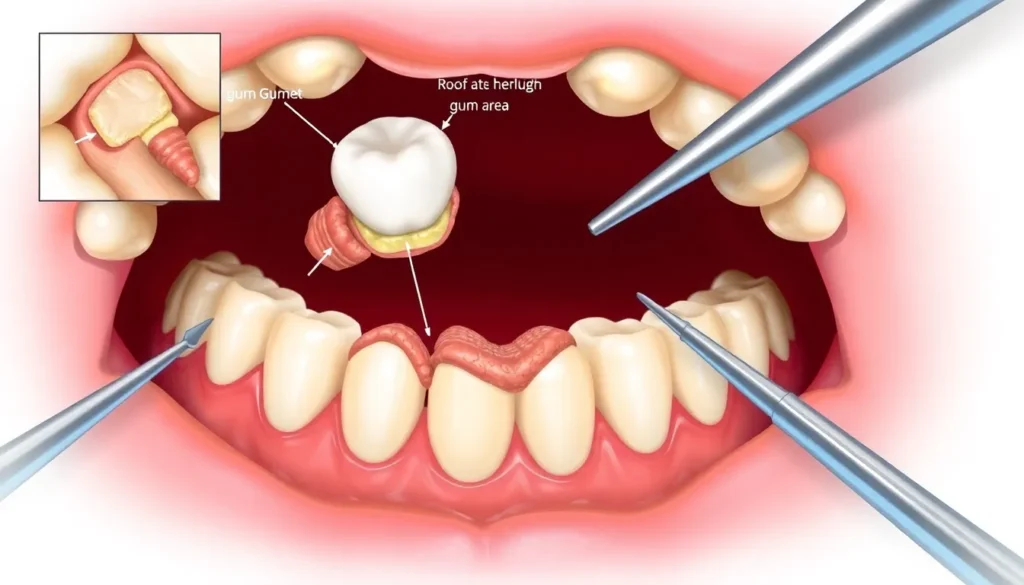
Gum grafting involves harvesting soft tissue, usually from the roof of the mouth (palate), or using donor tissue, and attaching it to the area where gums have receded. Several types of gum graft procedures exist, including connective tissue grafts, free gingival grafts, and pedicle grafts, each suited to different clinical situations. The procedure is typically performed by a periodontist or a trained dental professional.
Receding gums can result from periodontal disease, aggressive tooth brushing, trauma, genetics, or other factors. Gum grafts help to reinforce thin or damaged gum tissue, reduce root exposure, and alleviate symptoms such as tooth sensitivity or increased risk of root cavities.
How It Works
During a gum graft procedure, the dentist first prepares the recipient site by cleaning and sometimes reshaping the gum area around the affected tooth. Then, tissue is harvested from the donor site, commonly the palate, or a donor source. The graft tissue is then sutured onto the recipient site where the gum recession has occurred.
Over time, the grafted tissue integrates with the existing gums, creating a thicker and more resilient gumline. Healing usually takes several weeks, during which patients must follow specific care instructions to ensure successful grafting and avoid infection or graft failure.
Examples
- Connective Tissue Graft: The most common type, where tissue is taken from under the palate’s surface and placed over the exposed root.
- Free Gingival Graft: Tissue is taken directly from the palate’s surface and used to cover the exposed area; often used to increase gum thickness.
- Pedicle Graft: Tissue adjacent to the receded area is partially cut and stretched over the exposed root without a separate donor site.
Pros and Cons
Pros: Improves gum health and aesthetics, reduces tooth sensitivity, protects against root decay, and helps prevent further gum recession.
Cons: Involves surgical intervention with potential discomfort, risk of infection, longer healing time, and may require multiple visits.
Comparison Table
| Aspect | Gum Graft | Scaling and Root Planing |
|---|---|---|
| Meaning | Surgical procedure to add gum tissue to receded areas. | Non-surgical deep cleaning to remove plaque and tartar below the gumline. |
| Purpose | Restore gumline and protect exposed roots. | Treat periodontal disease and reduce inflammation. |
| Invasiveness | Surgical, involves tissue transplantation. | Non-surgical, involves cleaning. |
| Recovery Time | Several weeks for healing. | Usually minimal recovery time. |
Decision Checklist
- Use this if you have significant gum recession exposing tooth roots, tooth sensitivity, or aesthetic concerns.
- Avoid this if you have active gum infection or certain health conditions that contraindicate surgery.
- Check this first with a dental professional to assess gum health and determine the appropriate treatment.
What is the easiest way to understand a Gum Graft?
Think of a gum graft as a patchwork repair where healthy gum tissue is transplanted to cover and protect areas where the gums have worn away, similar to patching a worn spot on fabric to prevent further damage.
FAQ
What causes gum recession?
Gum recession can be caused by periodontal disease, aggressive tooth brushing, trauma, genetics, or poor oral hygiene.
Is a gum graft painful?
The procedure is typically done under local anesthesia, so discomfort during surgery is minimal. Some soreness or swelling may occur during healing.
How long does it take to recover from a gum graft?
Healing usually takes several weeks, during which patients should follow care instructions to ensure graft success and prevent infection.





Leave a Reply