
Short Answer
Overview
925 silver, commonly referred to as sterling silver, is an alloy composed primarily of silver with a purity of 92.5%. The remaining 7.5% typically consists of other metals, most often copper, to enhance the metal’s strength and durability. Due to its balance of purity and resilience, 925 silver is extensively used in crafting jewelry, silverware, and various decorative items.
Detailed Explanation
Pure silver (99.9% silver) is relatively soft and malleable, which limits its practical use in items subjected to frequent handling or wear. To improve its hardness and longevity, pure silver is alloyed with other metals. The 925 standard specifies that an alloy must contain at least 92.5% silver by weight to be considered sterling silver. Copper is the most common alloying metal because it maintains the alloy’s appearance while providing increased mechanical strength.
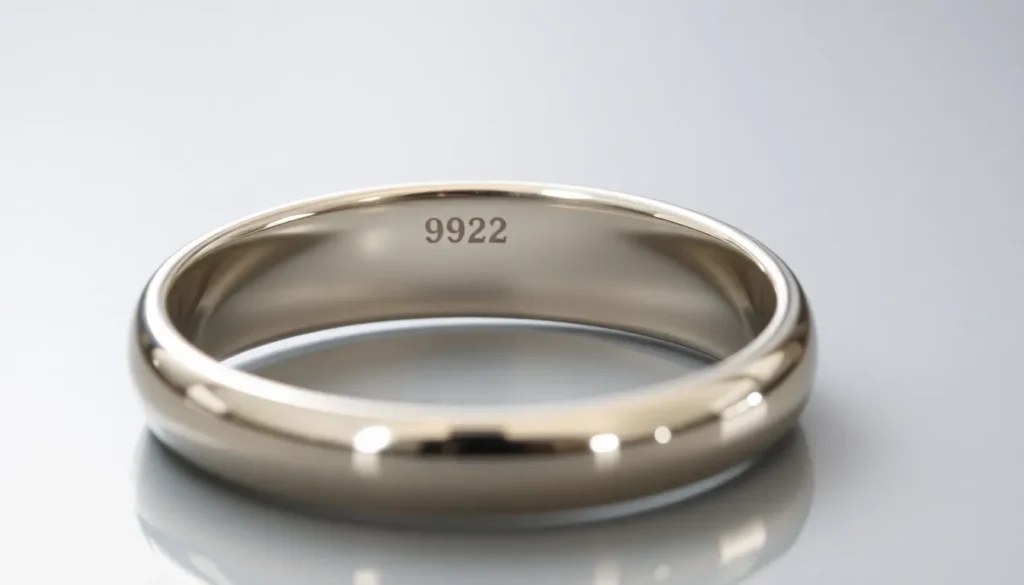
The 925 silver alloy has been a recognized standard for centuries, valued for its balance between the desirable properties of pure silver and the practical benefits of added metals. Items made from 925 silver are often stamped with a “925” hallmark to indicate their silver content and authenticity.

How It Works
The alloying process involves melting pure silver and the secondary metal, usually copper, together at high temperatures to produce a homogeneous mixture. This process allows the combined metals to form a solid solution, resulting in improved hardness and durability without significantly compromising silver’s characteristic luster and corrosion resistance.
When shaped into jewelry or utensils, 925 silver offers a bright, shiny finish that can be polished to maintain its appearance. Over time, the copper content may cause slight tarnishing, which can be cleaned using appropriate silver care methods.
Examples
- Jewelry: Rings, necklaces, bracelets, and earrings commonly utilize 925 silver due to its combination of beauty and strength.
- Silverware: Cutlery and serving pieces made from sterling silver are prized for both aesthetic appeal and functionality.
- Decorative Items: Items such as picture frames, candlesticks, and collectible coins are often crafted using 925 silver.
Pros and Cons
- Pros: High purity with strong durability, attractive shine, widely recognized and accepted standard, hypoallergenic for most users.
- Cons: Can tarnish over time due to copper content, requires regular maintenance, not as hard as some other metal alloys used in jewelry.
Comparison Table
| Aspect | 925 Silver | Fine Silver (99.9%) |
|---|---|---|
| Meaning | Alloy containing 92.5% silver and 7.5% other metals, typically copper. | Nearly pure silver with 99.9% silver content. |
| Durability | More durable and harder due to alloying metals. | Soft and prone to scratching and deformation. |
| Appearance | Bright and shiny with good polish retention. | Brighter but softer and less practical for everyday use. |
| Tarnishing | Can tarnish due to copper content. | Less prone to tarnishing but softer. |
Decision Checklist
- Use this if you want jewelry or items combining silver purity with durability.
- Avoid this if you need pure silver for specialized applications or minimal alloy content.
- Check this first for authenticity by verifying the “925” hallmark on silver items.
What is the easiest way to understand 925 Silver?
Think of 925 silver as pure silver strengthened with a small amount of another metal, usually copper, to make it more durable and suitable for everyday objects like jewelry. It retains the appearance and properties of silver while being less fragile than pure silver.
FAQ
What does the '925' stamp on silver mean?
The '925' stamp indicates that the item is made of sterling silver, containing 92.5% pure silver and 7.5% other metals, usually copper.
Is 925 silver the same as pure silver?
No, 925 silver is an alloy with 92.5% silver content, whereas pure silver is 99.9% silver. The alloying metals in 925 silver improve durability.
Does 925 silver tarnish?
Yes, 925 silver can tarnish over time due to the copper content reacting with sulfur and moisture in the air, but tarnish can be removed with proper cleaning.

Leave a Reply