
Short Answer
Overview
A swim spa is a hybrid aquatic installation that integrates the functionalities of a swimming pool and a hot tub or spa. Typically smaller than a standard swimming pool, swim spas are designed to offer a space for swimming, exercise, relaxation, and hydrotherapy within a compact footprint. They are equipped with water propulsion systems, allowing users to swim in place against a current, facilitating steady swimming without requiring a large pool area.
Detailed Explanation
Swim spas are constructed as self-contained units, often made from materials such as fiberglass, acrylic, or durable plastics. These units are designed to be installed indoors or outdoors and usually feature heated water to enhance comfort and therapeutic benefits. Unlike traditional swimming pools, swim spas provide a current generated by one or more water jets or propellers, enabling users to swim continuously in place. This feature is commonly utilized for fitness training, physical therapy, and recreational swimming.
In addition to the swim area, many swim spas include spa zones with jets for massage and relaxation purposes. The size of swim spas varies, but they are generally long and narrow, facilitating swimming strokes and aquatic exercises. Their compact size and versatility make them suitable for residential use, fitness centers, rehabilitation clinics, and wellness facilities.
How It Works
Swim spas operate by circulating water through powerful jets or current generators that create a steady flow against which a swimmer can swim without moving forward. The propulsion system can be adjusted to vary the speed and intensity of the current, accommodating different skill levels and exercise goals. The water temperature is maintained by integrated heaters, allowing for year-round use in various climates.
The unit is typically equipped with filtration and sanitation systems similar to those found in swimming pools, which maintain water cleanliness and safety. Controls for jet speed, temperature, and sometimes lighting and sound systems are usually accessible via a control panel. The design ensures that despite the compact size, the water remains sufficiently deep and wide for effective swimming and exercise.
Examples
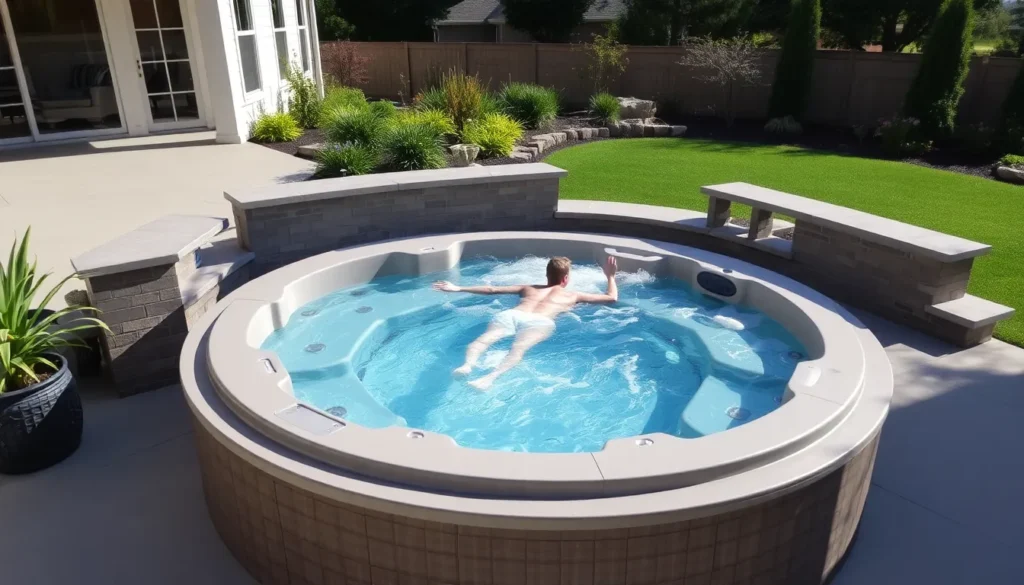
- A residential swim spa installed in a backyard, providing space for lap swimming and hydrotherapy massage jets for relaxation.
- A rehabilitation center utilizing swim spas for aquatic therapy and low-impact exercise for patients recovering from injuries.
- A fitness facility offering swim spa sessions for cardiovascular workouts and resistance training in a controlled environment.
Why It Matters
Swim spas present an accessible alternative to traditional swimming pools, requiring less space, lower maintenance, and reduced installation costs. They provide diverse benefits including cardiovascular exercise, muscle strengthening, relaxation, and therapeutic treatment. Their versatility makes aquatic activities more feasible for individuals living in areas with limited outdoor space or in colder climates where outdoor pools are less practical.
Common Misconceptions
Misconception: Swim spas are just small swimming pools.
Correction: While swim spas resemble small pools, they are equipped with propulsion systems that create a current for swimming in place, unlike standard pools that lack this feature.
Misconception: Swim spas are only for relaxation.
Correction: Swim spas serve multiple purposes including exercise, physical therapy, and relaxation, making them multifunctional aquatic environments.
Pros and Cons
Pros: Compact size suitable for limited spaces, year-round usability due to heating, multifunctional use for fitness and therapy, lower maintenance compared to traditional pools, and easier installation.
Cons: Limited swimming area compared to full-sized pools, higher initial cost than basic hot tubs, potential noise from water jets, and may require regular maintenance of propulsion systems.
Comparison Table
| Aspect | Swim Spa | Traditional Swimming Pool |
|---|---|---|
| Meaning | Compact aquatic unit combining swimming and spa features with a current for swimming in place. | Large water-filled structure designed primarily for swimming without current generation. |
| Size | Typically small to medium, long and narrow. | Large and variable depending on design. |
| Functionality | Swimming, exercise, hydrotherapy, relaxation. | Primarily swimming and recreational water activities. |
| Installation | Can be indoor or outdoor, often portable or semi-permanent. | Usually outdoor and permanent installation. |
| Maintenance | Requires filtration, heating, jet system upkeep. | Requires filtration, water treatment, cleaning. |
Decision Checklist
What is the easiest way to understand a Swim Spa?
A swim spa can be understood as a compact, heated pool with built-in jets that create a current, allowing a person to swim continuously in place, combining the benefits of swimming pools and hot tubs in one unit.
FAQ
What is the main difference between a swim spa and a traditional swimming pool?
A swim spa is smaller and features water jets that create a current, allowing users to swim in place, whereas a traditional pool does not have this current and requires a larger area for swimming.
Can swim spas be used year-round?
Yes, swim spas are typically heated, enabling year-round use regardless of outdoor temperature.
Are swim spas suitable for exercise and rehabilitation?
Yes, swim spas are commonly used for fitness, cardiovascular workouts, and physical therapy due to their adjustable currents and warm water.






Leave a Reply