
Short Answer
Overview
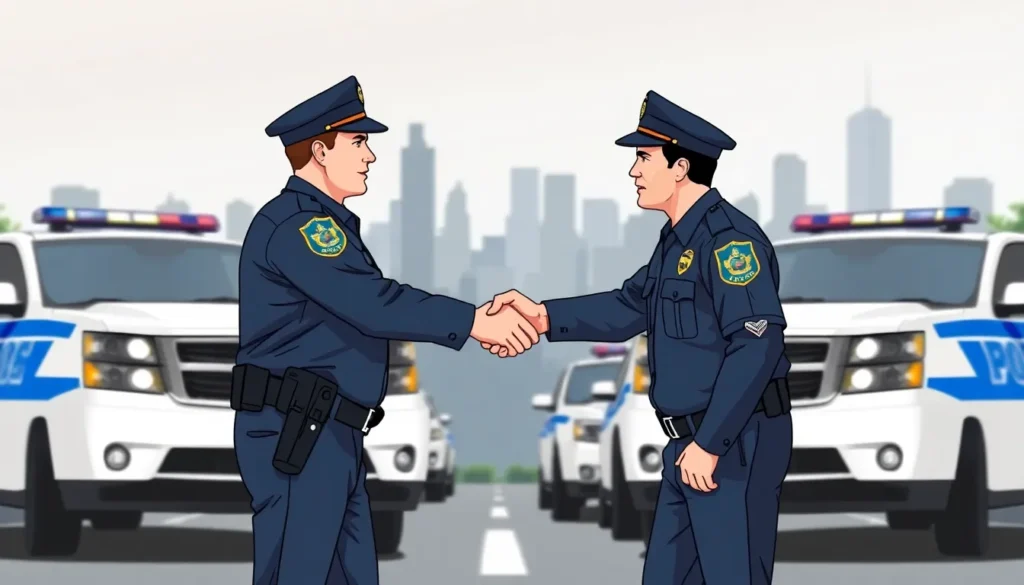
A lateral police officer is a law enforcement officer who transitions from one police department or agency to another. Unlike new recruits who typically enter the profession through academy training and initial probationary periods, lateral officers bring prior law enforcement experience, training, and certifications to their new agency. This practice is common in many police departments as a strategic approach to staffing, allowing agencies to quickly fill open positions with qualified personnel.
Detailed Explanation
Lateral police officers are usually experienced officers who have completed training and have served in a police capacity for a period of time at a previous agency. When they apply to transfer to a different department, they often bypass some of the initial training requirements that new recruits undergo because they already meet many of the professional prerequisites. The lateral transfer process is designed to recognize their existing qualifications and law enforcement skills.
Departments may have specific criteria for lateral officers, such as a minimum number of years of service, clearance of disciplinary records, and meeting physical and psychological standards. Depending on the agency’s policies, lateral officers might be required to attend a shortened academy or complete additional training tailored to the new department’s procedures.
How It Works
The lateral transfer process generally involves several steps:
- Application: The officer submits an application to the new department, often including detailed service records and certifications.
- Screening: The prospective lateral officer undergoes background checks, psychological evaluations, and physical fitness tests, similar to those required of new recruits.
- Interview and Assessment: The candidate may participate in interviews and assessments to determine compatibility with the new agency’s culture and requirements.
- Training: While they may be exempt from basic academy training, lateral officers often complete orientation or department-specific training modules.
- Probationary Period: Some agencies impose a probationary period to evaluate the lateral officer’s performance within the new environment.
Examples
- A police officer with five years of experience in a municipal police department applies to a county sheriff’s office through a lateral transfer program. After passing background checks and assessments, the officer attends a brief orientation before beginning duties.
- A state police trooper transfers laterally to a city police department. Due to differences in jurisdiction and procedures, the officer completes a specialized training course before assuming full responsibilities.
- An officer from a small-town police force moves to a larger metropolitan police department via lateral transfer, leveraging prior experience to fill staffing shortages and reduce training costs for the agency.
Why It Matters
The lateral officer concept is important for law enforcement agencies seeking efficient ways to maintain adequate staffing levels without the time and expense of training new recruits from scratch. It facilitates the sharing of experienced talent across jurisdictions, enhances operational readiness, and helps agencies adapt quickly to changing workforce needs.
Common Misconceptions
Misconception: Lateral officers do not need any additional training.
Correction: While lateral officers have prior experience, most agencies require some form of department-specific training to ensure familiarity with local policies and procedures.
Misconception: Lateral officers automatically retain their rank upon transferring.
Correction: Rank retention varies by agency and is subject to the receiving department’s policies; lateral officers may need to negotiate or requalify for certain ranks.
Pros and Cons
Comparison Table
| Aspect | Lateral Police Officer | New Recruit Officer |
|---|---|---|
| Meaning | Experienced officer transferring from another agency. | Individual newly entering law enforcement without prior police agency experience. |
| Training | May require limited or specialized training related to the new agency. | Undergoes full academy and field training program. |
| Hiring Process | Typically streamlined due to prior experience. | Comprehensive and longer, including academy enrollment. |
| Rank and Seniority | Varies; may retain rank or start anew depending on agency. | Starts at entry-level rank with probationary status. |
Decision Checklist
- Use this if: You are an experienced officer seeking to transfer to a new agency with existing qualifications.
- Avoid this if: You lack prior law enforcement experience or do not meet the lateral transfer requirements.
- Check this first: The receiving agency’s lateral transfer policies, training requirements, and rank recognition procedures.
What is the easiest way to understand a Lateral Police Officer?
The simplest way to understand a lateral police officer is to think of them as a trained police professional who moves from one law enforcement agency to another, bringing their experience with them to fill staffing needs more quickly and efficiently than hiring new recruits.
FAQ
What qualifications are needed to become a lateral police officer?
Qualifications typically include previous law enforcement experience, a clean disciplinary record, physical fitness, and meeting the new agency’s specific requirements.
Do lateral police officers have to attend the full police academy?
Usually no; lateral officers may attend a shortened or specialized training program tailored to the new agency's procedures instead of the full academy.
Can a lateral police officer keep their rank when transferring?
Rank retention depends on the receiving agency’s policies; some allow lateral officers to keep their rank, while others may require reclassification or starting at a lower rank.





Leave a Reply