
Short Answer
Overview
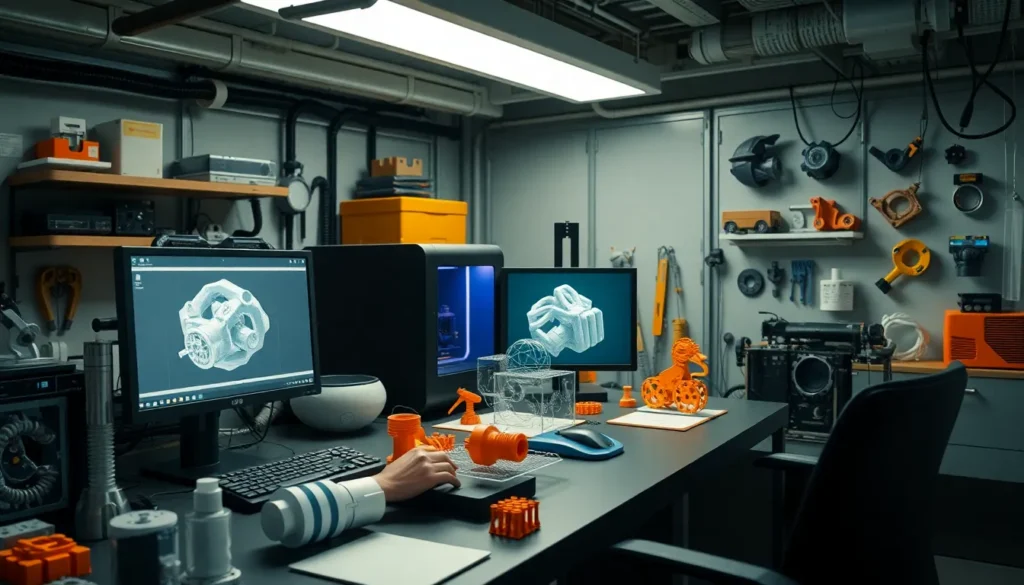
Careers involving 3D printing center on utilizing additive manufacturing technologies to create physical objects from digital models. These careers encompass a broad range of activities such as designing 3D models, operating printing machines, selecting appropriate materials, and post-processing printed products. Industries such as aerospace, automotive, healthcare, fashion, and education have integrated 3D printing, creating varied professional opportunities.
Detailed Explanation
Professionals in 3D printing careers may specialize in different stages of the additive manufacturing process. This includes computer-aided design (CAD) specialists who create digital blueprints, materials scientists who determine suitable printing substances, and technicians who manage the actual printing and finishing processes. Some roles also involve research and development to improve printing techniques or develop new applications.
These careers often require knowledge of engineering principles, computer software, material properties, and quality control. Additionally, understanding the limitations and capabilities of different 3D printing technologies—such as stereolithography (SLA), fused deposition modeling (FDM), and selective laser sintering (SLS)—is essential.
How It Works
The workflow in a 3D printing career typically begins with digital modeling, where a three-dimensional design is created using CAD software. This design is then converted into a format readable by 3D printers, often an STL file. The printer builds the object layer by layer, depositing or solidifying material according to the digital instructions.
Post-printing processes may include cleaning, curing, polishing, or assembling parts. Professionals may also conduct testing to ensure the printed object meets functional or aesthetic standards. Depending on the industry and application, the complexity and scale of projects can vary significantly.
Examples
- 3D Printing Technician: Operates and maintains 3D printing equipment, prepares print jobs, and performs quality checks.
- Additive Manufacturing Engineer: Designs printing processes, selects materials, and integrates 3D printing into product development workflows.
- Biomedical Engineer: Uses 3D printing to create medical implants, prosthetics, and anatomical models for surgical planning.
- Product Designer: Develops prototypes and customized products using 3D printing technologies to accelerate design cycles.
- Research Scientist: Investigates new materials and printing methods to enhance performance and applications of 3D printing.
Pros and Cons
- Pros: Enables rapid prototyping and customization, reduces material waste compared to traditional manufacturing, and allows complex geometries not feasible with other methods.
- Cons: Can involve high initial equipment costs, requires specialized skills, and may have limitations in material properties and production speed.
Comparison Table
| Aspect | 3D Printing Career | Traditional Manufacturing Career |
|---|---|---|
| Meaning | Focuses on additive manufacturing techniques to create objects layer by layer from digital designs. | Involves subtractive or formative processes such as machining, molding, or casting to produce parts. |
| Skill Set | CAD modeling, material science, machine operation, digital workflows. | Machining, tooling, manual assembly, conventional engineering skills. |
| Customization | High potential for customization and rapid iteration. | Customization is often limited and slower due to tooling changes. |
| Cost Structure | Higher upfront equipment cost, lower waste, cost-effective for low-volume runs. | Lower equipment cost, higher material waste, cost-effective for mass production. |
Decision Checklist
- Use this if: You are interested in digital design, innovation, and working with cutting-edge manufacturing technologies.
- Avoid this if: You prefer traditional hands-on manufacturing processes or large-scale mass production environments.
- Check this first: Your proficiency with CAD software, understanding of materials, and willingness to learn machine operation and maintenance.
What is the easiest way to understand a career involving 3D printing?
The simplest approach is to consider it as a profession that merges digital design with manufacturing technology to create tangible objects layer by layer. It requires both creative and technical skills, focusing on transforming virtual models into physical items using specialized printers and materials.
FAQ
What kinds of skills are needed for a career in 3D printing?
Skills commonly required include proficiency in CAD software, understanding of materials and their properties, knowledge of various 3D printing technologies, and machine operation and maintenance expertise.
Is 3D printing used only for prototyping?
No, while 3D printing is widely used for prototyping, it also serves in producing final products, customized parts, and components for industries like healthcare, aerospace, and automotive.
What industries employ professionals skilled in 3D printing?
Industries such as healthcare, aerospace, automotive, fashion, education, and manufacturing utilize 3D printing professionals for roles ranging from design to production and research.





Leave a Reply